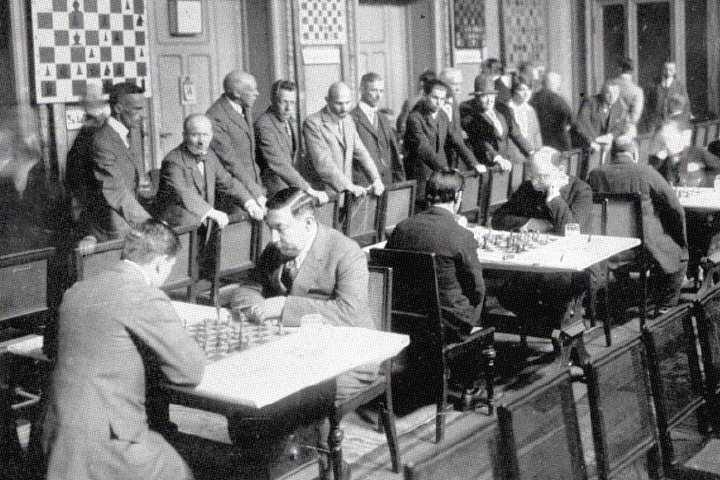
Nimzowitsch's victory at Dresden in 1926 stands as one of chess history's cleaner proofs that dominance and destiny aren't the same thing. Alekhine, on his way to the world title the following year, played in this strong field but came up short. Nimzowitsch won it outright.
The tournament mattered because it gathered serious strength. Dresden's chess club was marking fifty years, and they pulled together a field that reflected the era's top talent. This was the mid-1920s, the golden age of hypermodern chess, and Nimzowitsch was in his element as the movement's philosopher-king.
What makes this result interesting isn't just that the second-ranked player outperformed the first. It's that Nimzowitsch proved something about his understanding of position that Alekhine, for all his tactical brilliance, hadn't yet mastered at this moment. Within a year, Alekhine would claim the world crown from Capablanca and begin his long reign. But at Dresden, Nimzowitsch was the player who saw the board most clearly.
The tournament fades from memory now, overshadowed by Alekhine's rise to dominance. Yet it reminds us that chess tournaments rarely crown the obvious champion. The best rating means nothing when the best player walks into the room.