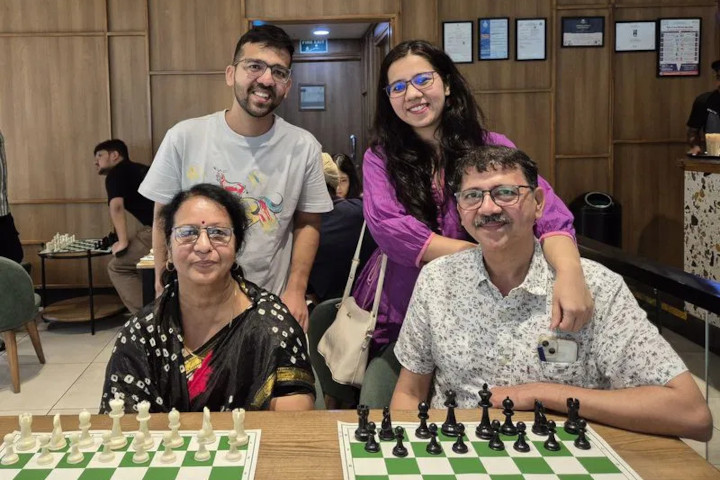
Bhavesh Vyas found his anchor in chess when life became unmoored. Diagnosed with cancer at 22, he turned to the game he'd loved since childhood. Chess offered what little else could during treatment: control, focus, structure. A board where outcomes depend on your own decisions, not on fate or illness.
The game became therapy. Not the kind a therapist prescribes, but the kind that works anyway. When your body betrays you, moving pieces across 64 squares gives you agency back. It reminds you that you can still think, still plan, still win.
What makes Vyas's story resonate isn't just survival. It's that chess didn't become a distraction from his battle. It became part of his recovery. Playing kept his mind sharp during chemotherapy fog. It connected him to a community when isolation felt suffocating. It proved he could still compete, still improve, still be himself.
This is chess at its truest purpose. Not ratings or titles or tournament prizes, though those matter. But chess as a mirror of resilience. A game that taught one young man he could face uncertainty, calculate his options, and push forward even when the position looked hopeless.
Vyas's journey shows what chess players already know: the game transcends the board.