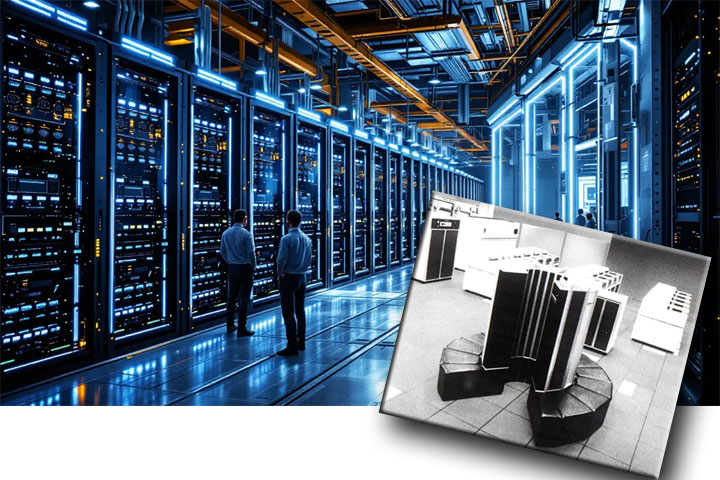
The Cray-1 in 1982 ran 130 million floating point operations per second and cost eight million dollars. It won two consecutive world computer chess championships. It could forecast the weather.
Today's supercomputers are incomprehensibly faster. The gap between then and now isn't just a matter of degree. It's a categorical difference. If you tried to guess the speed ratio, you'd be wildly off.
This matters for chess because engine strength depends on raw computing power. When Stockfish or Leela play today, they operate at speeds that would have seemed like science fiction to programmers of the early 1980s. A single modern laptop runs circles around what once crowned a world computer champion.
The Cray-1 represented the pinnacle of chess-playing machines in its era. It faced off against other titans in specialized tournaments. Winning those championships meant something. The machine was genuinely world-class.
Now? A chess engine running on consumer hardware crushes the Cray-1 with contemptuous ease. The fastest supercomputers today don't even bother with chess anymore. The problem became too trivial. Computers solved chess comprehension decades ago and moved on to harder puzzles.
The progression shows how quickly technology devours its own records. What seemed impossibly advanced in 1982 became a footnote almost immediately.