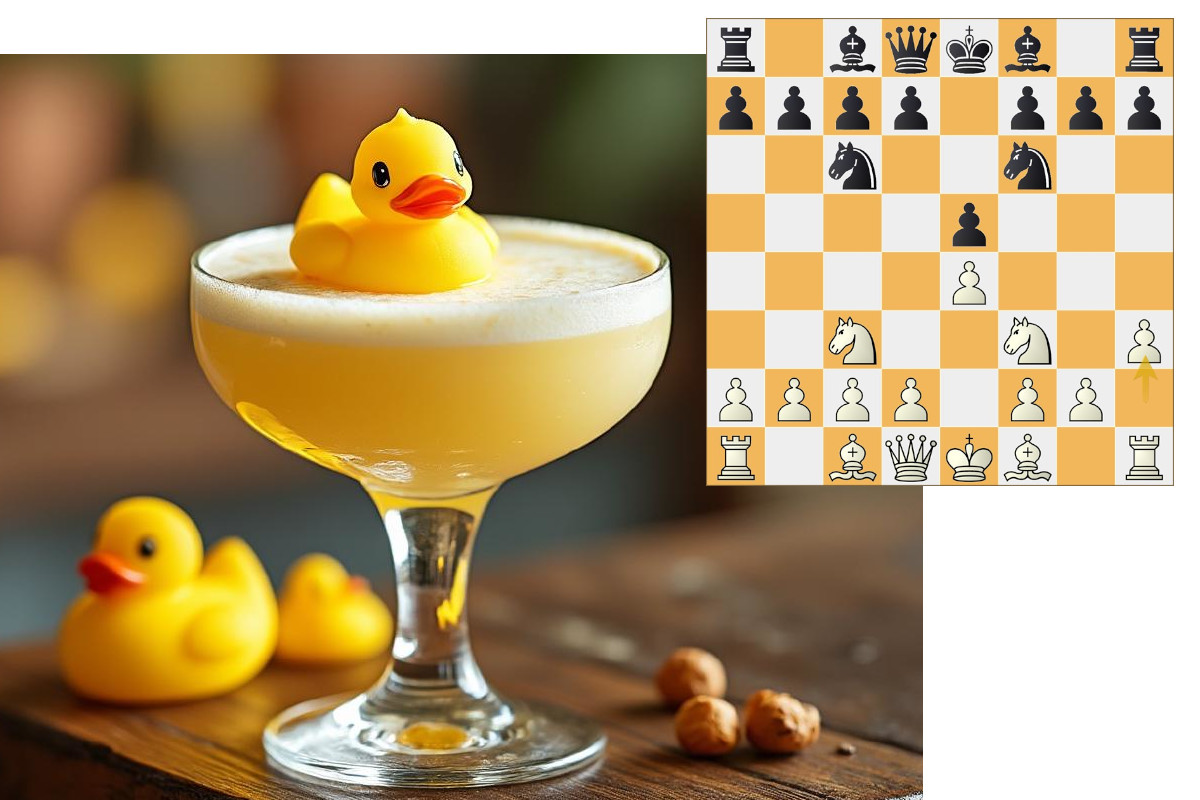
Speelman's latest column blends English heritage with practical chess problems. He starts at Hatfield House and Queen Elizabeth's Oak, then pivots to what he does best: working through concrete positions that teach you something.
The puzzles focus on rook endings, defensive resources, and tactical themes. These aren't abstract exercises. They're the kind of positions you'll face in your own games, where one move separates a draw from a loss or a win from a draw. Speelman walks you through the critical moments.
The fun bit comes with his invention of the "Fluffy Duck" opening. Named after an advocaat cocktail (yes, really), Speelman challenges readers to develop this into a proper opening system. It's tongue-in-cheek, but there's a real chess problem buried in the joke. What variations make sense? Where does it go? He wants the chess community to engage with it.
This is vintage Speelman. He doesn't just analyze games or positions in isolation. He connects them to broader ideas, plays with language and humor, and trusts his readers to think alongside him. The column works because it treats chess as something worth both serious study and genuine fun.