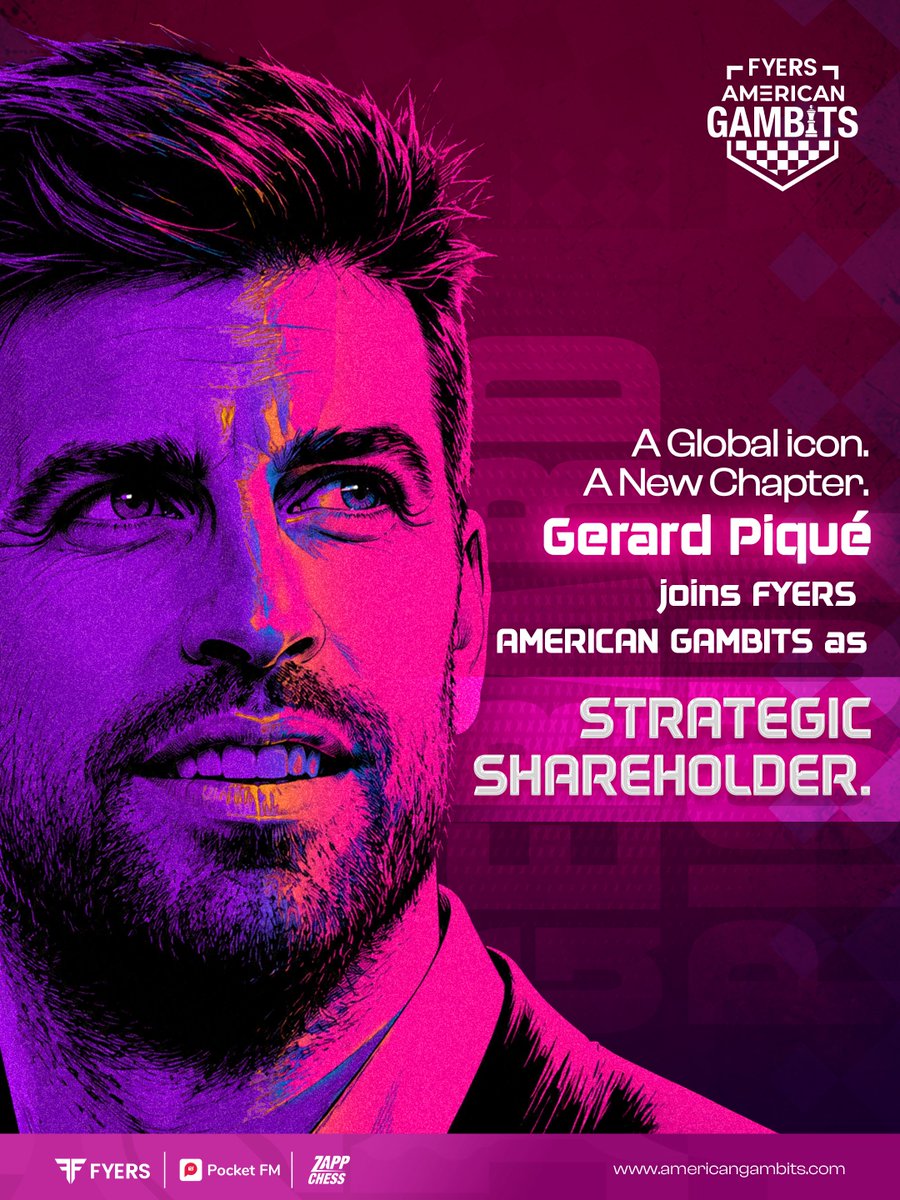
Gerard Piqué, the former Barcelona and Spain defender, has become a strategic shareholder in FYERS American Gambits, one of the major chess franchises in the United States Chess League ecosystem.
This move signals a shift in how top-tier chess teams operate. Celebrity investors and high-profile entrepreneurs are increasingly betting on chess as a brand builder and revenue stream. Piqué brings name recognition across continents, deep experience in sports management through his entertainment and sports ventures, and the kind of capital chess teams need to compete at the highest level.
American Gambits competes in a landscape where chess franchises now rival esports teams in production value and audience reach. The team operates within a structure where international stars, tech entrepreneurs, and traditional sports figures vie for stakes in professional chess. Piqué's involvement matters because it normalizes chess as a legitimate investment category for athletes and business leaders who might otherwise stay on the sidelines.
What makes this noteworthy: Piqué didn't dabble in chess casually. He joins a franchise that plays in the Champions Chess Tour ecosystem and produces content for global audiences. His Barcelona roots matter too. Kasparov was Catalan-obsessed. Spassky respected Barcelona's chess tradition. This isn't random geography. It's a calculated play into a chess market with real continental depth.
Piqué already proved his instincts for emerging competitive spaces. He co-founded Kings League, a football variant that reimagined how sports content reaches Gen Z audiences. He understands production, streaming, and building parasocial relationships between fans and players. Those exact skills transfer directly to chess, where presentation often lags the actual drama on the board.
For American Gambits specifically, this injection of capital and strategic direction comes as the team prepares for upcoming Champions Chess Tour legs and USCL matches. The franchise needed to deepen its roster, improve its streaming presence, and build revenue streams beyond tournament prize pools. A shareholder of Piqué's stature opens doors with sponsors who care more about global football audiences than traditional chess demographics.
The chess world has spent years complaining that the game lacks charismatic figures outside the top 10 players. Piqué's involvement doesn't solve that problem directly. But it signals that chess organizations finally understand they need business leaders, not just chess players, to build sustainable franchises.
This is what chess professionalization actually looks like: a legendary athlete recognizing that competitive chess attracts the same mentality that dominates football. Piqué didn't buy into a losing proposition. He bought into momentum.