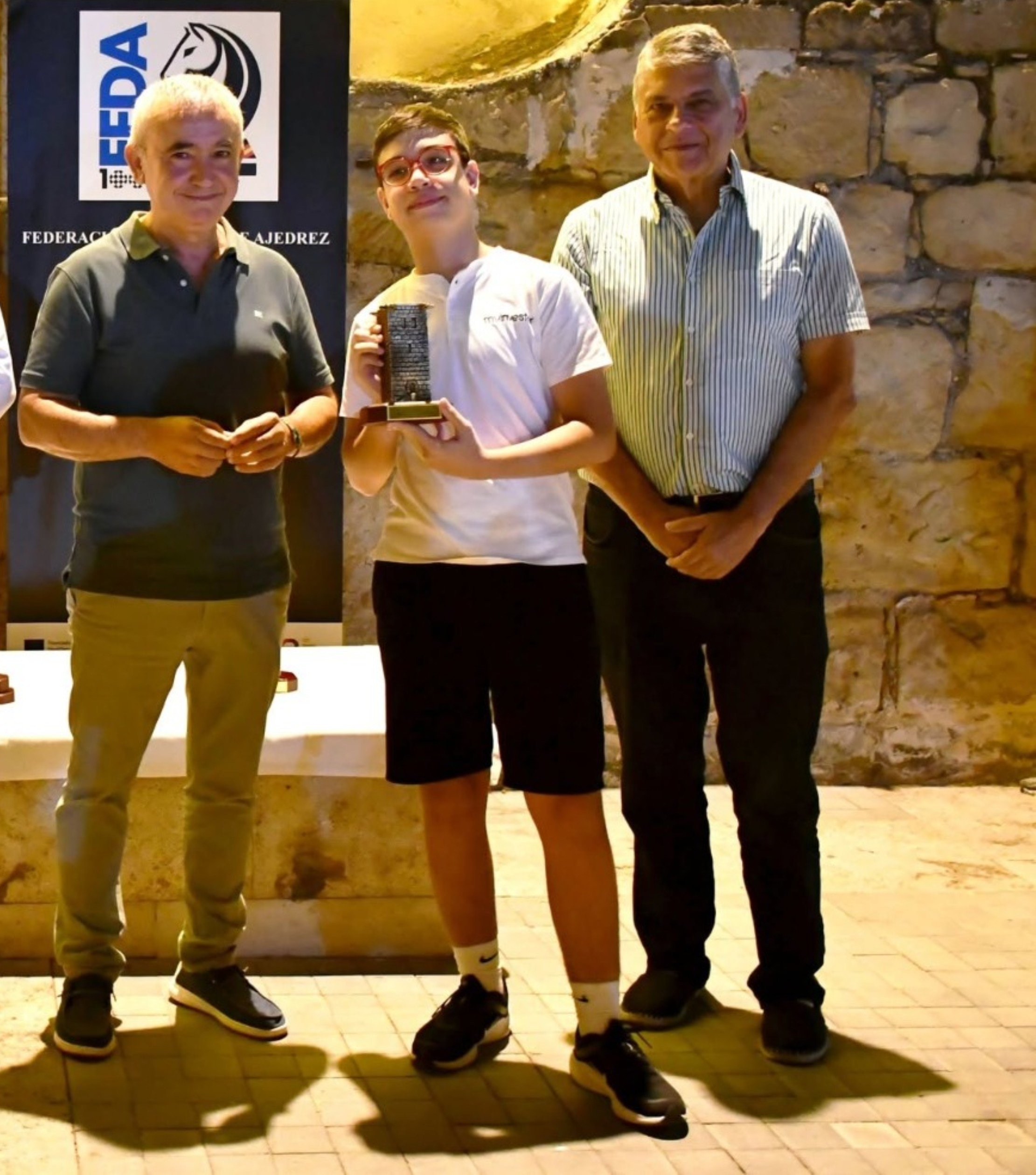
At 12 years old, Faustino Oro just proved he belongs in conversation with the world's most promising young talents. The Argentine prodigy finished sixth at Spain's Rapid Championship in Mengíbar this week, crushing the under-18 field in an 11-round Swiss with 8.5 points out of 11 at 15 minutes plus five-second increment. He pocketed 250 euros for best junior, but the real prize was the statement: this kid can compete directly against elite adult players and win.
Jaime Santos Latasa took the title with a marginally higher score, while fellow Argentine Alan Pichot grabbed second. Nearly 300 players entered. Oro finished ahead of most of them. That's not luck. That's not an outlier performance in an event padded with weak opposition. Rapid chess rewards precision, concrete calculation, and the ability to stay sharp under time pressure. Oro has all three in abundance.
This result fits into a pattern that's become impossible to ignore. Oro has been turning heads since he earned his IM title at age 10, becoming one of the youngest in history to reach that milestone. He's been training with some of Spain's best coaches, and while he's technically Argentine by birth, much of his competitive development has happened in Spain, where serious chess infrastructure exists. The Spanish federation has clearly invested in his potential. That investment is paying dividends.
What makes Oro different from other child prodigies cluttering the FIDE ranking lists is his consistency in time-scrambled formats. Blitz and rapid chess expose weaknesses that classical games can hide. Young players often blow up under pressure or rely on pure calculation without positional understanding. Oro doesn't do that. He navigates both the concrete and the strategic. His win rate against adults in rapid conditions suggests he's grasping the game at a deeper level than most 12-year-olds manage.
The trajectory matters. If Oro maintains this upward curve, he'll likely hit 2600 classical strength before turning 16, which would put him in exclusive company. Giri, Caruana, and Vachier-Lagrave all hit that mark as teenagers, but not at his age. He's tracking toward something rarer.
Mengíbar wasn't a super-tournament. The field had depth but no top-50 players. Still, Oro didn't just survive the tournament. He dominated it. That's the difference between a talented kid and a future world championship contender.