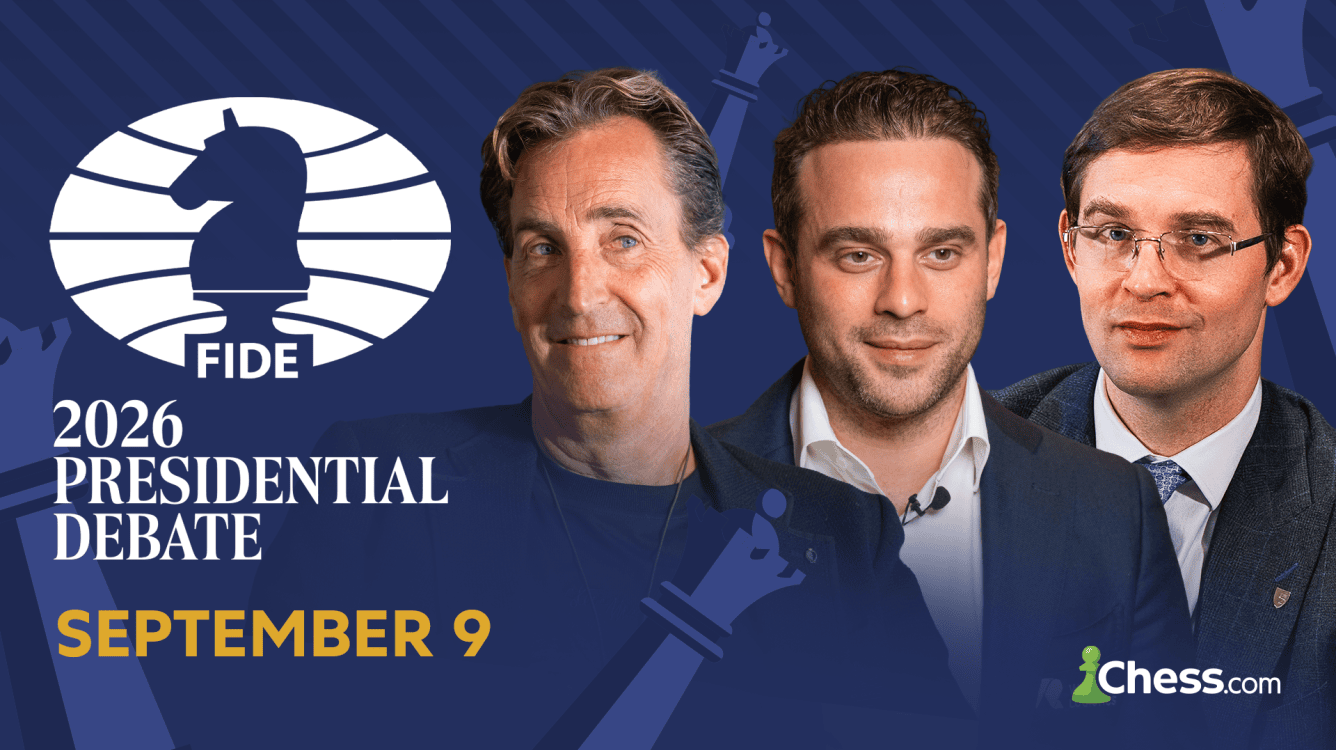
Chess.com is forcing the 2026 FIDE presidential race into the open. The platform will host the first live debate between all three candidates on September 9, just seventeen days before voters decide Garry Kasparov's successor at the FIDE Congress in Samarkand.
This matters because the campaign has been a shadow fight. Jan Henric Buettner, Wadim Rosenstein, and Timur Turlov have traded formal complaints and position papers. They have avoided direct confrontation. A live debate changes that. It forces each candidate to defend their record and answer for their criticisms in real time, on camera, before the global chess audience.
The context is messy. Turlov and Rosenstein have filed grievances against each other. Questions linger about funding, campaign conduct, and who really represents chess interests versus personal power. Buettner operates as the establishment candidate. Turlov, the Chess.com co-founder and billionaire, brings money and platform control. Rosenstein commands support from the Russian federation and allied federations. None of them has campaigned openly alongside their opponents until now.
Chess.com's decision to host this debate gives the platform enormous leverage over the narrative. The platform chooses the moderators, the questions, the format. It controls what viewers see. For a company that has its own commercial stakes in FIDE's decisions about classical time controls, online competitions, and revenue sharing, this is not a neutral position. Yet it may also be the only venue where such a debate could happen. FIDE itself has shown little interest in structured candidate forums.
The September 9 debate will air under scrutiny. Players and federations have waited months for clarity on FIDE's direction. The organization hemorrhages credibility every year. Corruption allegations persist. The classical world championship cycle remains chaotic. Online chess has pulled money and attention away from traditional FIDE circuits. Whoever wins in Samarkand must address these failures immediately.
Expect the debate to focus on governance, not chess. Turlov will likely emphasize digital innovation and Chess.com's resources. Rosenstein will appeal to federalist concerns and traditional chess values. Buettner will try to appear above the fray. None of them will offer radical reform. FIDE's structure resists it.
The real test comes after. A debate changes nothing if voters ignore it. Federations cast the ballots. Seventeen days is enough time for lobbying, backroom deals, and reversals. The candidates know this. A public debate actually constrains their movement. They must now defend positions on record. That constraint alone explains why Chess.com's September 9 event matters more than its moderators or questions ever could.