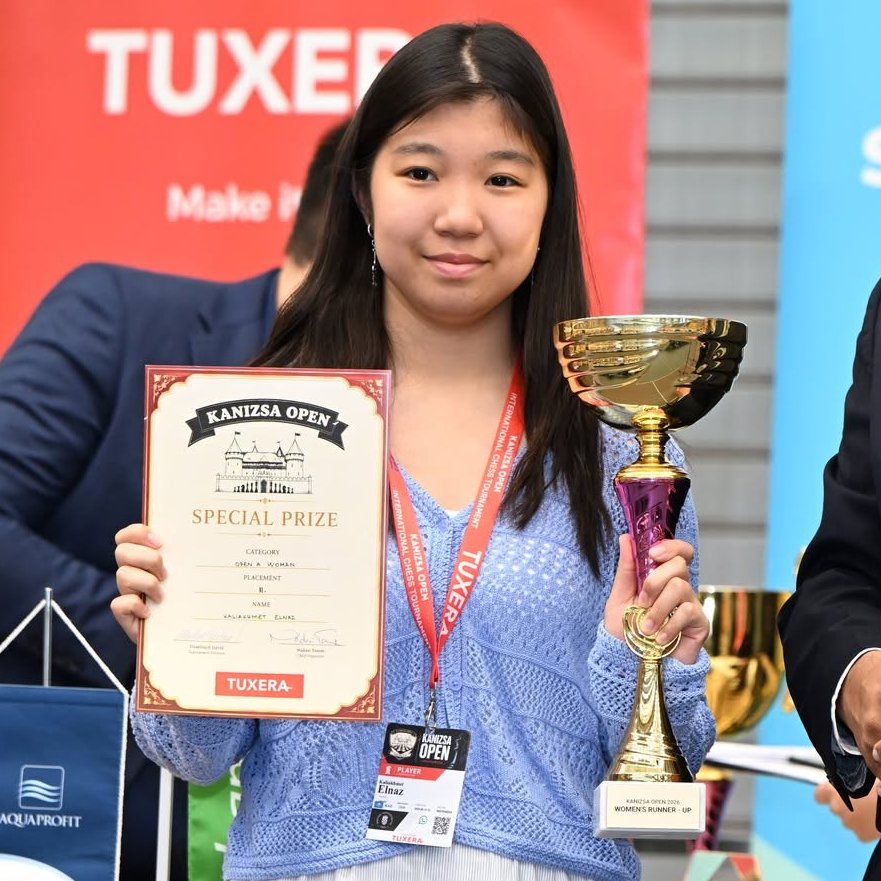
Elnaz Kaliakhmet of Kazakhstan just earned her first International Master norm at 15. She did it at the Kanizsa Open with a performance rating of 2473, vaulting her rating to a career-high 2347. She'll carry that rating to the Chess Olympiad in September, where she represents Kazakhstan.
This is not a one-off breakthrough. Kaliakhmet has been accumulating results at a pace that separates the genuinely talented from the merely promising. A year ago she took silver in the Under-14 Girls World Junior Championship. Earlier this year she won the Under-16 Girls World Youth Rapid Championship. Now she has the IM norm. At 15, she is operating in the company of the generation's elite female prospects.
The IM norm itself matters more than the headline might suggest. It's not just a rating milestone. It's a formal title that requires specific tournament results against strong opposition over a defined rating threshold. You don't stumble into an IM norm. You play 9 or 11 rounds at a minimum, you need to score above a floor rating, and your performance has to be witnessed by a FIDE arbiter. Kaliakhmet cleared that bar in Hungary.
Her rating of 2347 puts her in territory where she can compete against established international masters and early-career grandmasters. That's not where 15-year-olds typically operate. It places her among the best female players her age globally. For context, most women don't reach 2400 until their early twenties, if they reach it at all. Kaliakhmet is three years ahead of the curve.
The Olympiad in September changes what we should expect from her. She will play for Kazakhstan's women's team against players from dozens of nations. The competition level jumps. The board position matters. The psychological weight of representing your country shifts the calculus of every game. Some young players crumble under that pressure. Others sharpen. Her next eight months will clarify which type she is.
Kazakhstan has invested in developing female chess talent over the past decade. Kaliakhmet is one of the fruits of that work. Her trajectory suggests the investment is paying dividends. Whether she becomes a 2500-rated grandmaster or plateaus at 2400 remains open. What is clear is that she has the work ethic, the talent, and now the formal credentials to belong in elite-level competition.
The next test comes in September. Before then, she has time to push the rating higher and test herself against the world's best women at a major event. A 15-year-old with an IM norm and climbing rating is no longer a prospect. She's arrived.