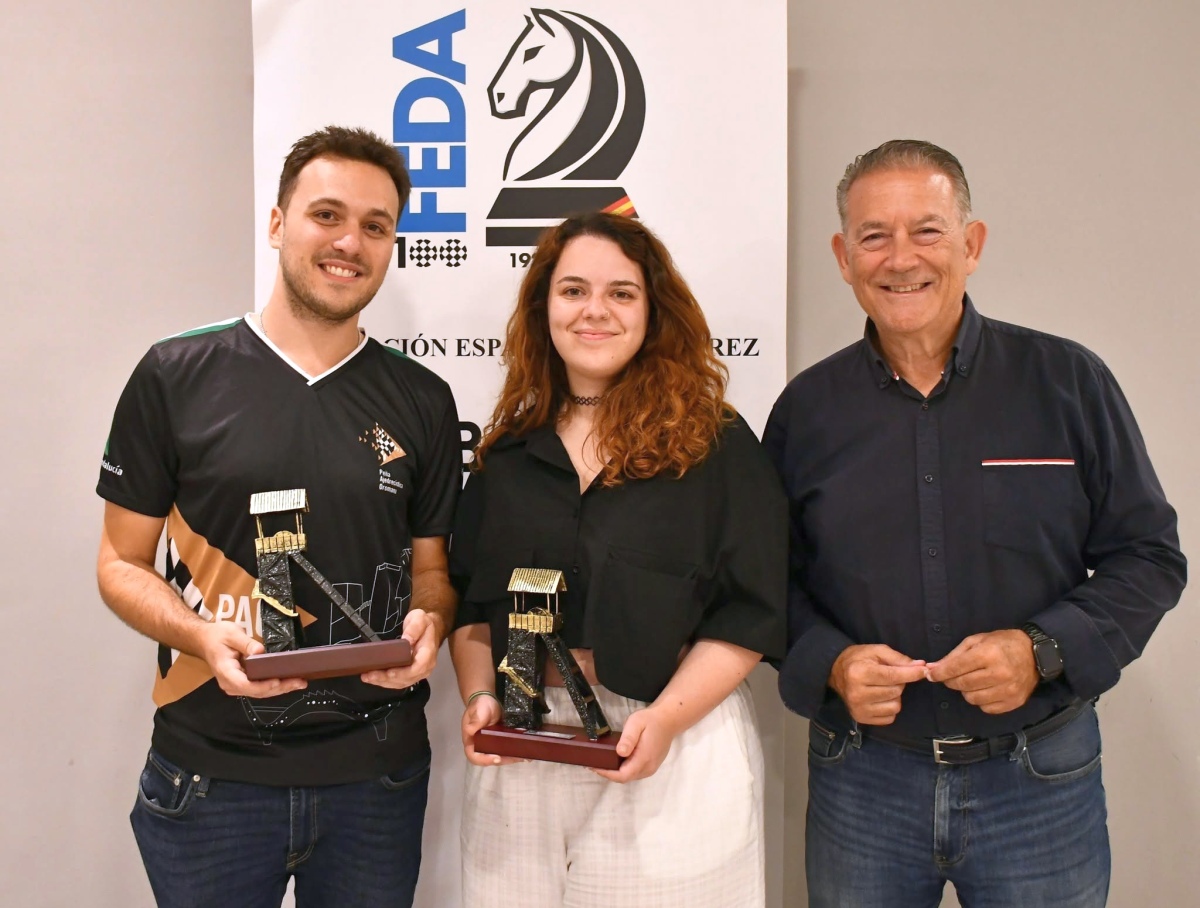
Alan Pichot's Spanish Championship breakthrough carries more weight than the headline suggests. The Argentine grandmaster who relocated to Spain seized his first national title in Linares, edging a field that included higher seeds and established contenders. This matters because Pichot has been knocking on the door of elite competition for years without major national crowns to show for it. In a Swiss format where seed doesn't guarantee anything, he outplayed players seeded above him, including fourth-seed Eduardo Iturrizaga Bonelli, to claim the trophy.
The men's title opens doors. Spain recognizes national champions as the primary representatives in continental and world federation events. Pichot now carries that credential into future competition. At his rating level, a Spanish championship validates his presence among the continent's serious contenders and signals that Linares 2026 marked a turning point in his career trajectory.
Marta García Martín's defense of the women's crown tells a different story, one of dominance. Her third title in what appears to be a concentrated period of championship success establishes her as Spain's leading female player. The women's field in Spain has shown real depth, yet García Martín's ability to win multiple times suggests she has maintained a gap over her peers. That consistency matters more than a single triumph.
The format itself, a 9-round Swiss held August 17-25 in Linares, leveled the playing field. Swiss systems reward consistent performance over the entire tournament rather than head-to-head matchups. Pichot's fifth seed meant the federation rated him below Iturrizaga and others, yet he posted the strongest performance when it counted. That's how Swiss events work. They expose true form.
Linares hosted this championship. The historic Spanish venue has seen centuries of chess activity and maintains credibility as a tournament site. Hosting the national championship there gives it institutional weight beyond just being "another Swiss event."
The rating implications move differently for each winner. Pichot gains title credibility that helps with future invitations and federation selection committees. García Martín's three-time status strengthens her position as Spain's female champion in rating calculations and tournament invitations.
Next comes the rating distribution and federation recognition. These championships determine Spain's representatives for the European Team Championship and other international events. Pichot and García Martín now carry official status as national champions, a credential that stays with them for a year until the next championship cycle. For García Martín, this third title creates separation from the rest of Spain's women's players and makes her the clear choice for any federation-dependent selections. For Pichot, the question becomes whether he can consolidate this win or whether it was a peak performance at the right tournament.