# The ECU's Outliers Are Setting the Bar Higher Than Anyone Expected
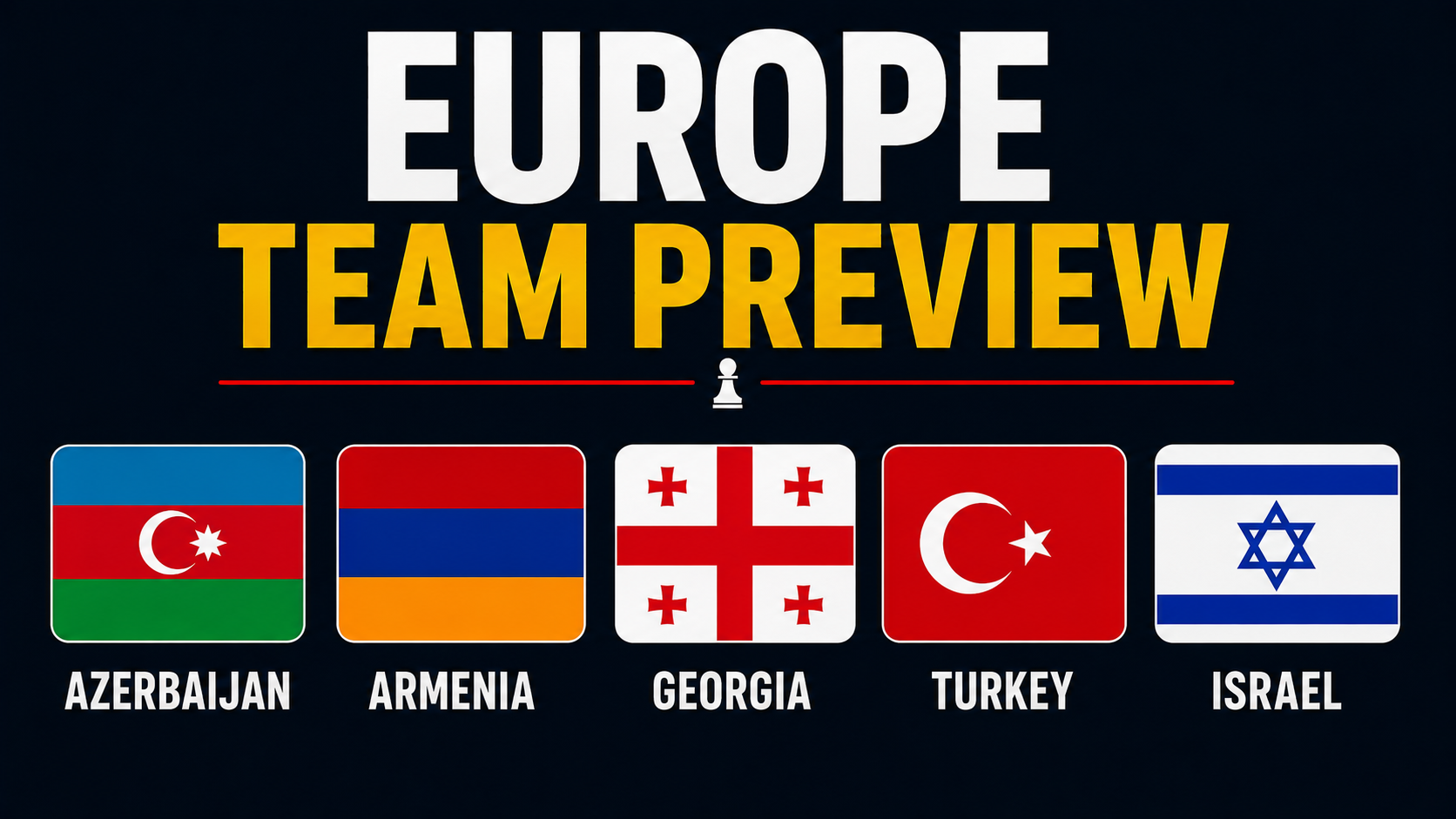
Georgia, Armenia, Azerbaijan, Turkey, and Israel walk into the 2026 Olympiad carrying something no other regional bloc can claim. Every single one of them will field five grandmasters in the Open section. Not four. Not a mix. Five. Each.
This is the story that matters about Europe's geographic outliers. They have cracked a code that Africa, the Americas, and Asia have not.
The European Chess Union's boundaries stretch beyond maps in ways that fuel endless bureaucratic debates. Armenia sits in the Caucasus. Georgia straddles it. Azerbaijan occupies territory that geographers fight about. Turkey spans two continents. Israel sits on the Eastern Mediterranean. Yet here they are, organized under the ECU umbrella, and here they come to the 2026 Olympiad with a level of concentrated strength that raises questions about what peak regional chess development actually looks like.
Five grandmasters per federation is not a casual threshold. It reflects sustained investment, serious talent pipelines, and the kind of competitive culture where becoming a grandmaster is a plausible career path for talented young players. You see this level of depth in the world's chess superpowers. Russia fields it. China does. America is getting close. But to see it replicated across an entire cluster of five federations, all in or near the same geographic region, is striking.
Georgia deserves separate mention. The women's side seeds them second overall in the entire Women's section. That ranking tells you something about their development model. They are not choosing between supporting men or women. They are building both. Nona Gaprindashvili's legacy runs deep, and the federation has not wasted the foundation she left.
The density matters for prediction purposes at the 2026 Olympiad. When a regional group this strong shows up together, the medal tables tighten. Turkey will not sneak up on anyone. Neither will Georgia in the men's competition, though they could surprise on the women's side. Azerbaijan has the firepower to compete for medals. Armenia and Israel will not field afterthoughts.
This is what happens when chess federations decide that breadth is not enough. You need depth. You need five grandmasters, not three or four. You need women's teams that rank in the top tier worldwide. You need young players who look at their national champions and see a realistic path forward.
The 2026 Olympiad will show whether this concentration of strength in a handful of ECU federations translates into hardware. The raw material is there. The grandmaster count does not lie. Now comes the tournament.