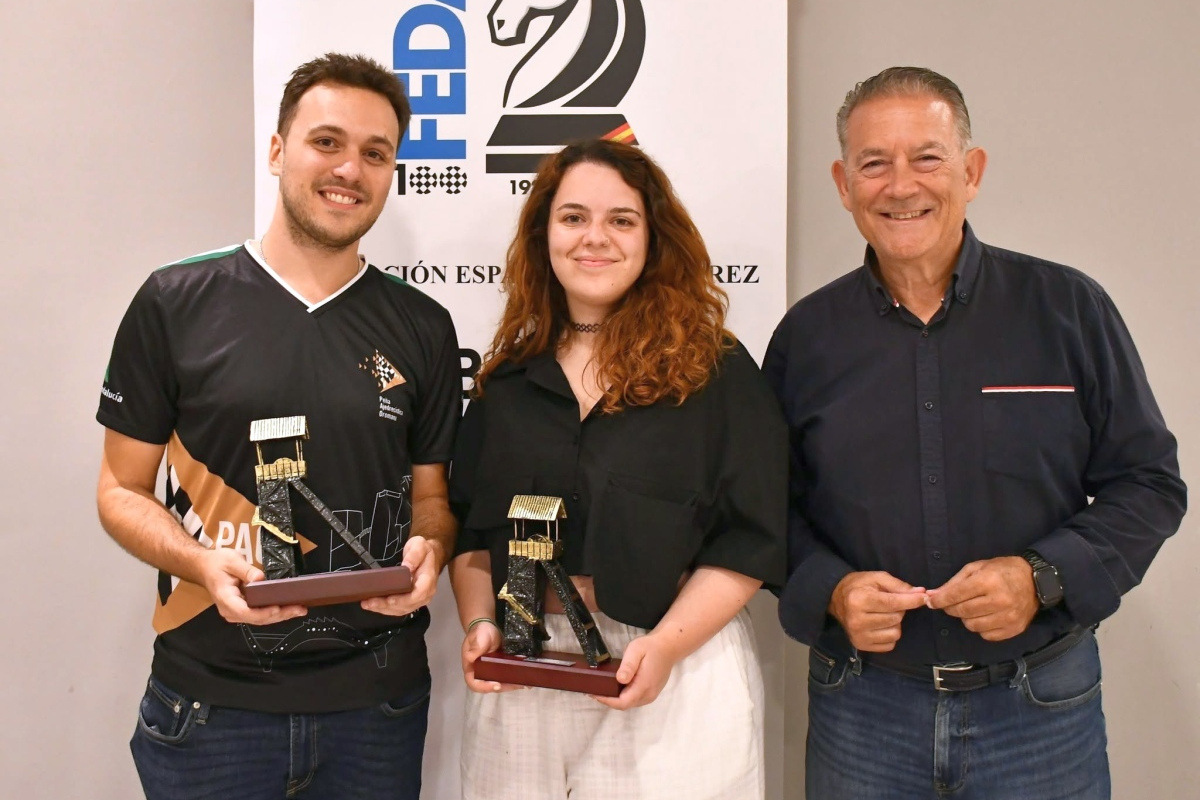
Alan Pichot has won the 2026 Spanish Absolute Championship, claiming his first title in the country after finishing on 7½/9 in Linares. The Argentine-born player sealed victory with a final-round win over Alex Villa Tornero, putting him clear of a crowded field that included two strong former champions.
Daniil Yuffa and Eduardo Iturrizaga Bonelli both finished on 7/9, but Yuffa took the silver medal on tiebreaks. Iturrizaga, who has won this championship before, could not quite mount a challenge strong enough to reclaim it. The tournament structure meant that tiebreaks decided places in the thick of the standings, underlining how tight the competition was across the middle of the leaderboard.
Pichot's breakthrough matters because he operates in a Spanish chess scene that has produced world-class talent but remains dominated by experienced players with proven records at the national level. That he could navigate a field including Iturrizaga to win outright suggests Pichot has raised his level substantially. For a player born outside Spain, winning the absolute championship represents full acceptance into the Spanish chess establishment. It also signals that he can grind through long events and convert advantages in the final rounds, not just produce isolated strong performances.
The path to this title reflects the broader evolution of Spanish chess over the past decade. The country produces strong players at every level, but the pool at the very top has become more competitive and less predictable. Pichot's win is the latest evidence that no single player dominates the national circuit anymore.
In the women's championship, Marta García Martín successfully defended her title with a 6/9 score. Defense of a Spanish women's championship is never automatic, even when you are the returning champion. García faced challenges from Sabrina Vega and Adhara Rodríguez Redondo, who finished second and third respectively. The fact that García's margin of victory was one point shows the depth of talent competing for the title.
García's defense underscores her status as the leading female player in Spain. She will represent the country in upcoming international events, carrying the momentum from this win. The proximity of Vega and Rodríguez Redondo suggests that the women's championship could remain competitive over the next cycle, with multiple players capable of challenging for the title at the next championship.
Both championships took place in Linares, a town with enormous historical weight in chess. Linares hosted the Super-Interzonal tournament in 1973, a pivotal event in Karpov's rise toward the world championship. Later, it became the site of an annual tournament that attracted the world's elite. While the championship format differs from the legendary closed tournaments of earlier decades, Linares remains a venue where serious Spanish players test themselves.
The Spanish championships represent the starting point for national representation. Players who perform well here earn selection for team events like the Chess Olympiad and European Team Championships. Pichot's title win puts him in contention for those squads, assuming the Spanish federation weights recent national championship performance in its selection process.
The next phase of competition will test whether Pichot can build on this championship. Spanish players often peak at the national level but struggle to translate that success internationally. The difference between winning in Linares against familiar opposition and producing results against world-ranked opposition from other federations is significant. Pichot will need to prove that his 2026 championship represents genuine progress rather than a single strong tournament.
García, by contrast, has demonstrated international capability already and will be expected to compete seriously whenever she plays for Spain in team events. Her defense of the title keeps her in the conversation for major competitions and confirms her position as the country's premier female player.