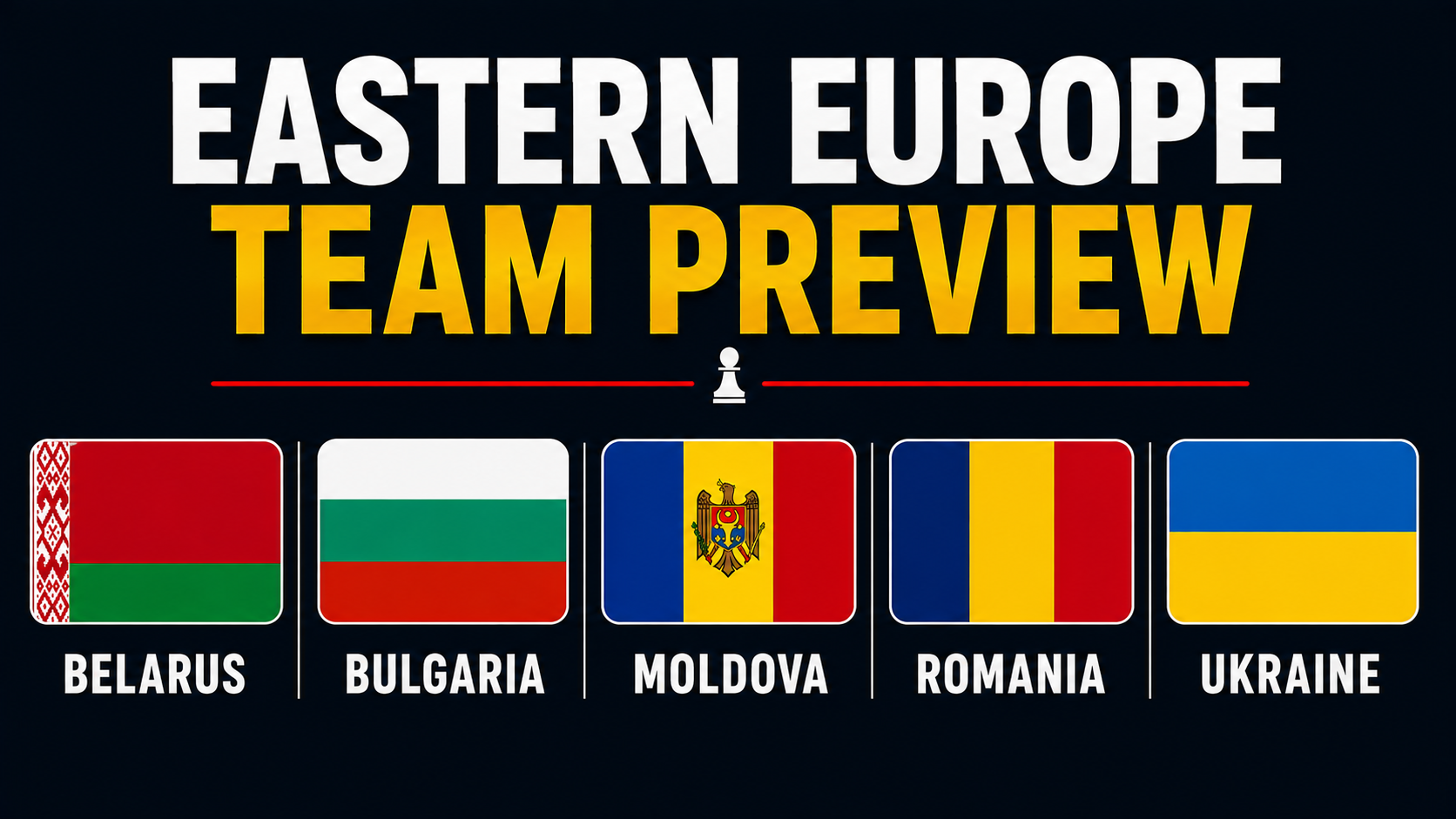
Ukraine's dominance in fielding elite squads continues, but the real story at the 2026 Olympiad is how Eastern Europe has locked down an unprecedented streak. Seven consecutive federations now bring five grandmasters to the Open competition. That's not a trend anymore. That's a region.
Ukraine anchors this run with Vasyl Ivanchuk still grinding at 2634 rating despite decades at the board. Ivanchuk's presence alone signals Ukraine's commitment to competing for medals. But the women's contingent matters just as much. Anna Ushenina, a former Women's World Champion, leads a team that has become genuinely threatening in recent Olympiads. Ukraine won't sneak up on anyone, but they won't fade either.
Bulgaria fields a different kind of strength. GM Kiril Georgiev captains the roster and plays on it, a choice that speaks to Bulgarian chess culture. Georgiev brings institutional memory and tournament experience that younger squads lack. His presence stabilizes the lineup and gives Bulgaria a realistic shot at a top-ten finish.
The streak itself deserves examination. Having seven federations in succession field all-GM fives is remarkable because it reflects Eastern European investment in chess development and talent retention. These countries keep their best players competing for the national team. They don't lose them to retirement or emigration the way some regions do. The pipeline is working.
Romania, Belarus, and Moldova add depth to the regional narrative, though with mixed rating distributions. Not every federation can field five 2500-plus players, but each roster reflects genuine preparation and selection strategy. That matters for Olympiad dynamics. The region won't cannibalize itself. The federations compete against each other, sure, but they also represent a collective force on the international stage.
What changes next depends on who else steps up. India, China, and the United States have the resources to push back, and they will. But Eastern Europe has established something harder to replicate than raw rating points. They have continuity. Players like Ivanchuk are still there. Georgiev is still there. That staying power translates to better preparation, better team chemistry, and better results.
The 2026 Olympiad will test whether this streak continues past seven. Watch the pairings closely. Ukraine and Bulgaria will play other regional powers, and those matches will tell you whether Eastern Europe's dominance is real or a statistical artifact. The answer probably is both.