# Why Anderssen's Immortal Game Still Matters 172 Years Later
Adolf Anderssen crushed Lionel Kieseritzky in 1851 at Simpson's-in-the-Strand in London. Black resigned after 23 moves. Nothing about that line matters. Everything about how Anderssen won does.
The Immortal Game endures because it answered a question chess was still wrestling with: how far could you push the attack? Anderssen didn't just win. He won by sacrificing material with such clarity and purpose that modern engines still validate almost every decision. The German master saw 20 moves ahead in a coffeehouse setting. No clocks. No computers. No notes beforehand.
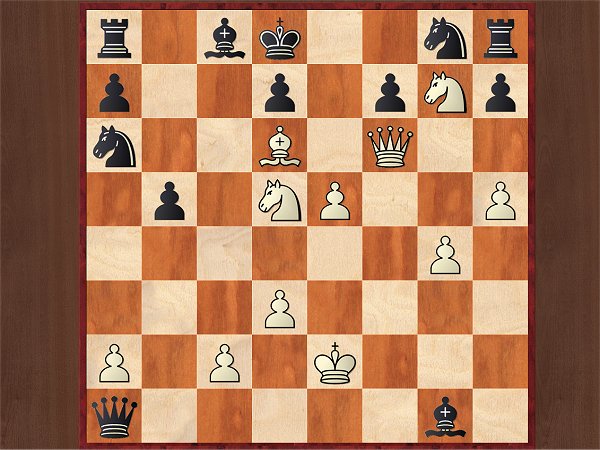
Kieseritzky, the Russian aristocrat and serious player of his era, walked into a trap he couldn't escape. Anderssen played 1.e4 and steered into the Center Game, a system that favored aggressive handling. By move 11, Anderssen had already given up a bishop. By move 21, he'd sacrificed even more material. But each sacrifice opened lines toward the Black king. The final blow came with a quiet bishop move that threatened unstoppable mate.
Why does this game still matter today?
Because it proved that chess rewards concrete attacking vision over material counting. Modern engine analysis shows Anderssen was never actually worse. He calculated variations that would take humans years to understand. When younger players study the Immortal Game now, they learn that sacrificing a piece for three pawns and an open king isn't reckless. It's science.
The game became the blueprint for romantic chess. Morphy, Neumann, and Tal all drew from Anderssen's playbook. They understood that a king under fire with nowhere to hide trumps any material advantage. Chess romanticism gets dismissed by today's positional purists, but watch Anderssen's combinations and you see why the opening salvo still influences how attacking players think.
The Immortal Game shaped how chess literature itself developed. Players in the 1880s and beyond didn't just admire the result. They dissected every move looking for the logic beneath the sacrifice. That habit of deep analysis, studying not just what worked but why it worked, became central to chess pedagogy.
Modern super-engines like Stockfish rate the position after move 21 as completely winning for White. Anderssen calculated this without silicon. That gulf between human calculation and machine verification is precisely why the game fascinates top players today. Giri, Caruana, and Vachier-Lagrave all cite the Immortal Game as foundational to understanding attacking chess.
A casual game at a London coffeehouse in 1851. No prize money. No rating points. No sponsorship. Just one man showing the world what chess could be when a player combined ferocious calculation with the courage to believe in his own vision.