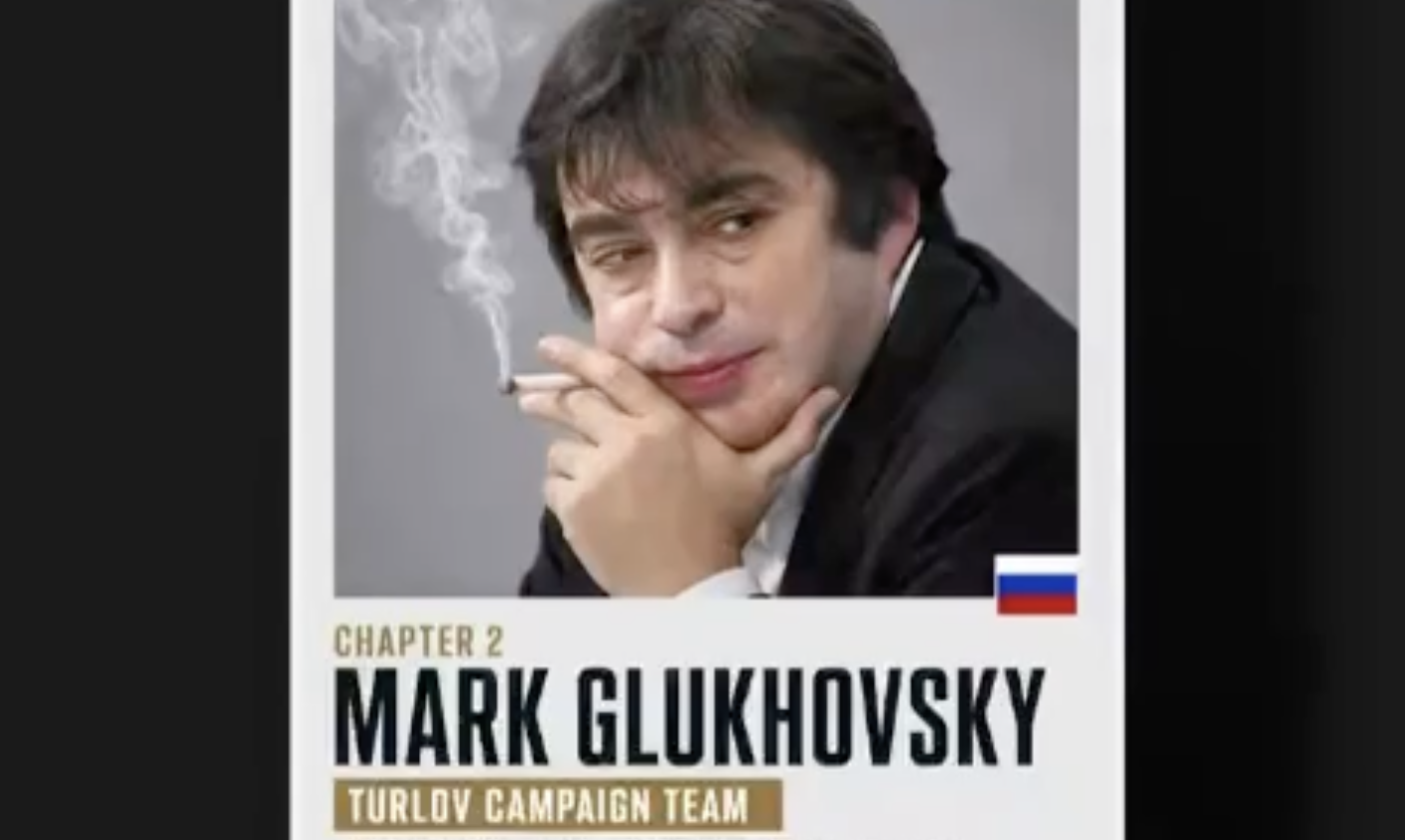
# Another Glukhovsky Recording Surfaces, Adding Fuel to FIDE's Fractious 2026 Race
The Turlov campaign took another hit Tuesday when a second leaked recording surfaced on social media, this time featuring what appears to be Mark Glukhovsky discussing strategy against rival Wadim Rosenstein ahead of the 2026 FIDE presidential election.
The recording, posted by the X account @ChessConspiracy under the label "Chapter 2," captures someone identified as Glukhovsky speaking casually about damage control tactics. The conversation reportedly includes dismissive characterizations of African chess federations and explicit discussion about undermining Rosenstein's standing as a European businessman.
This is the second such leak to hit Timur Turlov's campaign in recent weeks. The first recording created immediate controversy within the chess community. Now, with another video in circulation, the Turlov team faces a credibility problem that extends beyond individual comments. The pattern suggests either serious operational security failures or deliberate leaks from within the organization itself.
The African chess community represents real voting power in FIDE elections. Federations from the continent and elsewhere control bloc votes that determine the outcome. Characterizing any group of voters as less thoughtful or worthy of strategic consideration is politically toxic in this context. Turlov cannot simply dismiss these recordings as taken out of context without addressing why such conversations happened at all.
Rosenstein, meanwhile, has positioned himself as a reform candidate with strong European federation backing. The recordings inadvertently confirm that Turlov's team views him as their most dangerous opponent. Whether that makes Rosenstein stronger or just better at messaging remains to be seen.
The timing matters here. The 2026 race is still years away, yet campaigns are already operating in full intensity. This suggests the field will remain crowded and the competition dirty. Candidates cannot afford to assume their private conversations will stay private. Every campaign now operates under the assumption that microphones are running and phones are recording.
FIDE has not commented on the leaked materials or launched any investigation into their authenticity. The federation's leadership typically stays above campaign frays, but this situation tests that principle. If these recordings are authentic, they document campaign operatives discussing voter populations in terms that many will find offensive. That becomes a governance question, not just a campaign embarrassment.
For chess followers outside FIDE's politics, these leaks matter because they reveal how the federation's leadership gets chosen. The answer is not pretty. Money, regional blocs, and willingness to play hardball all factor in. The recorded conversations show exactly what that looks like behind closed doors.