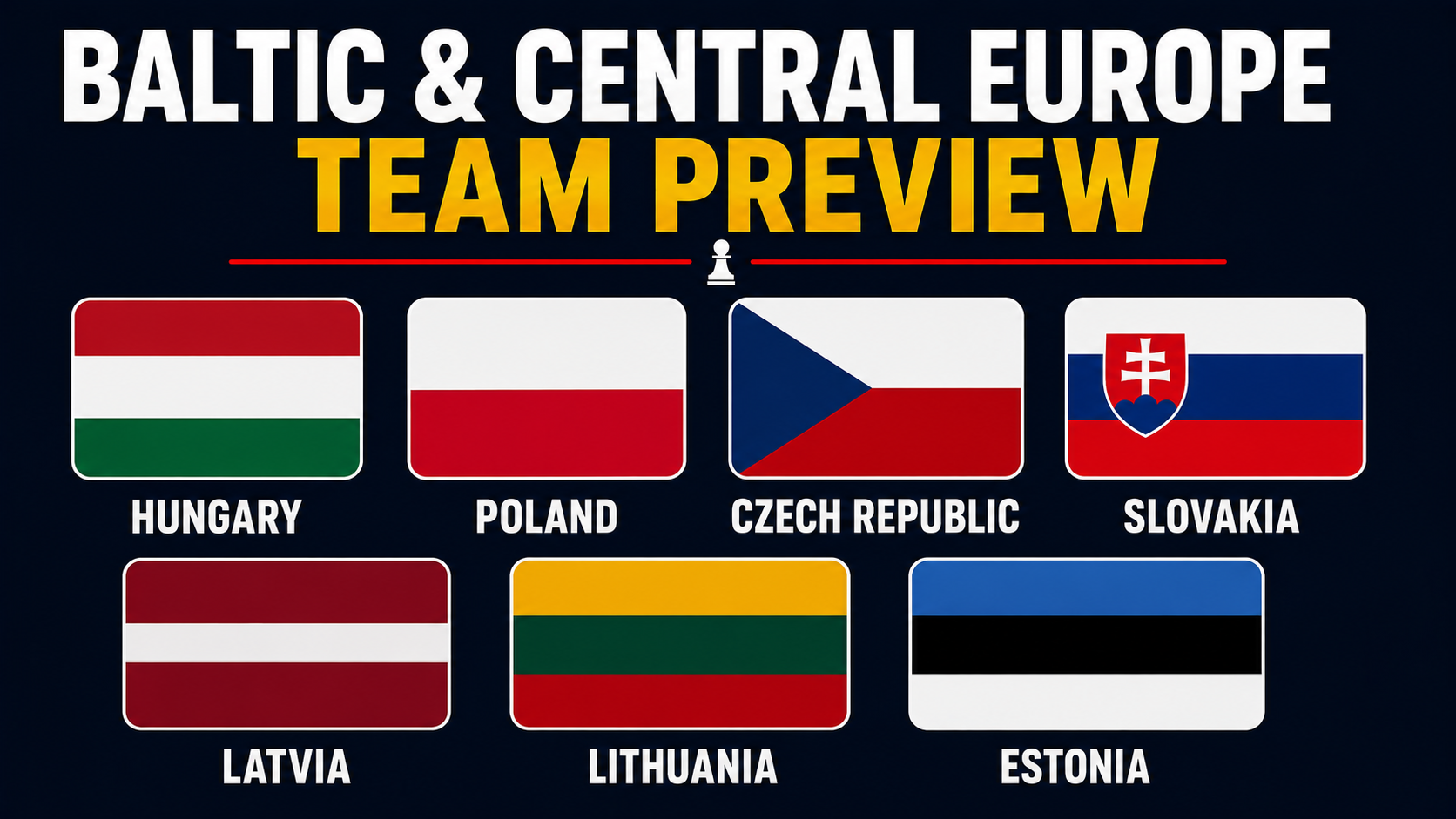
# Hungary and Poland Shape Up as Olympiad Dark Horses
Hungary's decision to reunite Richard Rapport with Peter Leko at the 2026 Olympiad marks a calculated gamble on chemistry over pure rating points. Rapport, volatile and imaginative, sits board one. Leko, the former world championship challenger now in his forties, anchors board two. It's a pairing that trades rating dominance for the kind of mutual understanding that can produce results in match play when the stakes climb.
The Hungarians know what they're doing here. Leko hasn't played for his country in significant team competition for years. His return signals that Hungary views this Olympiad as a genuine medal opportunity, not a participation exercise. With an 8th seed overall, they're positioned to make noise in an Open section where the favorites will cannibalize each other while Hungary plays without the same level of pressure.
Poland presents a different profile altogether. Jan-Krzysztof Duda at 2743 is the single highest-rated player across all the teams in this regional bracket. That's not a coincidence. Duda carries the weight of being Poland's absolute anchor, the player expected to deliver point after point from board one. It's a burden he's carried before and handled well, but it concentrates risk. If Duda falters, Poland's entire tournament tilts.
The Polish women's team seeding at 8th in their section adds depth that Budapest lacks. That's a structural advantage. Women's team composition matters more in Olympiad contexts than casual observers realize. An eighth seed suggests Poland has genuine medal potential on that board as well, which means their federation invested real thought into squad construction across both sections.
The family narratives around both teams shouldn't be dismissed as mere color. Rapport has always played better with national pride on the line. Leko's return is his own choice, his own return to a game he loves. That voluntary element often unlocks something different in aging players than forced participation would. Hungary's entire approach feels personal in a way that sometimes translates to over-performance.
Poland's structure is more conventional but more robust. Duda doesn't have to carry everything. Their depth should let them compete consistently through all thirteen rounds, which matters more in team events than individual tournaments. A single brilliant performance doesn't win an Olympiad. Consistency does.
Both teams will contend seriously. Neither should be underestimated, particularly Hungary, where Rapport and Leko might produce the kind of emotional narrative that fuels an Olympiad run. Poland has the cleaner road if their preparation holds and Duda stays sharp, but narratives matter at these events. Hungary's story is the more interesting one to watch unfold.