# The Olympiad Built a Superpower. Here's How Chess Became the Cold War's Quietest Battlefield.
The Chess Olympiad started as a London curiosity in 1927. It became the stage where the Soviet Union proved itself the world's chess empire.
That dominance was total. Between 1952 and 1990, Soviet teams claimed the gold medal 18 times. They didn't just win tournaments. They won the narrative. While Americans sent talented amateurs to compete, the Soviets trained their best players like state assets. Botvinnik, Smyslov, Tal, Petrosian, Spassky. The USSR turned the Olympiad into a referendum on their system.
This wasn't accident. Stalin understood something about chess that most Western leaders missed. A victory on the board was a victory in the ideological arena. The state funded chess training centers. Players received salaries to study openings. The Soviet federation published tournament bulletins and analysis that set the global standard.
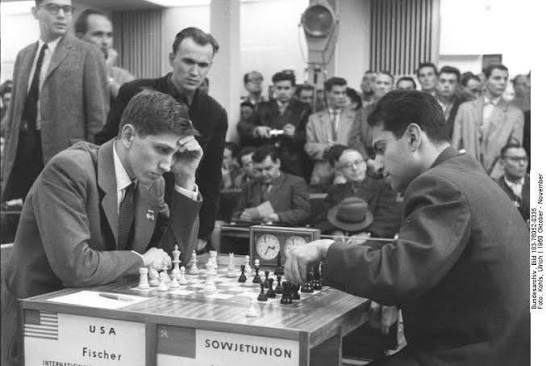
The Americans tried to answer. Bobby Fischer emerged as the genuine counterpunch in 1972 when he beat Spassky in Reykjavik. But Fischer was an anomaly, not a system. One genius burning bright. The Soviets had a pipeline.
The Olympiad's format matters here. It's team competition, not individual glory. That structure favored Soviet depth. They could field five boards of world-class strength. Most countries scrambled to find three. The Olympiad became less about finding the world's best player and more about which nation had built the best chess infrastructure.
By the 1980s, the tournament had evolved from a niche gathering into genuine international spectacle. National pride attached itself to every round. Broadcasters covered matches. Journalists tracked standings like sports editors tracking baseball. The Olympiad wasn't a chess tournament anymore. It was a Cold War proxy war played with 64 squares instead of missiles.
The format changed over decades. The organizers experimented with scoring systems, board arrangements, and participation rules. Each tweak reflected the politics of the era. When smaller nations wanted to compete, organizers expanded. When dominance became predictable, they adjusted the structure.
What the Olympiad revealed was structural. Chess talent isn't random or evenly distributed. Nations that invested in training academies, that paid their players, that published analysis and shared preparation with their teams, dominated. The Soviet model worked. It still works. Countries that treat chess as a state priority produce better results than those that don't.
Today the Olympiad remains every two years. The Soviet Union is gone but its legacy runs through the event. Russia still competes near the top despite sanctions and isolation. India is rising with state funding behind Giri and other talented young players. China invests heavily. The nations that win the Olympiad are the ones that decided chess matters.