# Family Chess Runs Deep in the British Isles and Microstates at the 2026 Olympiad
The 2026 Chess Olympiad will serve up something rare. When the British Isles and microstates take the board, you will watch families compete under the same flag. Not occasionally. Constantly.
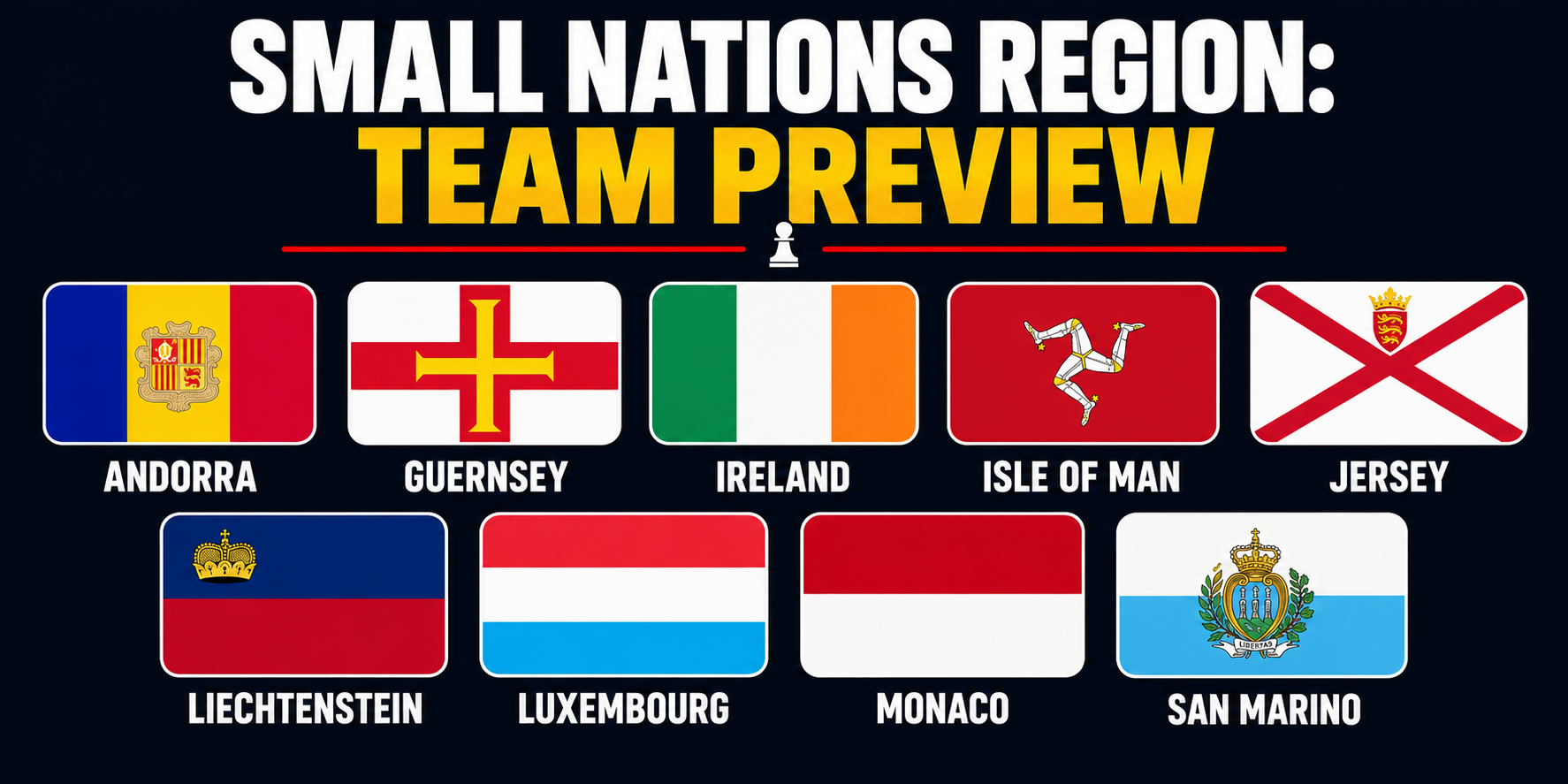
Seven of the nine federations sending teams to Nice have relatives playing in both the Open and Women's sections. Ireland alone runs two sibling pairs. Guernsey and the Isle of Man go further, fielding single mixed teams where family members play alongside one another across the same roster. Andorra completes the picture, though full details remain incomplete in the source material.
This matters because small federations operate differently from chess superpowers. When your talent pool runs thin, you build from within. A Guernsey or Isle of Man player learns the game from siblings. A parent coaches a child. These nations lack the institutional depth of England or the Netherlands, so family networks become the spine of competitive chess infrastructure.
The logistical angle matters too. Organizing two separate teams, or managing a mixed roster, requires different planning. A nation with five strong players splits them differently depending on federation rules. The Olympiad's mixed-team setup for Guernsey and Isle of Man eliminates the gendered distinction entirely, which streamlines their squad construction but also shapes which players they prioritize for selection.
This also signals something about chess culture in smaller regions. These aren't factory systems pumping out grandmasters. They are communities where the game passes directly from one generation to the next, parent to child, older sibling to younger. The 2026 Olympiad becomes a family reunion crossed with a national competition. When your federation has maybe ten active adult players, the ties that bind them run personal and deep.
Watch the Irish delegations closely. Two sibling pairs means head-to-head family pressure. How does one sister perform when her sibling sits two boards over? Does family solidarity help or hinder preparation? These small details rarely surface in tournament reporting from the major powers, but they shape everything in microstates.
The 2026 Olympiad will crown a world champion team. It will also quietly demonstrate how chess survives and thrives in places without million-dollar budgets or government subsidies. It survives because families keep playing. Families keep teaching. In Guernsey, Isle of Man, and Ireland, that means relatives competing together for the same national colors.