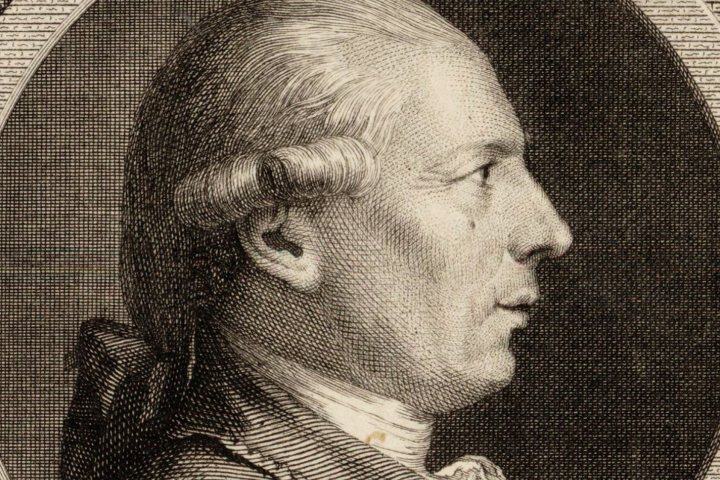
Philidor died centuries ago, yet his fingerprints remain all over modern chess. Three hundred years after his birth in 1726, the French master's legacy still shapes how we think about the game. He was not the strongest player in some abstract sense. He was the strongest player when it mattered most: when chess became a profession that paid real money, and when the game needed intellectuals to explain what was actually happening beneath the surface.
Most casual chess players know Philidor only through a defense. The Philidor Defense (1.e4 e5 2.Nf3 d6) sits in countless opening repertoires as a solid, unambitious response to 1.e4. That reputation undersells him entirely. Philidor did not invent the move for timid players. He understood something his contemporaries did not: pawn structure matters more than piece activity. His willingness to place pawns defensively, to give ground, to wait for his opponent to overextend came from a chess mind operating on a different plane from the romantic, tactics-obsessed players of his day.
He dominated European chess from roughly the 1750s through the 1780s. In an era before formal world championship matches, Philidor simply beat everyone who played him seriously. He defeated the German master Kieseritzky in match play. He crushed opponents in public simuls. His reputation was so formidable that the best players of his generation largely avoided playing him for stakes. This was partly out of respect, partly out of fear.
What made Philidor genuinely ahead of his time was not just his results but his understanding of why he won. He wrote "Analyse du jeu des Échecs" (Analysis of the Game of Chess), first published in 1749. This book became the opening theory bible for nearly a century. Philidor articulated principles that sound obvious now but were revolutionary then: control the center with pawns, not just pieces. Develop your pieces with a purpose. Play for the endgame from the opening. Avoid unnecessary weaknesses. Modern chess education passes these ideas to club players in their first month of study. Philidor had to fight to establish them against intuition and tradition.
He performed blindfold exhibitions that astounded audiences. Playing multiple opponents simultaneously without seeing the board was considered a parlor trick, almost a violation of chess propriety. Philidor turned it into theater. He accepted an invitation from Frederick the Great and visited Sanssouci Palace in Potsdam. The Prussian king wanted to see the legendary Frenchman prove his genius. That Philidor accepted royal summons speaks to his stature. By the late 18th century, he had become the most famous chess player in Europe.
But Philidor was not only a chess master. He was a celebrated composer and musician. His opera "Tom Jones" premiered in Paris in 1765 and enjoyed considerable success. Philidor divided his energy and talent between the concert hall and the chessboard. This dual career is almost unimaginable for professional chess players today. Modern players train from childhood and specialize entirely. Philidor belonged to an earlier world where a gifted mind could contribute seriously to multiple disciplines.
He made his living from chess in Paris and London. He gave private lessons. He played matches for purses. He sold his analysis and his reputation. When chess could finally support professionals, Philidor was the first to prove it was possible. He showed that a man could feed his family and build wealth through the game.
Philidor died in 1795 at age 68. His tournament record speaks for itself, but his real legacy lies deeper. He demonstrated that chess requires depth, that pawns have dignity, that planning matters more than attacking. Every time a modern player builds a position carefully, eschews unnecessary drama, trusts the pawn structure, that player channels Philidor. He taught chess how to think.