# The Modern Chess Second: Why the Best Players Can't Compete Alone Anymore
You cannot win a world championship match today without a team behind you. This is not an exaggeration. The role of the second and the broader preparation apparatus has evolved from a luxury into a necessity.
The shift happened gradually but it is now complete. When Capablanca and Lasker hired assistants in the early 1900s, they brought in other strong players to bounce ideas off during preparation. Those men offered chess understanding, fresh perspectives, pattern recognition. That model survived for decades. A world champion might have one or two trusted colleagues helping with openings.
Then computers arrived. The game changed overnight.
Modern seconds do three things their predecessors could not. First, they run engines overnight to find improvements in positions both players will face. Second, they manage the psychological load. A player in a twenty-game match cannot think about logistics, nutrition, scheduling. The second handles it. Third, they quality-check preparation. Before a player sits down at the board, multiple people have already vetted the analysis, tested it against engine moves, stress-tested the lines.
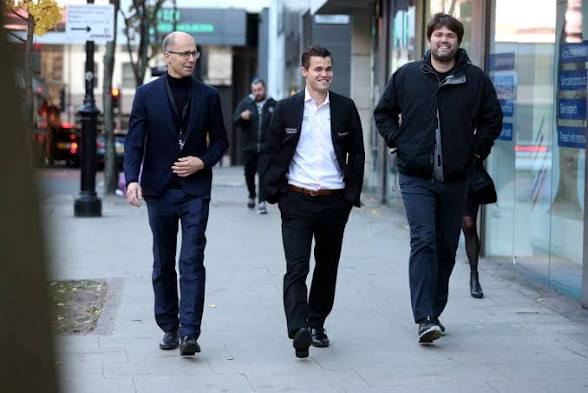
This is why every world championship contender now arrives with a team of three to five people. Magnus Carlsen works with multiple grandmasters and computer specialists. Ian Nepomniachtchi travels with his own group. Giri has his crew. These are not casual friendships. They are professional relationships built on expertise.
The preparation depth matters enormously. When two players reach an identical position on move 18, the one whose team has analyzed it deeper, found the hidden resources, tested the complications against Stockfish 16 at 50 depth, has an edge. Sometimes a large one. The match becomes a competition not just between two players but between two preparation machines.
Yet there is a cost to this infrastructure. Elite chess has become expensive. A player without resources cannot assemble a top-tier team. This creates a gap. A 2700-rated grandmaster with no budget prepares against a 2700-rated grandmaster with five assistants, and the match becomes unequal despite equal strength.
Some tournaments have tried to level this. The Candidates Tournament provides some support. But match play remains brutal. The player with better preparation wins more games. The player with better seconds adapts faster when something unexpected appears.
The old model of one brilliant second offering intuitive help is dead. The future belongs to the team with the most organized computers, the clearest thinking under pressure, and the deepest analysis before move one.