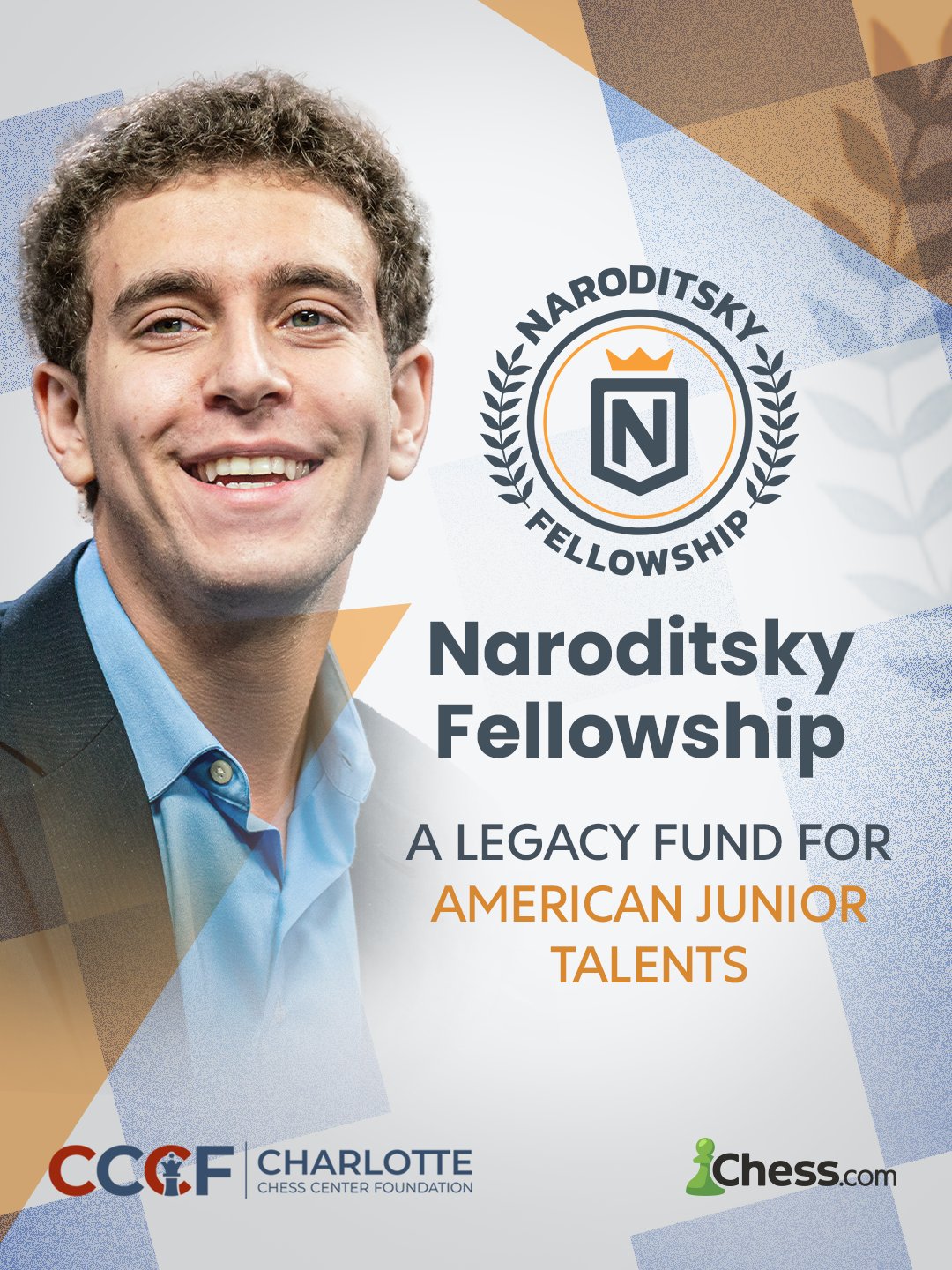
Daniel Naroditsky has just launched a fifty-thousand-dollar fellowship aimed squarely at America's best young chess talent. The deadline to apply is December 1, and the money goes toward training, travel, and tournament prep throughout 2027.
This matters because American junior development has long lacked the kind of sustained financial backing that produces world-class players. Naroditsky, a three-time U.S. champion and one of the strongest American grandmasters of his generation, isn't handing out charity. He's making a calculated bet that targeted support during the critical junior years separates the players who plateau at 2500 from those who reach 2700 and beyond.
The timing is deliberate. 2027 is when several American juniors hit peak competitive windows. The standard path to elite status requires constant tournament experience, coaching from top players, and the ability to travel to major events without financial stress. Many American families can't absorb those costs. A fifty-thousand-dollar boost removes that friction for one or two elite juniors per year.
The fellowship structure also signals something about Naroditsky's philosophy. He's not just throwing money at raw talent. The application process will reveal which juniors have the right mindset, training discipline, and long-term vision. Those who get selected will work directly with Naroditsky's network, which means access to the kind of practical guidance that money alone can't buy.
What happens next shapes American chess for the next decade. This fellowship could become a model that other successful grandmasters replicate. If Fabi Caruana, Wesley So, or Ray Robson launched similar programs, you'd see a genuine pipeline emerge. Right now, the U.S. relies heavily on private coaching relationships and parental resources. A coordinated system of fellowships changes that calculation.
The comparison point is obvious. Russia, China, and India have state-backed development systems. Europe has traditional chess federations with structured junior programs. America has money, yes, but it's scattered and reactive. Naroditsky's move is bottom-up and focused. He's not waiting for a federation reorganization. He's building the support system he wishes existed when he was fighting his way to the top.
Interested juniors should prepare solid applications highlighting tournament results, rating trajectory, and concrete goals for 2027. Naroditsky will almost certainly favor players already above 2400, with demonstrated work ethic and realistic aspirations toward the 2600-plus range. The fellowship rewards readiness, not just potential.