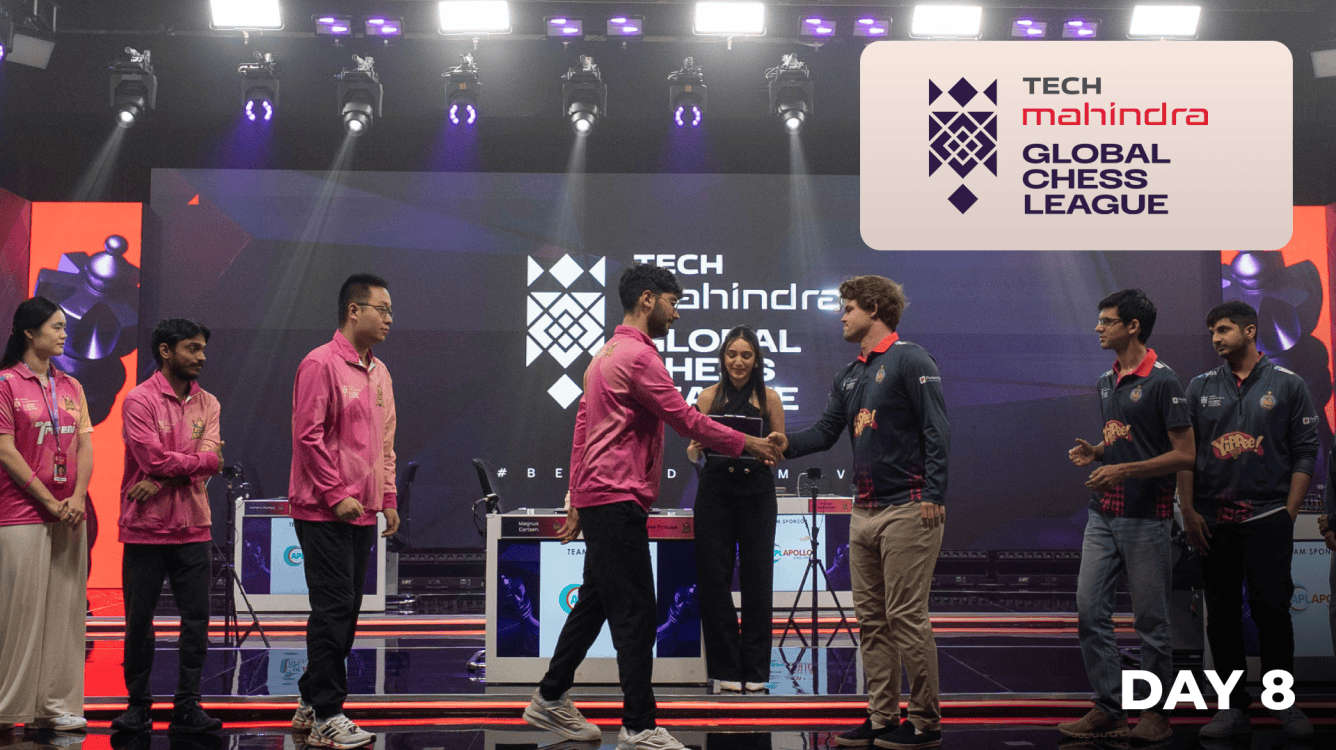
Magnus Carlsen and Ian Nepomniachtchi will square off for the Tech Mahindra Global Chess League title despite both captains watching their teams lose in the semifinals. This is the kind of twisted bracket logic that makes league formats either brilliant or baffling, depending on your tolerance for head-scratching seeding.
The Alpine APL Pipers and Ganges Grandmasters earned their spots through the regular season standings, not by winning their final matches. Both teams finished atop the league table before the playoffs compressed things down to a head-to-head final. The specifics of how losses in the semifinal round didn't disqualify either team point to a structure where cumulative performance over the full league mattered more than hot-hand momentum into the championship.
This matters because it fundamentally changes how we evaluate the two teams heading into the final. Carlsen and Nepomniachtchi aren't coming in with that classic playoff surge narrative. Neither skipper gets to say his roster peaked at exactly the right moment. Instead, they're the teams with the deepest benches and the most consistent point accumulation across the entire league calendar.
The matchup itself carries real weight for chess' team competition ecosystem. Tech Mahindra's Global Chess League represents one of the sport's attempts to build a franchise model around roster-based play. It lives in the space between traditional Olympiad representation and the newer franchise leagues that have multiplied across chess over the past decade. The business viability of these formats depends partly on star power and narrative arc. Having two of the world's elite captains in the final, even if their path was unconventional, keeps that star power intact.
Carlsen brings his usual heavyweight credentials. Nepomniachtchi carries the narrative of a former world championship challenger still at the sharp end of elite competition. The two have faced each other many times across classical, rapid, and blitz formats. Each knows the other's patterns. Neither should surprise the other tactically or strategically.
What remains unknown is squad composition. We don't have clarity yet on which players will anchor each roster for the final match. Carlsen's ability to construct a balanced lineup has been part of Alpine APL Pipers' regular-season success. Same for Nepomniachtchi with the Ganges Grandmasters. The championship match might be won or lost in how smartly each captain deploys their available firepower across the boards.
The final is scheduled to begin soon. In format terms, this appears to be one unified match rather than a home-and-away series, though those details weren't specified. What we know is certain: two strong teams with storied captains will determine who lifts the trophy. The road there was messy. The final itself should be clean chess.