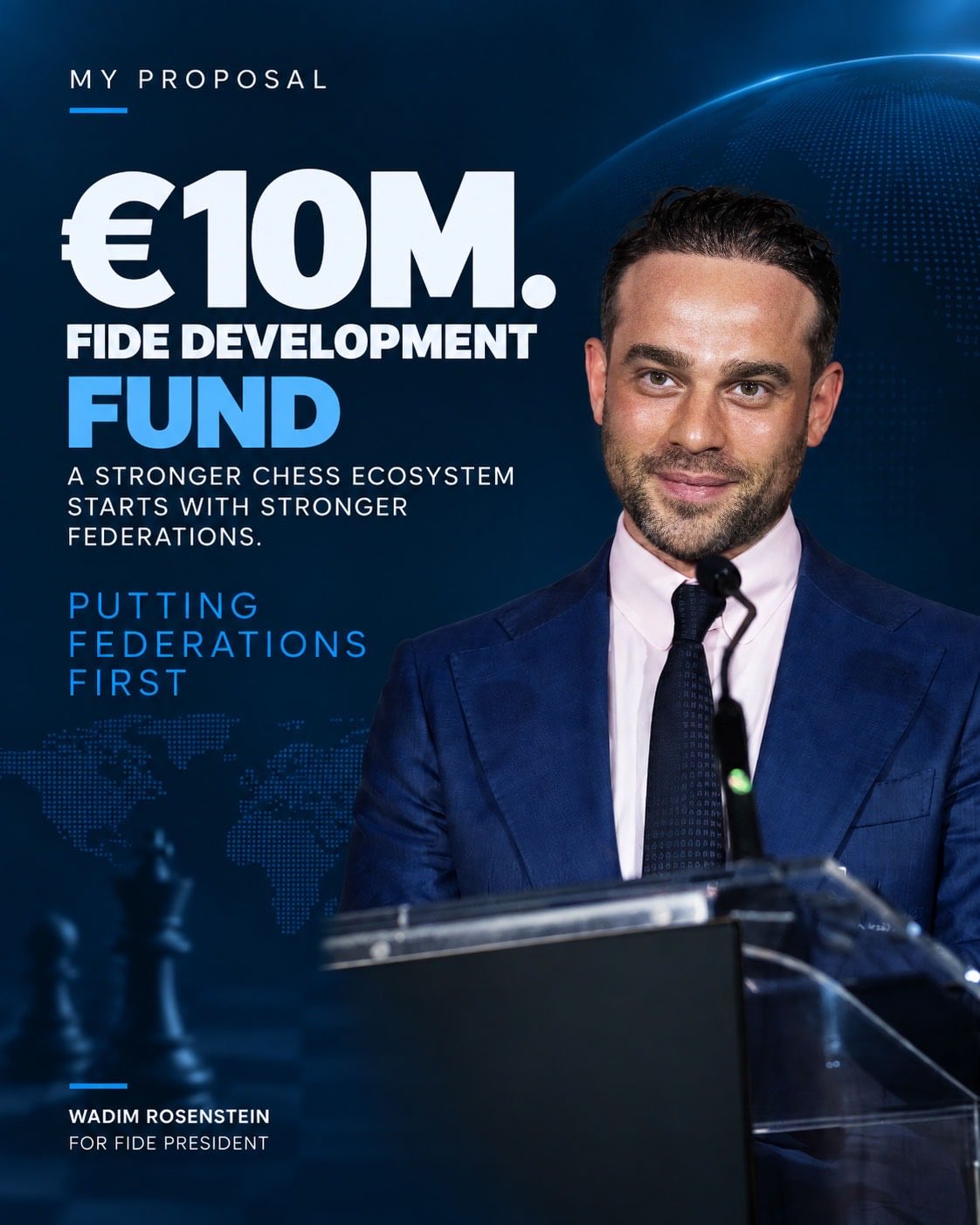
Rosenstein's €10 million federation plan arrives as a direct counter to Arkady Dvorkovich's FIDE presidency. The timing matters. By announcing during the Olympiad in Samarkand, Rosenstein signals he's not waiting for an election to start building political capital among the federation delegates who will actually vote for the next president.
Here's what Rosenstein and running mate Gordon Tang are proposing. €4.5 million goes directly to national federations across all continents. No strings attached language, just money for immediate operational needs. Another €3.5 million funds infrastructure modernization: IT systems, digitalization, federation services. The remaining allocation addresses unspecified priorities, though the letter doesn't detail how that gets distributed.
The federation funding angle matters because it works. National federation presidents control votes at FIDE congresses. They represent the chess playing masses in their countries. Dvorkovich's administration has faced criticism for neglecting smaller federations while concentrating resources on elite tournaments and rating systems. A candidate who promises direct cash flow to federations wins delegates fast.
Rosenstein's background as a German businessman gives this pledge credibility. He has the means to fund it. That's different from political promises that evaporate after election day. His running mate Gordon Tang brings Asian federation connections, broadening the ticket's geographic reach beyond Europe.
The digitalization emphasis reveals Rosenstein's thinking about FIDE's future. Federations across Africa, parts of South America, and Central Asia operate with outdated systems. Modern IT infrastructure lets them organize online tournaments, track player ratings efficiently, and manage membership databases. These aren't sexy improvements, but they transform how federations operate at ground level.
Dvorkovich has roughly four months until the next FIDE election. He'll need to respond with his own federation support strategy or risk losing votes he previously considered locked in. The Olympiad itself becomes a campaign trail now. Every federation president attending Samarkand will hear about Rosenstein's plan multiple times before leaving.
This race just became about concrete resource commitments, not vision statements. Federations want money. Rosenstein is offering it. That changes the dynamics significantly for any challenger trying to unseat an incumbent president. Dvorkovich's record on elite events counts for less when a candidate promises to fund your entire national program.