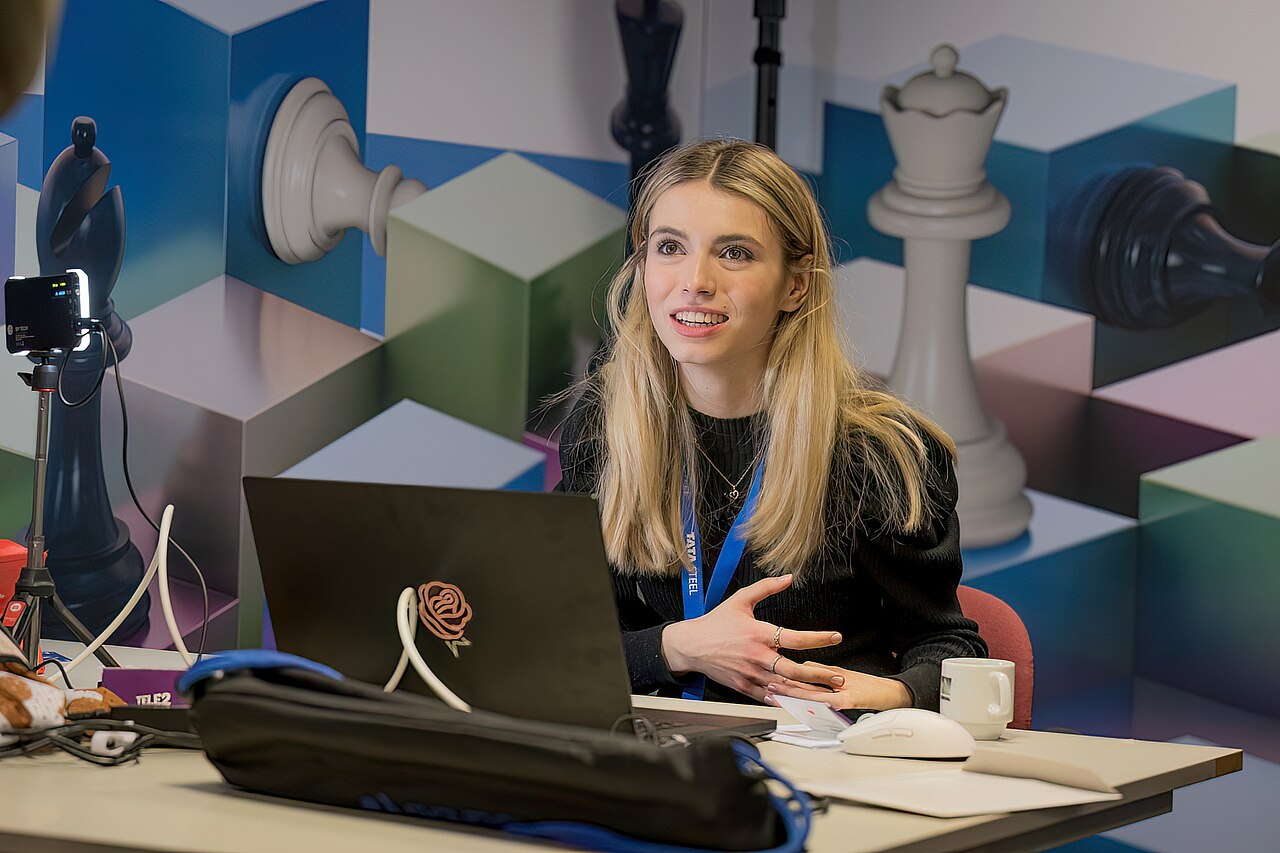
Pia Cramling has turned Olympiad chess into a family sport. At the Women's Olympiad in Samarkand, Sweden fielded a three-person operation that reads like a dynasty: Pia herself on board one, her daughter Anna Cramling at board four, and her husband Juan Manuel Bellón López handling captain duties.
This is not a gimmick. This is their fourth Olympiad running the same lineup.
What makes this noteworthy goes beyond the warm family story. Pia Cramling is a veteran of Olympiad chess who has been competing at the highest level for decades. Her presence on board one for Sweden signals that at an age when most elite players retire, she remains competitive enough to anchor a national team. That matters. Board one positions are earned, not given.
Anna's inclusion at board four shows a genuine two-generation talent pipeline. Women's chess in Sweden has a continuity few federations can claim. You do not keep bringing the same family unit back to four consecutive Olympiads unless the results justify it. Bad teams do not repeat their core rosters.
The captain role for Bellón López, a Grandmaster in his own right, creates another layer. He brings both playing strength and decision-making authority. His position allows the team to function as a coherent unit rather than four individual boards sending signals in different directions. That structural advantage matters in team competition, where psychology and coordination separate winners from middle-of-the-pack finishers.
Olympiad chess typically exposes deep rifts in national federations. Federations rotate players, clash over selections, and fragment over resources. Sweden's continuity with this family unit suggests they have found something that works. Pia plays. Anna plays. Juan Manuel guides. Repeat.
The other noteworthy angle: this arrangement challenges the common narrative that chess is a young person's game. Pia Cramling competing at Olympiad level after 44 years of participation proves that elite female players can have durable, long careers at the highest rungs. She is not a curiosity playing down at a lower level. She is board one. The team trusts her there.
Sweden's women's team structure in Samarkand stands apart precisely because it refuses to be fashionable or temporary. Family chess teams work when the talent is real and the commitment is genuine. Sweden has both.