# One Blunder Reignites the Olympiad Gatekeeping Question
An unrated American player's catastrophic blunder against a 1449-rated opponent from Cote d'Ivoire has torn open chess's oldest institutional wound: whether the Olympiad should remain truly open, or whether there's a case for minimum playing strength requirements.
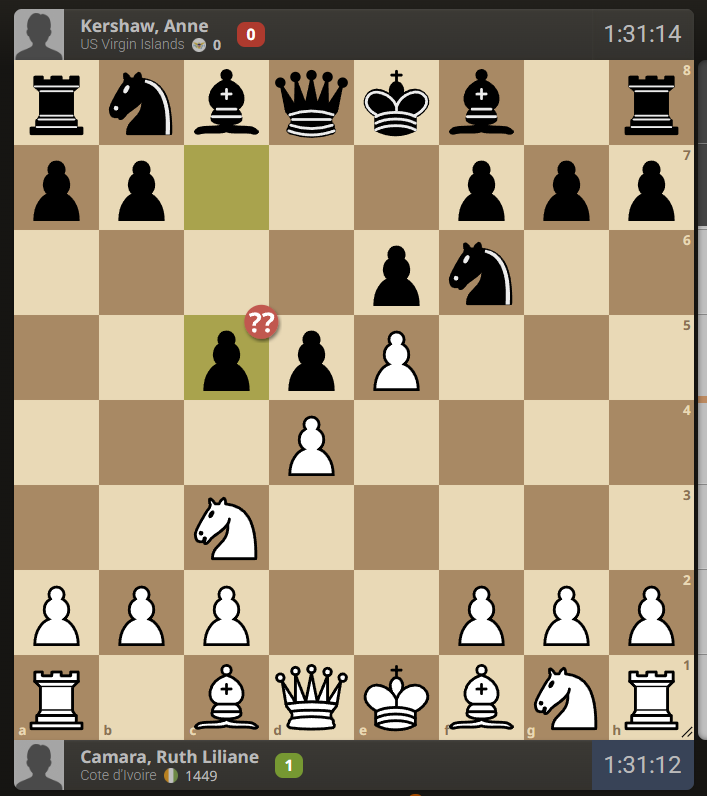
Chess content creator Chessentials posted the viral position on September 17. Anne Kershaw of the US Virgin Islands, unrated, faced Ruth Liliane Camara (1449) in what looked like a routine middlegame. Then Kershaw moved into a position so obviously losing that it forced the internet to ask: what is someone of this level doing at the sport's most democratic, most inclusive competition?
The Olympiad's openness is not accidental. FIDE designed the tournament to welcome every federation, regardless of chess infrastructure or player strength. This accessibility matters. It means countries without deep chess traditions still get a seat at the global table. It means a federation in the Caribbean can send a team without fielding grandmasters. That principle has stood for decades.
But that principle collides with something else: credibility. When a position becomes this obviously blundered, it doesn't just hurt the player or her federation's rating. It invites mockery. Chessentials' post blew up because the gap between the position's demands and Kershaw's play was so wide that casual observers started asking whether this was even the same game chess players know.
This is the recurring debate. On one side: the Olympiad exists to promote the game globally, to give weaker chess nations genuine participation in the world's most prestigious team event. Accessibility builds the game. On the other side: there's a baseline below which the tournament stops representing competitive chess and starts resembling participation trophy logic.
The rating floor argument has teeth. If FIDE implemented something like a 1600 minimum (or a federation could field one 1400-rated player if necessary), Kershaw wouldn't have played. The tournament would lose some teams, yes. But it would also stop generating these moments where casual chess fans see something that looks less like sport and more like exhibition.
The counterargument is harder to defend publicly but real: once you set a minimum, you've made the Olympiad exclusive. You've told federations that their players aren't good enough. You've created incentive to not develop chess in weaker countries, since they'll never clear the threshold anyway.
Kershaw's loss didn't change the Olympiad's outcome. But it changed the conversation. Next time this debate surfaces, there's now a fresh example, a clean position, a video that proves the case. FIDE has sidestepped this question for years. The viral blunder suggests the organization can't avoid it much longer.