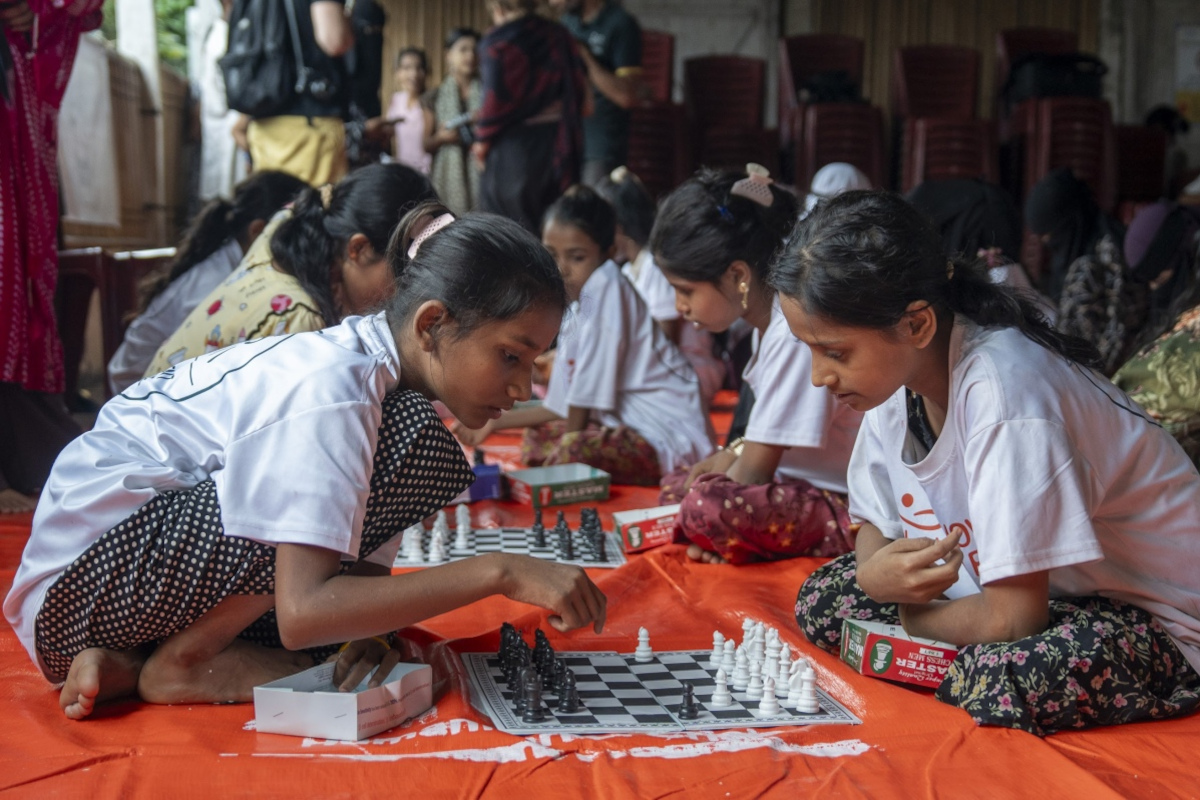
A charity backed by FIDE is pushing to bring chess to 5,000 refugee children in Cox's Bazar, Bangladesh, using the game as a tool for education and psychological resilience in one of the world's largest refugee camps.
Movement in Refuge launched its initial chess programme for Rohingya children in August with FIDE support. The results convinced founder Magnus Wolfe-Murray that the model works. Now he wants to scale it dramatically. The organization is raising $100,000 to reach 5,000 more children over the next two years.
The Rohingya crisis created a staggering humanitarian need. More than 900,000 Rohingya live in refugee camps in Cox's Bazar after fleeing Myanmar. Most are children. Most have experienced trauma. They lack stable schooling and structured activities. Chess fills both gaps.
Chess does specific work in refugee settings that other programmes struggle to accomplish. It demands focus and patience. It teaches planning ahead and consequences. It builds problem-solving skills. It creates structured peer interaction in an environment where children have little control over their lives. The game also works without translation barriers, which matters when you're teaching in camps where languages shift and literacy varies widely.
Wolfe-Murray is not content with local impact alone. He plans to present the initiative at the Chess Olympiad in Samarkand later this year, using the event's global platform to recruit donors and draw attention to chess as a refugee support tool. He also aims to develop a longer-term vision: forming a refugee youth chess team that could compete internationally.
That's an ambitious goal, but not unprecedented. Chess organizations have successfully recruited and trained players from displaced populations before. What matters is sustainable funding and proper coaching infrastructure. The $100,000 target covers both training staff and materials for two years of expansion.
The programme also aligns with FIDE's broader mission to grow chess globally and use the game for social good. FIDE's backing lends credibility and access to networks that Wolfe-Murray needs to hit his fundraising target.
A few practical questions remain unanswered. How will the programme ensure continuity as children age out or move from the camps? How will coaches be trained and retained in a region with limited chess infrastructure? What happens if funding stalls after two years? Charities in refugee settings face brutal logistics and unpredictable donor fatigue.
But the early results in August matter more than these uncertainties right now. Something is working. Children are learning. They're thinking differently about problems. They have something meaningful to do.
The Chess Olympiad announcement will be a critical moment. Wolfe-Murray needs to convince the global chess community that this isn't a feel-good vanity project but a replicable model with real outcomes. If he succeeds, other camps in other countries might adopt similar programmes. The game becomes a portable skill, a way to help traumatized children rebuild agency and hope.
That's the ambition here. Scale matters, but story matters more. A refugee child who learns chess in Cox's Bazar may never become a grandmaster. But she gains a tool for thinking clearly under pressure. In a refugee camp, that changes everything.