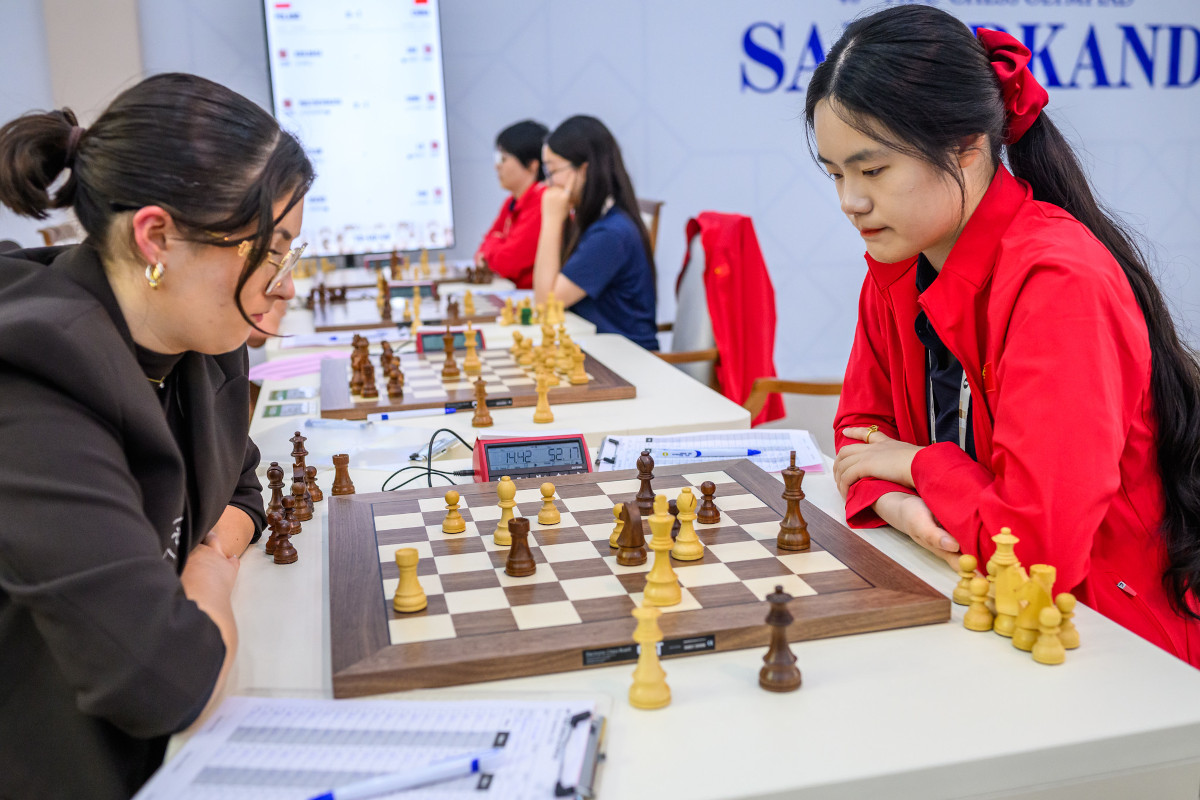
China and Kazakhstan are steamrolling through the Women's Chess Olympiad in Samarkand. After six rounds, both nations remain undefeated with perfect 12-0 match records heading into the rest day. This is not a fluke. This is dominance.
Kazakhstan edged Azerbaijan 3-1 in round six to stay perfect. China, meanwhile, crushed Poland 3½-½ in the same round. Poland's loss stings because the Polish team had just upset defending champions India in round five, a result that seemed to inject some chaos into the tournament. China absorbed that lesson and showed no mercy to their next opponent.
The rest day comes at the right time for the field. China and Kazakhstan have set a pace that nobody else can currently match. The margin between first and the rest is already significant. After six of fourteen rounds, the leaders have played three full match cycles. They have not dropped a single point.
India's response to their round five loss was swift and decisive. They beat the United States 3-1 in round six, recovering some ground but still trailing the leaders by two match points. A match point in Olympiad scoring represents a full team victory. India, the defending world champion team, cannot afford to slip further behind.
Georgia, the second seeds, also claimed a convincing victory over Uzbekistan and moved into the chasing group. The Georgian roster has the firepower to stay in contention, but they face the same problem as India. They are chasing two teams that have not stumbled once.
The structure of the Olympiad format means that China and Kazakhstan will eventually face each other. That match has become the tournament's pivot point. The winner of that encounter will hold the initiative. The loser will need a flawless run thereafter to have realistic medal hopes.
What makes China's performance particularly notable is the consistent depth of their performance across all four boards. Individual brilliance matters in team competition, but reliability matters more. Zhu Jiner's presence on the Chinese roster adds star power, but the real story is that China has not let any board become a liability. This team approach stands in contrast to some other squads that rely on one or two standout performers to carry the load.
Kazakhstan has built their perfect record on a similar principle. Neither team has a weak link. Both squads have prepared thoroughly and executed with discipline. They play fast chess with few errors. In a competition where the margin between winning and drawing can determine medal positions, error minimization separates the elite teams from the rest.
Poland's upset over India in round five showed that the top teams are beatable. But Poland then faced China immediately after and learned that toppling one champion does not grant immunity from another. That loss will be instructive for the Polish team. Olympiads reward consistency. One good result counts for almost nothing if you cannot repeat it.
The tournament structure gives the leaders an advantage. They play each other late. They face weaker teams early and build momentum. By the time they encounter serious opposition, they have already accumulated a buffer. Both China and Kazakhstan understood this dynamic and capitalized on it.
The second half of the Olympiad will determine whether either China or Kazakhstan can maintain their perfection through all fourteen rounds. History suggests that perfection over fourteen rounds is exceptionally rare in team competition. The margin for error shrinks as the tournament progresses. Fatigue sets in. Opponents prepare more intensively for matches against the leaders.
But for now, heading into the rest day, the chess world must acknowledge what is happening in Samarkand. Two teams have separated themselves decisively from the field. Everyone else is playing for silver.