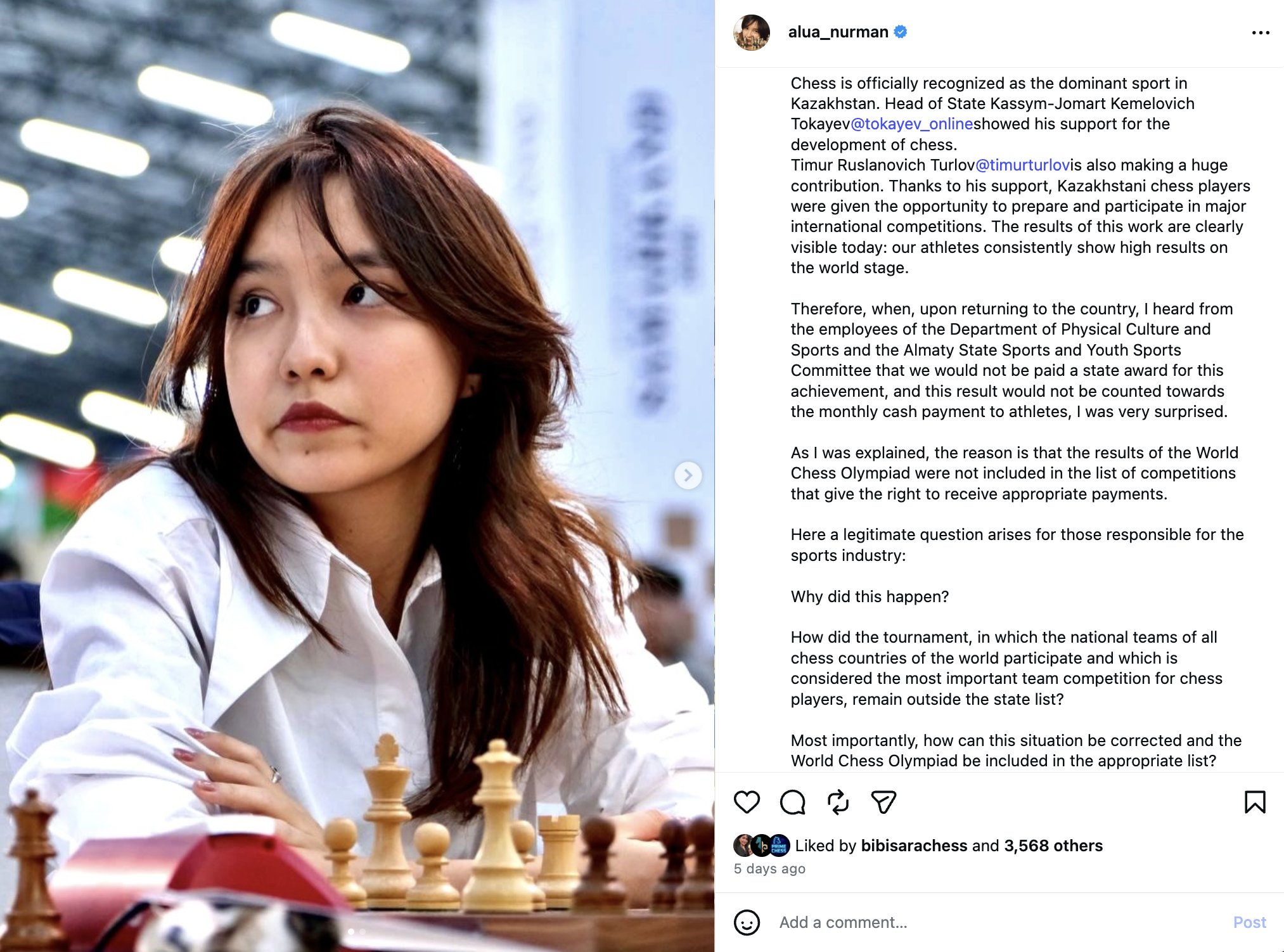
Alua Nurman Just Exposed A Glaring Hole In Kazakhstan's Chess Policy.
The Kazakh player returned from the Chess Olympiad expecting state recognition. Instead, she discovered her result counted for nothing in her country's official athlete reward system. No award. No monthly stipend. Nothing.
Nurman posted about it on Instagram after learning the bitter truth. The explanation from officials was blunt: the Chess Olympiad simply doesn't appear on Kazakhstan's list of qualifying international competitions for state benefits.
This matters because Kazakhstan has produced serious chess talent. The country has a functioning support structure for athletes. But the rules governing which tournaments earn rewards are apparently frozen in time. The Chess Olympiad, held every two years, ranks among the most prestigious events in the sport. National teams compete. Medals are awarded. Yet Kazakhstan's bureaucracy treats it like a regional qualifier.
The absurdity cuts deeper when you consider how other countries handle this. Top chess nations offer prize money, state sponsorship, and tax breaks for Olympiad results. Some provide housing and training grants. Kazakhstan has a system in place for athletic achievement. It just forgot to include chess's flagship event.
Nurman didn't demand anything unreasonable. She simply asked why chess's world championship format doesn't qualify for the same consideration as other international sports. The question exposes lazy policymaking. Someone drew up a list years ago, checked some boxes, and nobody bothered to update it as chess's profile rose globally.
This isn't unique to Kazakhstan. Many federations struggle with the gap between traditional sports and chess funding. But Kazakhstan actually has the infrastructure to solve it quickly. The government recognizes chess culturally. Nurman's post forces a conversation that officials probably wanted to avoid.
The practical impact is real. Young players considering careers in chess face uncertainty about financial stability. International success doesn't translate into the safety net that basketball or swimming offers. It's a recruitment problem disguised as paperwork.
Nurman's transparency on Instagram puts pressure on the right people. Officials now have a public record of this complaint. Fixing it would require minimal effort. A committee review. An amendment to the qualifying events list. Maybe one decision in one meeting.
The Chess Federation of Kazakhstan should escalate this immediately. The government should respond. Because right now, excelling at the world's most prestigious chess competition counts as professional success that the state won't acknowledge. That's not a sustainable way to build a chess nation.