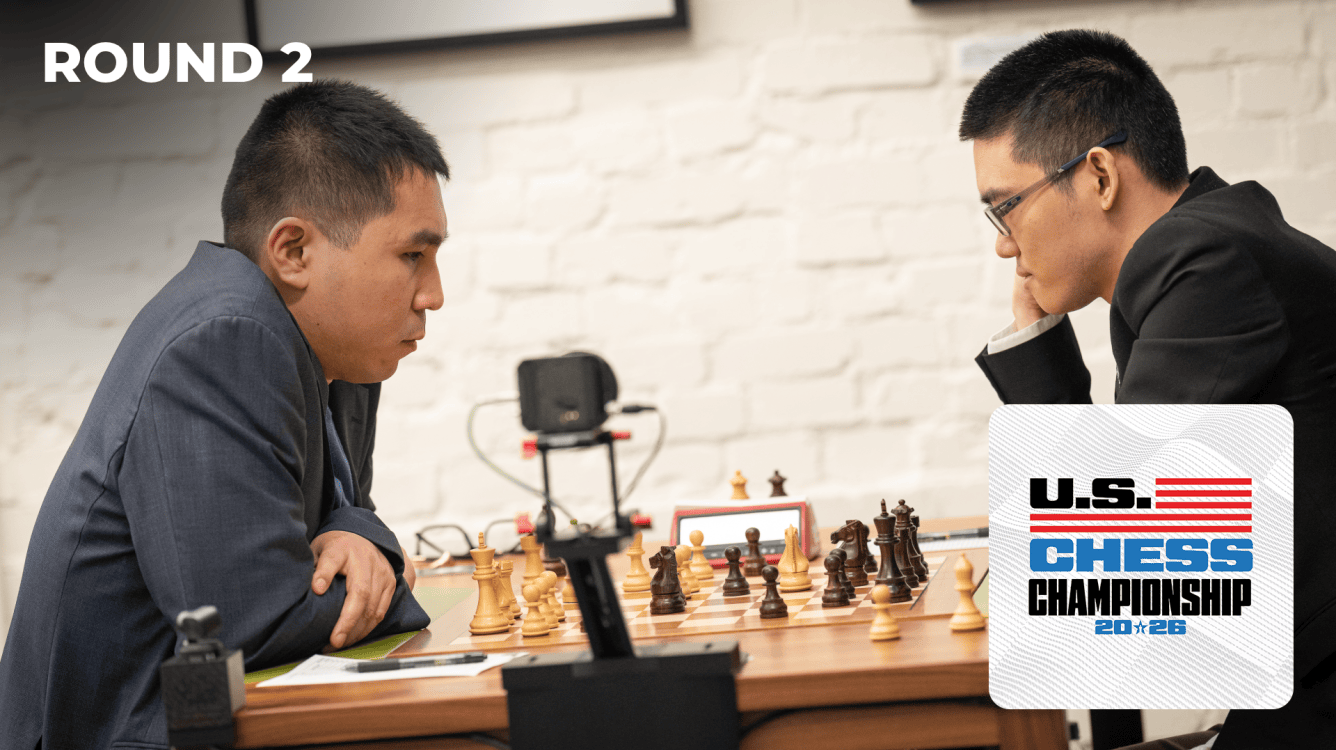
Wesley So narrowly escaped a disaster on round two's crucial battlefield. Facing Jeffery Xiong, So found himself in a position that would have crushed most players. He survived it anyway. That survival matters because the U.S. Championship's open section needed clarity after round one's three-way tie at the top. So's escape from Xiong's attack meant the leaders stayed bunched, but now only two players hold the outright advantage instead of three.
Awonder Liang provided that other victory at the summit. He dismantled Samuel Sevian in a performance that announced Liang as a genuine threat in this tournament. The young player has spent the last few years climbing the rating ladder, and performances like this one justify the attention.
Fabiano Caruana finally cracked the win column in round two. After a round one that kept him scoreless, Caruana needed a result badly. He found one. Now he trails the leaders by just half a point, which means the tournament remains wide open heading into round three. The defending champion's presence within striking distance changes the tournament's complexion entirely.
The women's section threw an unexpected curveball. Megan Paragua and Thalia Cervantes, the two lowest-rated players in the field, now lead outright at 2/2. That's not a story about an upset in the traditional sense. Paragua beat defending champion Carissa Yip, which is the real shocker. Yip entered as the favorite and the woman to beat. Instead, she lost to someone rated significantly below her. Cervantes ran up a matching score through her own play.
What matters here goes deeper than the raw standings. The U.S. Championship rarely produces wide-open tournaments at this stage. Usually by round two, an elite favorite has separated themselves through superior preparation and execution. Instead, the field is compressed. No one in either section has run away. Wesley So hasn't dominated as his rating might suggest. Caruana came in cold. Liang showed up and delivered, but one round doesn't define a tournament.
The women's section looks even more chaotic. If two of the lowest-rated players can take control after two rounds, rating gaps matter less than form does this year. Paragua's win over Yip suggests that classical chess at the championship level still rewards concrete preparation and good nerves over ratings points.
Saint Louis will see significant movement in round three. The leaders face pressure. The contenders smell opportunity. By Tuesday's round conclusion, the tournament's true favorites will likely separate themselves. But right now, nobody controls the narrative.