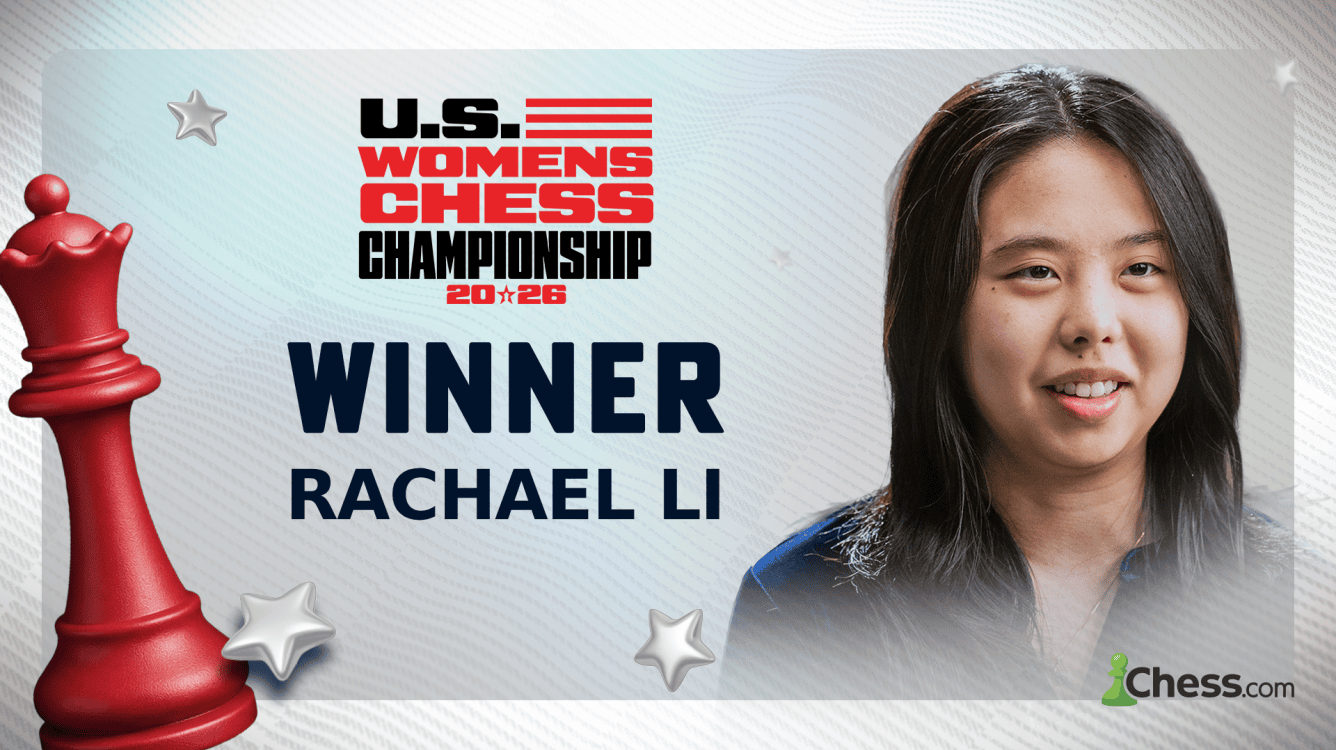
Rachael Li claimed the U.S. Women's Championship at 16 years old, becoming one of the youngest winners in the event's history. She drew Anna Zatonskih in round 11 to secure the title outright. Li's victory marks a stunning breakthrough for a player who entered the championship as a rising talent rather than a favorite. At an age when most junior players are still years away from serious title contention, Li finished the job decisively.
The men's title, meanwhile, remains unsettled. Wesley So entered round 11 needing only a draw to win his fourth championship. He had built a full-point lead and faced no obvious threats. Then Sam Sevian, who arrived at the final round in last place with just 2.5 points from ten games, dismantled him.
Sevian played a near-perfect game in a Nimzo-Indian, outplaying So systematically through the middlegame and into a heavy-piece endgame. The American converted his advantage into a winning rook and pawn position. So's collapse gifted the title race to Fabiano Caruana, who beat Awonder Liang to join So at 7/11.
The loss stings because So had done the hard work already. Leading by a full point with one round left in a field of America's elite players should be enough. It wasn't. Sevian's performance was the kind of upset that changes tournament narratives. Coming from dead last to eliminate the frontrunner requires not just tactical brilliance but psychological strength. Sevian delivered both.
Caruana's required win feels less dramatic in hindsight. He played solid chess against Liang, converted his position into victory, and suddenly found himself still alive in the championship race. That's how tournaments work sometimes. One player collapses. Another capitalizes. Now both men get a second chance.
The playoff happens today in Saint Louis, a fresh 25-minute rapid game that erases the accumulated pressure of eleven classical rounds. So enters as the player who should have won but didn't. Caruana enters as the player who refused to die. In rapid chess, mental momentum matters. So's confidence took a hit. Caruana's rose on the final move against Liang.
Li's performance carries less drama but more historical weight. She won outright, no tiebreaks, no second chances needed. She played well enough to finish first. That's the cleanest path to a championship, and at 16, Li proved she belongs with the women's elite immediately.