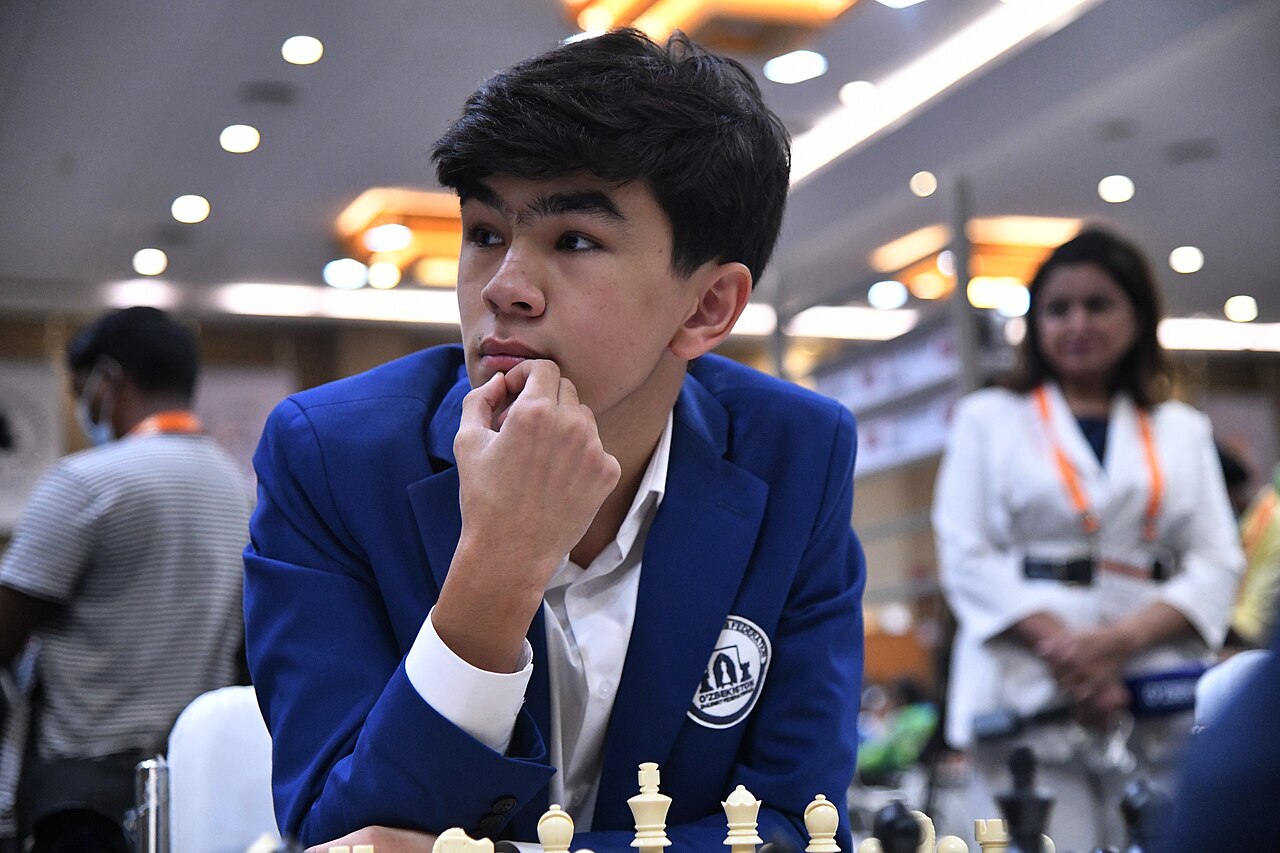
Javokhir Sindarov walked into his World Championship match against Gukesh Dommaraju knowing he might never get here again.
The 20-year-old Uzbek challenger was blunt about it in late August, weeks before the two players squared off for the title. He told The New Indian Express that this could be his only realistic opportunity to play for the crown. Not in the way young players casually hedge their bets. He meant it.
Sindarov framed the upcoming 14-game classical match as the hardest test of his life. Three weeks locked in with one opponent, no room to escape, no tournaments to bounce between and reset. The format itself terrified him. He understood the mathematics. One player cracks. One player blinks. Over that many games, the margin between champion and challenger shrinks to milliseconds of clarity and moments of doubt.
The timing of his candor matters. This was August, post-Olympiad, when the competitive calendar offers clarity. Sindarov had clawed his way into position. He had done the work. Now came the reckoning.
What made his assessment so striking was the realism, not pessimism. He did not claim he would shock the world or that Gukesh had nothing he could not handle. Instead, Sindarov acknowledged a hard truth: challengers do not spawn endlessly. You get your shot. The window closes. Career trajectories splinter based on these matches.
Gukesh, at 18, was already the youngest World Chess Champion in history when Sindarov faced him. The Indian prodigy had moved impossibly fast through the ranking list, skipping conventional milestones. Sindarov, four years older, had taken the classical route. He was experienced, sharp, capable. But experience alone does not beat perfect preparation and generational talent.
The pressure was asymmetrical. Gukesh defended a title he had already won. Sindarov chased a crown he might never hold. That gap, Sindarov understood, was not small.
Challenging for the World Championship requires a specific alignment of rating, qualification results, and opportunity. Not every strong grandmaster gets called. Many never do. Sindarov had made it. He knew the statistics on second chances. They were not encouraging.
So he walked in with his eyes open, without illusions, but also without surrender. He had trained for this. He had earned this. Whether the match vindicated his belief or confirmed his fears, Sindarov had already demonstrated something rare: clarity about what he was fighting for.