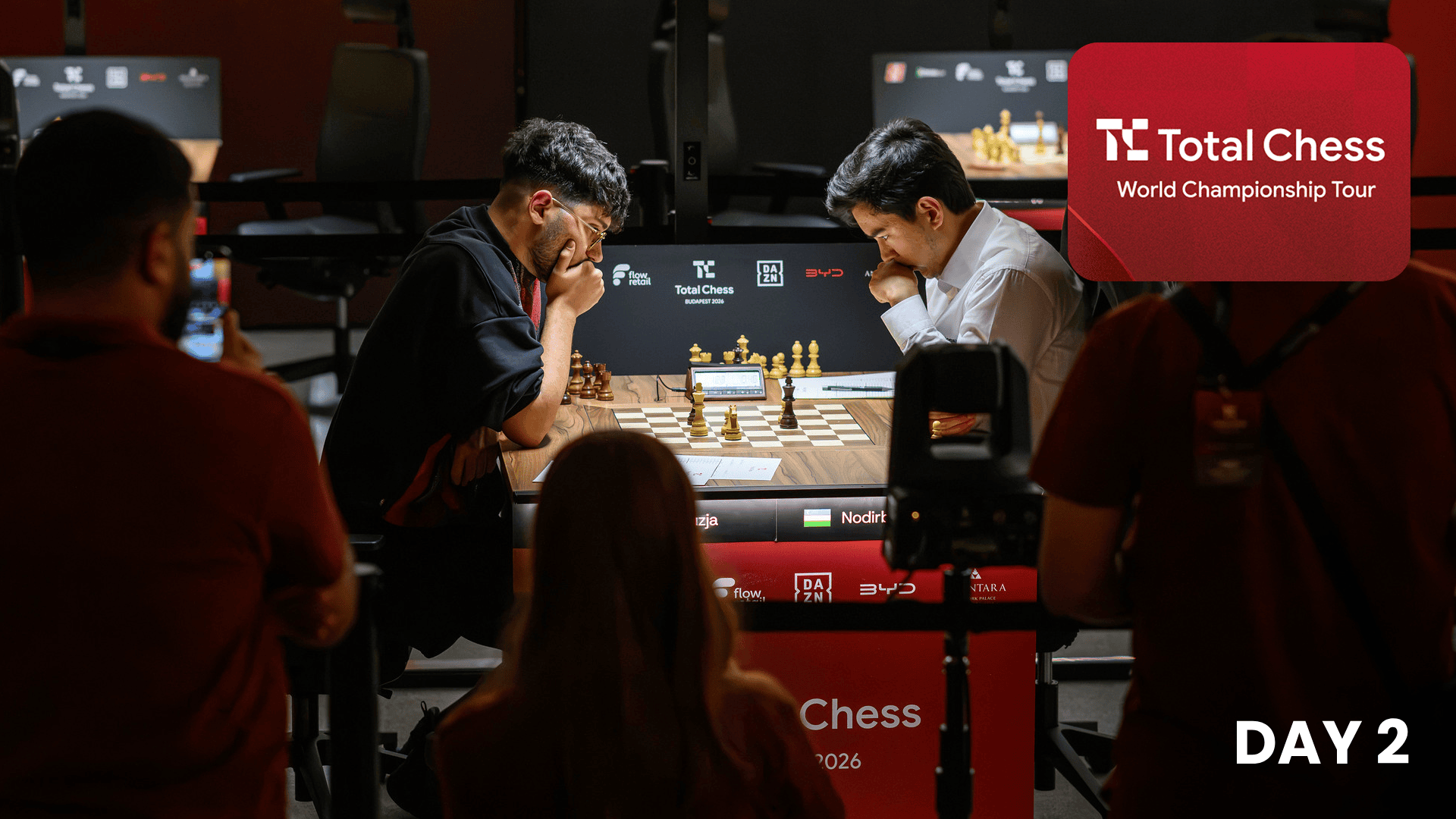
# Van Foreest and Martirosyan Bounce Back as World Championship Tour Pilot Begins in Chaos
Jorden van Foreest recovered from a round-one loss to dismantle Levon Aronian in the second round of the Total Chess World Championship Tour Pilot 2026 Group Stage. Haik Martirosyan did the same, turning the tables on Shakhriyar Mamedyarov after an opening setback. The pattern told the early story: no one arrived at this event bulletproof.
The World Championship Tour Pilot format itself remains a work in progress for chess. FIDE designed this structure to create a cleaner path to Candidates matches, cutting through the usual bureaucratic weeds that plague qualification cycles. The fast chess component adds another wrinkle. Blitz and rapid chess don't replace classical strength, but they test something else entirely: resilience under pressure and the ability to adjust when preparation breaks down.
Van Foreest's loss to his first opponent stung. He's a player who expects to win. At 26, the Dutch grandmaster has already proven his classical credentials at the highest level. Losing game one felt like a false start. Against Aronian in round two, Van Foreest showed the steel that makes him dangerous. He didn't just recover. He dismantled a former World Championship candidate.
Martirosyan's path echoed Van Foreest's arc. The Armenian GM came into the event as one of the Tour's qualifying players. Losing the first match against someone ranked below him would have meant real damage to his seeding and confidence. Instead, he responded by beating Mamedyarov, a player whose classical rating sits far higher. In fast chess, that gap narrows. Experience matters more than rating points. Mamedyarov plays a lot, but Martirosyan showed he could match the pace.
The real question emerging from the Group Stage opening rounds involves the field's depth. Names like Alireza Firouzja, Fabiano Caruana, and Jan-Krzysztof Duda are in this tournament. These aren't fringe players waiting for their moment. They're established top-20 performers. If Van Foreest and Martirosyan can beat Aronian and Mamedyarov in fast chess, what does that tell us about the classical players here struggling in a format that requires instant decisions?
It suggests the tournament might not follow traditional rating expectations. Fast chess introduces variance. A player who stumbles in round one doesn't stay down if he reads positions well under time pressure. Van Foreest proved that in his second match. Martirosyan did the same. Both men understood that the tournament had seven rounds ahead of them. One loss meant nothing.
Aronian's loss stands out because he's typically excellent in rapid and blitz settings. He enjoys fast chess. He plays with creativity and without fear. Yet Van Foreest found a way to crack him. That speaks to preparation meeting practice on the board. Van Foreest likely studied Aronian's recent games, identified patterns, and exploited them. In classical chess, that's table stakes. In fast chess, it's the difference between advancing and dropping points.
Mamedyarov's loss to Martirosyan carries similar weight. Mamedyarov is a fighter. He doesn't concede positions. Against Martirosyan, something broke. Either Martirosyan played with superior accuracy under time pressure, or Mamedyarov miscalculated. Fast chess doesn't record the thinking process. We see results.
The Group Stage format itself creates urgency. Every player knows the points they drop now affect their seeding in later stages. Van Foreest and Martirosyan understood this viscerally after their opening losses. They responded like professionals who've been through wars. They played to win, not to draw out safe results.
The next rounds will tell us whether this bounce-back pattern continues or whether the field stabilizes. Some players will build momentum from round two victories. Others will hit reality in round three. The World Championship Tour Pilot exists to find the strongest challenger for the established elite. So far, it's proving that strength in classical chess doesn't automatically translate to strength in fast classical and blitz formats. That discovery alone makes these early rounds worth watching closely.