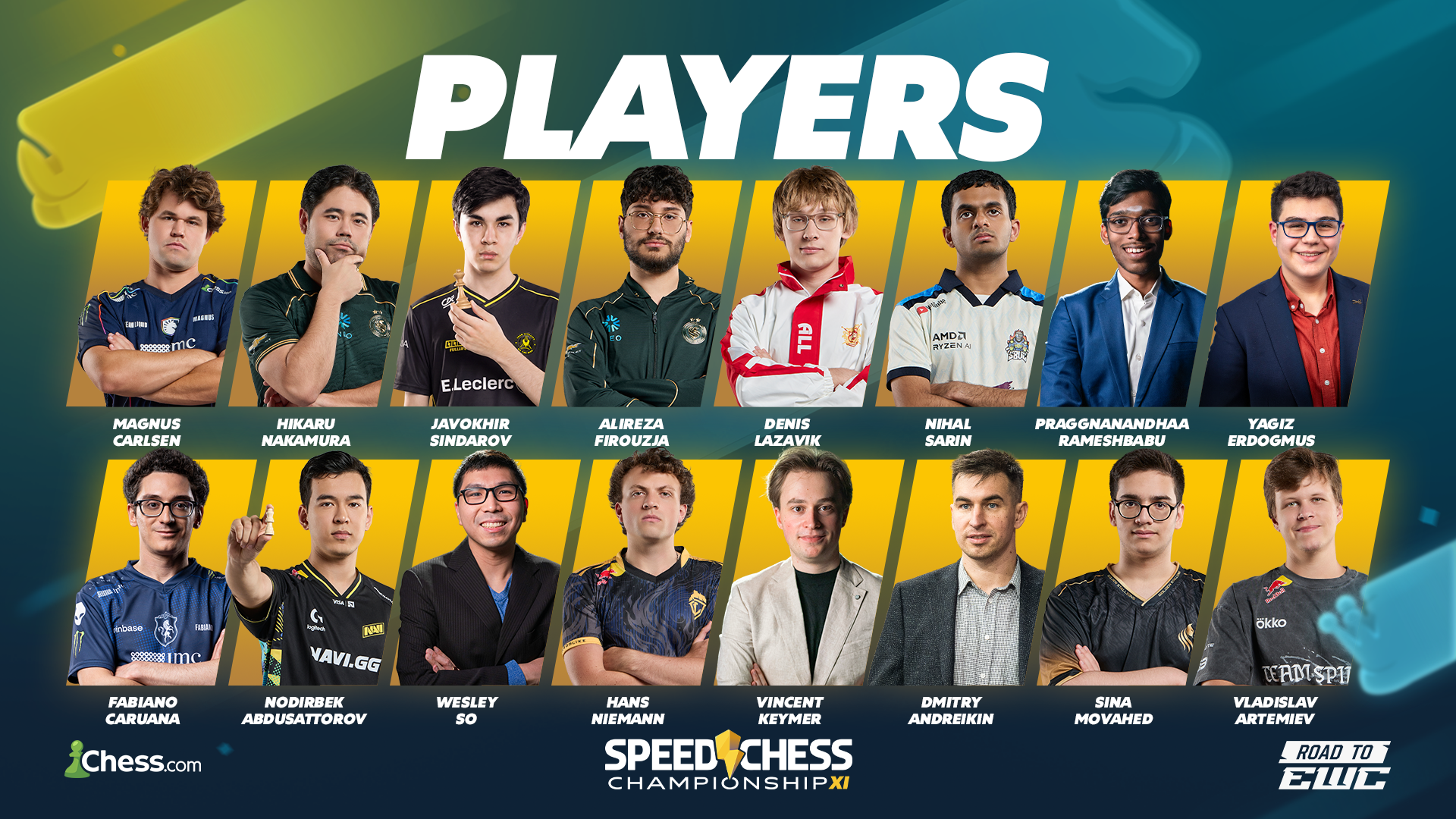
# Speed Chess XI: The Blitz Gauntlet Where Carlsen Faces Real Competition
Speed Chess Championship XI arrives with a sharper field than ever before. This isn't just another online blitz tournament. The $250,000 prize pool and CCT standings points mean players will treat this seriously. The format demands precision at bullet and blitz time controls where one miscalculation ends your night.
Sixteen players. Four matches each in a round-robin structure. The math is brutal. One bad match ruins your entire event. Speed chess punishes passive play. It rewards killer instinct, preparation, and the ability to stay composed when you have thirty seconds to find checkmate.
Magnus Carlsen arrives as the favorite, as he always does. His bullet skills remain elite even as he ages out of his peak years. But Speed Chess has become a tournament where specialist blitz players punish classical GMs who rest on their laurels. Carlsen won't coast. He can't.
Hikaru Nakamura represents the American contingent and poses real problems for anyone who faces him. His aggression in rapid and blitz is unmatched. He plays for the win from move one. In a tournament where draws are possible but meaningless in the final standings, Nakamura's mentality becomes an asset. He converted that edge into wins at the previous edition.
Giri brings technical excellence and endgame precision to rapid games. Hans Niemann has the ability to generate practical complications that rattle opponents. Duda plays with razor-sharp preparation in the opening. Caruana's classical strength often translates to speed formats.
The Eastern presence matters here. Firouzja, despite his recent struggles in classical chess, remains dangerous at blitz. Praggnanandhaa has the speed and the confidence. Ding Liren, despite his world championship match loss, plays speed chess at the elite level.
Round 1 matchups will tell us everything. Carlsen versus a specialist blitz player early could expose whether his reflexes are still sharp enough. If Nakamura draws two games against a defensive opponent, he immediately needs offense in his remaining matches. These aren't ten-game matches where you can recover from an opening blunder. These are sprint events.
The prize distribution matters too. The player who wins all four matches doesn't just pocket the biggest check. They prove they belong in the same conversation as the top classical players when reflexes matter more than calculation. That's rare. Most 2700+ players struggle to maintain their rating advantage when time collapses.
Speed chess has evolved. Players now study blitz openings the way they study classical ones. The positions aren't random. The knowledge required to play at the top level in this format has deepened dramatically. That means Carlsen's classical preparation advantage shrinks. Everyone brings serious weaponry.
The CCT standings points push these players toward aggression too. A win moves the needle toward the 2027 Esports World Championship qualification. A loss sets you back. That shifts the risk-reward calculus. Players will take chances they might avoid in a regular tournament.
Weather matters less online. Travel doesn't. These sixteen players sit in their own time zones and battle. No excuses about jet lag or noise. That eliminates variables. What remains is pure chess instinct.
Nakamura will tell you he's hunting Carlsen. Giri will approach the tournament methodically. Firouzja has little to lose. Praggnanandhaa will play with the confidence of someone who's beaten the world's best in speed formats.
The opening round begins soon. Within hours, we'll know who panicked under pressure and who thrived. That's the beauty and brutality of speed chess. The result arrives immediately. The pattern emerges fast. By the time half these matches conclude, we'll know if this is Carlsen's tournament or if the specialists have finally built enough depth to challenge him.
Speed Chess XI doesn't have room for inconsistency. It punishes mistakes and rewards precision. That's what makes it matter.