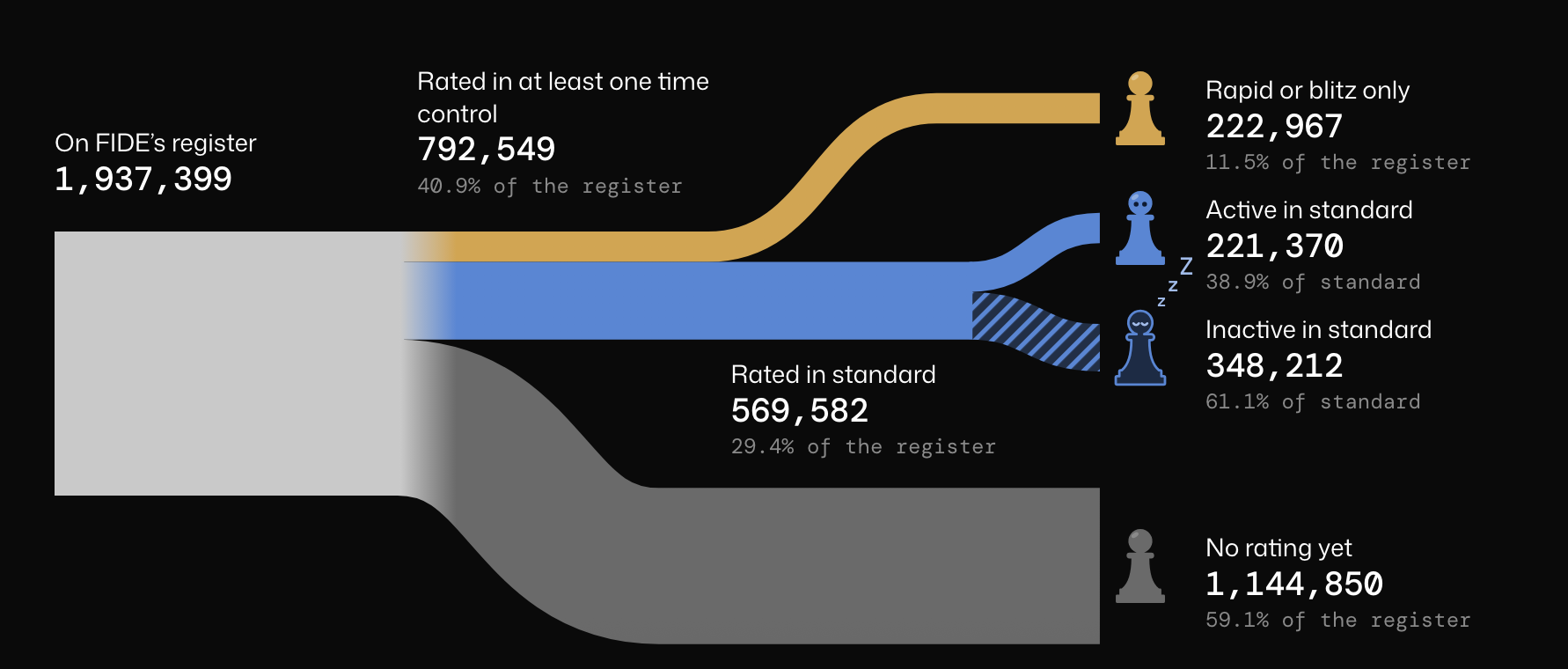
FIDE just handed casual fans and serious analysts a tool that actually works. Chess by the Numbers, the federation's new data platform built with Salesforce, opens a decade of tournament results, rating histories, and player demographics to anyone with a web browser. This matters more than it sounds.
For years, chess data lived in silos. You could dig through FIDE's rating lists or hunt for tournament crosstabs on scattered websites, but connecting the dots required patience and spreadsheet skills. Now the federation is saying: here's the full picture, play with it yourself. Real-time rankings sit next to historical trends. You can track how a player's rating climbed from 2300 to 2700, see which openings dominated in 2015 versus 2024, spot demographic shifts in the player base. The platform uses predictive analysis too, which means you're not just looking backward.
The technical backbone matters here. Salesforce's Agentforce platform does the heavy lifting, digesting mountains of raw data and surfacing patterns humans can actually understand. That's the difference between a data dump and a tool. Interactive charts replace static PDFs. Exploration replaces memorization.
Why this hits now. Chess growth over the past decade has been real and measurable. The pandemic brought millions into the game. Magnus Carlsen's dominance, the Netflix effect from "The Queen's Gambit," young talent like Gukesh breaking through. These trends existed, but proving them required pulling numbers from a dozen places. Chess by the Numbers gives that story a central hub. Journalists can fact-check claims about women's participation. Coaches can analyze what opening systems their opponents favor. Rating projection tools help players understand their realistic target rating based on current trajectory.
The federation is essentially democratizing analysis that used to live exclusively in the databases of elite teams and serious prep crews. If you're preparing for a tournament and want to know how many 2600+ players prefer the Sicilian Defense in rapid format, you don't need a data scientist anymore. You click.
This also gives FIDE something it lacked: transparency with teeth. When people question ranking calculations or tournament distribution, the federation can point to the actual numbers. Skeptics can verify claims themselves instead of taking FIDE's word for it.
The platform's real test comes next. Launch hype fades fast. Chess by the Numbers needs to stay updated in real time, stay responsive, and actually deliver insights people didn't already know. If it becomes the go-to resource for understanding chess trends, we'll see it quoted in every serious tournament analysis within a year. If it stagnates into a museum of old data, it won't matter that Salesforce built it.