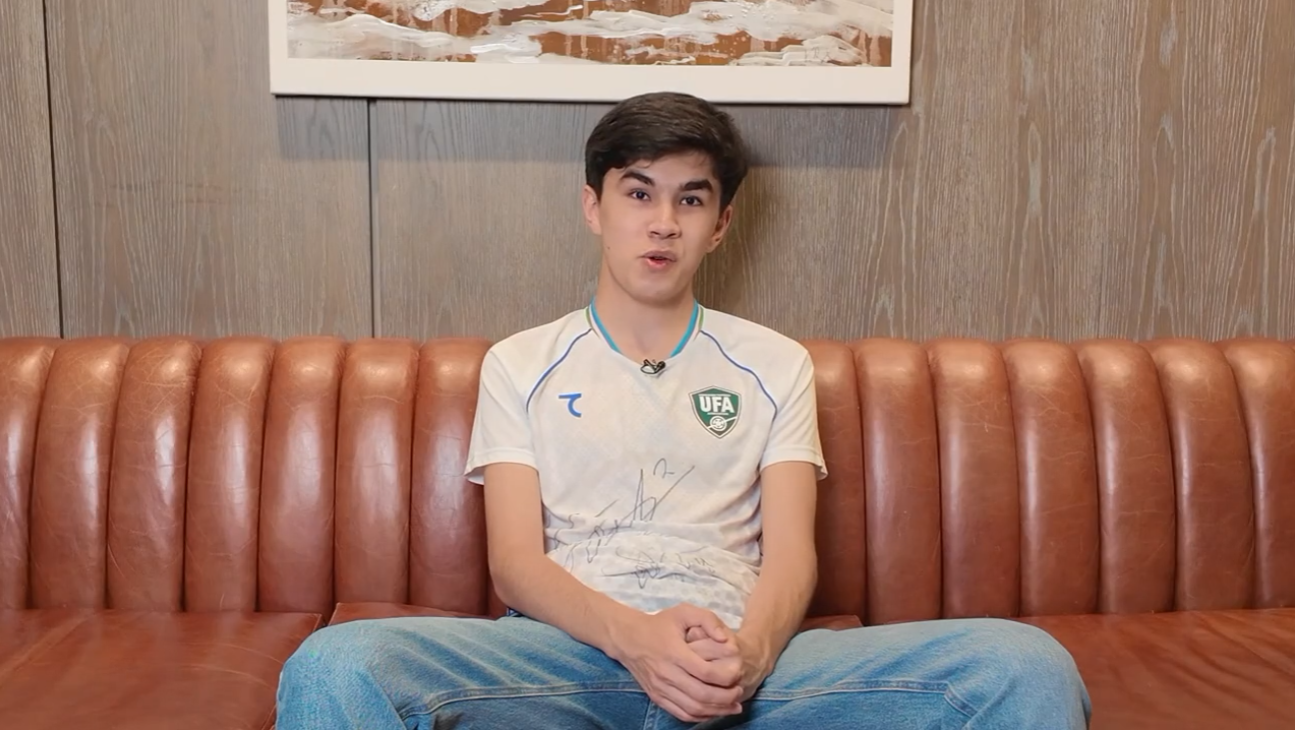
Javokhir Sindarov is 20 years old and walking into the 2026 World Championship match as the challenger. That alone makes him one of the most unlikely figures in modern chess history to reach the sport's highest stage. Chess.com documented his journey in a behind-the-scenes film premiering November 20, just before he faces the reigning champion.
"I will give my all and try to bring the crown to Uzbekistan," Sindarov says in the footage. That statement carries weight coming from someone who, five years ago, was a promising junior with potential. Now he is hours away from the biggest match of his life.
The timing of this documentary is strategic. Chess.com knows what audiences want. They want context. They want to see the human being behind the rating, the preparation, the pressure. Sindarov represents something the sport hasn't seen in years: a young challenger with no major world title experience stepping directly into a match for the crown. The last player to reach a world championship match this young without first winning a Candidates tournament or similar qualifier was arguably Hans Niemann, and that ended in controversy. Sindarov's path is different, but equally surprising.
What we know about Sindarov's preparation: he trained with some of the strongest coaching staffs available. His rating crossed 2700 less than two years ago. His rise has been steep but not unprecedented for elite juniors who train obsessively with computers and top coaches. The question every serious chess fan asks is whether that rise will hold under championship pressure.
The documentary serves another purpose. It humanizes Sindarov before the match. Fans will watch him speak about his dreams, his family, his country. They will see his daily routine, his preparation methods, his mental state. This is deliberate. Chess.com built its audience by showing players as people, not just ratings. When you watch Sindarov say he wants to bring the crown to Uzbekistan, you understand his stake. This is not just another match for him. It represents his entire country's chess hopes.
Uzbekistan has never produced a World Chess Champion. That detail matters more than casual chess observers realize. Players from smaller chess nations carry different pressure than players from traditional powerhouses like Russia, China, or the United States. For Sindarov, winning would not just be a personal achievement. It would be a generational moment for Uzbekistani chess.
The reigning champion will face someone who has nothing to lose and everything to prove. That is dangerous. Psychological momentum matters in chess more than in almost any other sport because fatigue and doubt accumulate across 14 games. If Sindarov plays without fear in the first few games, if he scores early, the champion faces a challenger who grows in confidence with each passing round.
Chess.com releasing this content now is timing that works in Sindarov's favor narratively. By the time the match begins, audiences already know his story. They already care about the outcome beyond rating points and ELO calculations. They want to see if he can do it.
The real test arrives in days. No documentary, no interviews, no behind-the-scenes footage matters once the board is set and the clock starts. But Chess.com understands that in 2026, the match itself is only part of the story. The human narrative around it determines whether millions tune in or thousands. Sindarov's youth, his country, his determination, and his underdog status are all elements that make this championship cycle different from the last one.
Part 1 ends there, with more content to follow. The question becomes whether Sindarov's performance on the board matches the promise shown in the camera.