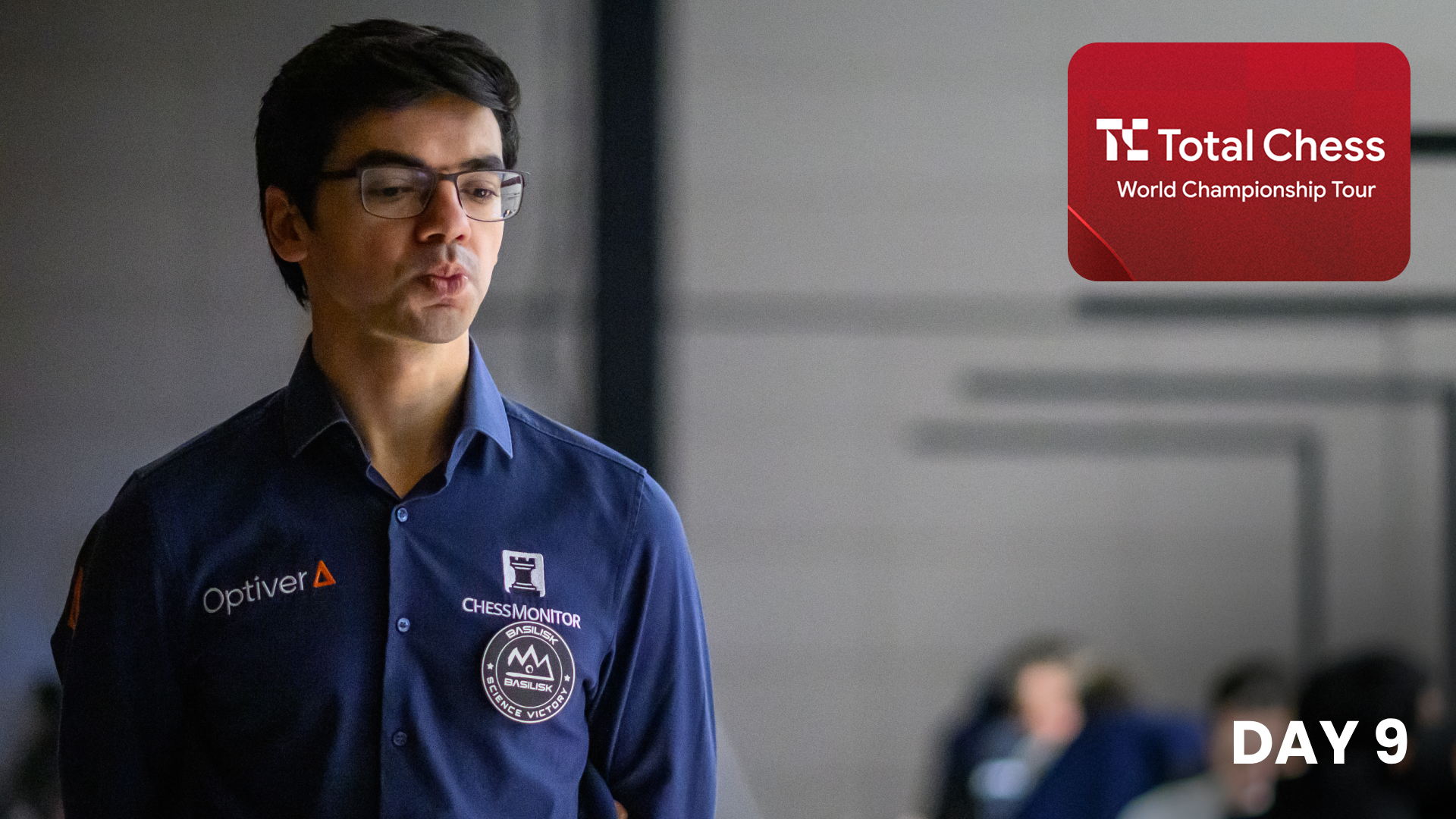
# Giri Holds the Edge in World Championship Final After Escaping Serious Trouble
Anish Giri secured the first-set victory against Alireza Firouzja in the Total Chess World Championship Final, winning 11-9 in fast classical play and grabbing what could prove to be a decisive advantage in the match. The Dutch grandmaster showed exactly why he remains one of the world's most dangerous defenders, conjuring resistance from a position most players would have surrendered.
The specific nature of Giri's survival matters here. He didn't defend something clearly drawn. The position was genuinely lost on the board, the kind where analysis engines hand out harsh verdicts and spectators start writing the postmortem. Yet Giri kept the tension alive, refused to cooperate with Firouzja's conversion attempts, and forced his younger opponent to find perfection when tired chess is in play. That's the difference between a 2750-rated player and everyone else.
Firouzja, still hunting for his first world title at just 21 years old, faced the kind of frustration that breaks momentum in matches. He had the position. He had the advantage. And it slipped through his fingers during the critical moment when fresh legs and sharp focus matter most. This isn't a failure of technique. It's the cruelty of match play, where one defensive miracle can swing the psychological weight of an entire competition.
The fast classical format tested both players differently than classical 90-minute games would have. Neither man had unlimited time to grind out forced moves or calculate deep tactical sequences. Speed favors the player who trusts their intuition, and Giri's decades of experience showed. Firouzja has closed that gap significantly in recent years, yet when it matters most, the gap remains.
Magnus Carlsen, meanwhile, stayed above the 2800 rating barrier this week, maintaining his grip on the top position despite not competing in this particular event. The world champion's rating stability reflects the reality that unless you're losing games at the absolute elite level, you don't drop points quickly. Carlsen hasn't fallen into that category for years. His presence looms over this final anyway. Neither Giri nor Firouzja has firmly displaced him as the consensus number-one player, and both know that capturing this title represents a step toward that conversation.
What happens next in this final will shape the narrative for years. If Giri closes the match out, his defensive prowess earns renewed respect after his comeback from a career low. If Firouzja forces a decider and wins the ultimate game, the young talents get their confirmation that the guard is shifting. The 11-9 set win gives Giri psychological leverage, but fast classical matches turn quickly. One bad game, one oversight in time pressure, and Firouzja could level immediately.
The match structure here matters. Best-of-sets format means that surviving a first set isn't the same as clinching the title. Giri leads, but he hasn't won. The pressure now flows both directions. Firouzja must respond with aggression. Giri must avoid overconfidence and treat the remaining sets with the same defensive intensity he displayed in set one.
This final represents the generational push that defines modern chess. Giri, at 34, still has time and skill to win major titles. Firouzja, at 21, is building toward the dominance many predicted when he was 16. One trophy changes how we view both careers going forward. For Giri, it's proof he belongs among the genuine elite even after falling away. For Firouzja, it's the breakthrough that separates prospects from established champions.
The first set is done. The harder work begins.