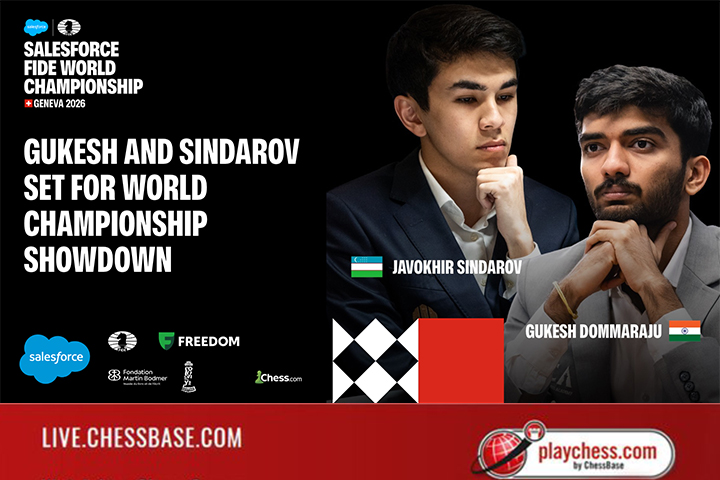
Gukesh Dommaraju is about to defend his world title against Javokhir Sindarov in Geneva, and the chess world will get its first real look at both players today.
The 2026 Salesforce FIDE World Championship begins tomorrow at 15:00 CET. But before the opening move, the press conference at 15:30 CET gives us the prefight narrative. These moments matter. Players signal their preparation, their mindset, their respect or dismissal of the opponent. Gukesh, the defending champion, carries the weight of defending. Sindarov, the challenger, needs to project calm and readiness to everyone watching.
Sindarov is not a surprise opponent. The Tajik player qualified through the World Championship cycle and earned his shot. At 25, he is younger than Gukesh but less experienced at this level. That matters. The world championship is a twelve-game grind. Stamina, nerves, and the ability to convert small advantages into wins separate the champion from the challenger.
Gukesh became world champion in 2024 at just 18 years old, making him the youngest champion in history. He dethroned Ding Liren in that match and immediately faced questions about whether he could hold the title. The 2026 World Championship answers that. If Gukesh retains his crown, he establishes himself as the generation's dominant force. If Sindarov wins, it confirms that Gukesh's title was vulnerable and opens the door for a new era.
The opening ceremony at 17:00 CET is ceremonial but sets the tone. These events have grown into proper spectacles under FIDE president Arkady Dvorkovich's tenure. The sponsorship by Salesforce signals that the World Championship is backed by real money and corporate interest. That changes the experience for both players. They play in a televised, high-production environment. The boards are set up for cameras. Every move is analyzed live by grandmasters commentating for millions of viewers.
The first move comes tomorrow at 15:00 CET. That is when the talking stops. Gukesh and Sindarov will sit at the board in Geneva and play chess.
The match runs to completion, meaning whoever reaches six and a half points first wins the title. Twelve classical games, 50 minutes per side plus 10 seconds increment, means each game can easily run four to five hours. For Gukesh, this is familiar ground. For Sindarov, it is new. That psychological edge belongs to the champion. Gukesh has sat in the chair before under these lights. He knows what it feels like to be interviewed after a loss, to manage the pressure, to recover from a bad position.
Watch the press conference to see which player looks confident and which one looks like they are managing their nerves. Listen to their openings plans. Gukesh will likely face questions about whether he has studied Sindarov's preparation or if he trusts his opening knowledge. Sindarov will need to explain his strategy for attacking the champion without overextending himself.
The rating implications are stark. If Gukesh wins, he solidifies his position as the strongest player in the world and locks down his title for the next cycle. If Sindarov wins, he jumps into the elite tier of players and forces a rematch or unification with whoever else claims to be world champion. The rating swing could be over 50 points in either direction.
Geneva 2026 begins today with words. Tomorrow it begins with moves.