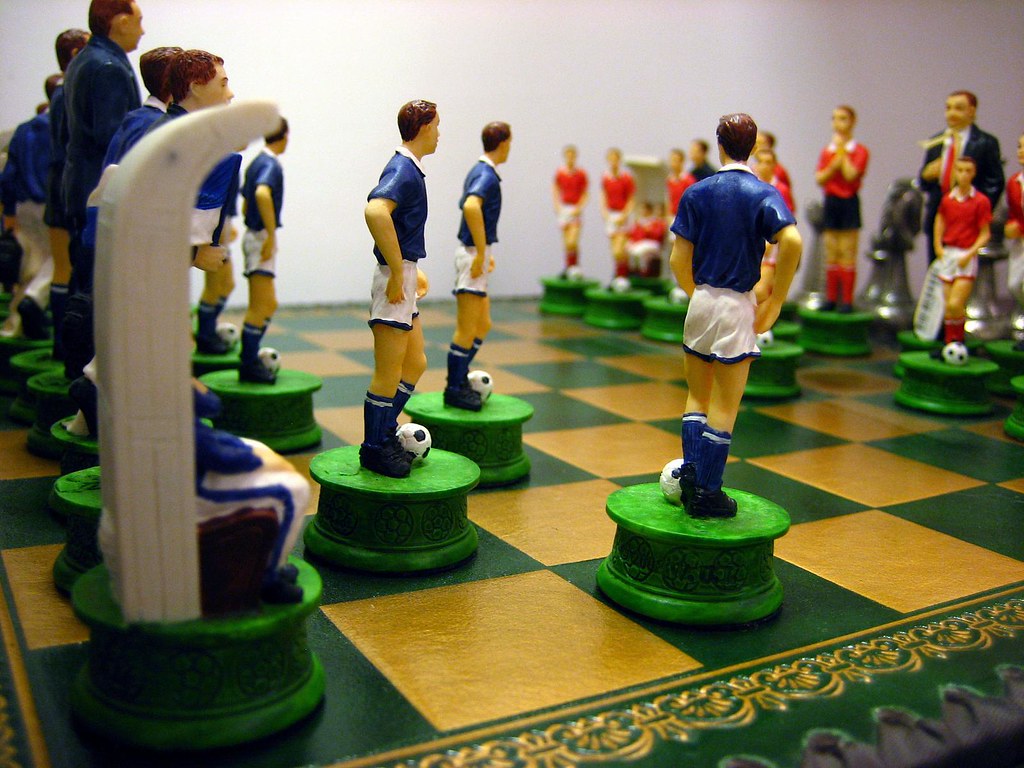
# When Elite Athletes Take Chess Seriously
Mohamed Salah sits down to play chess almost every day. Not as a distraction between training sessions. Not as a photo op for social media. The Liverpool forward treats the board like another arena where he competes, and he credits the game with sharpening the same mental tools that make him lethal in the penalty box.
This isn't new. Athletes have always dabbled in chess. What's changed is the depth of their commitment. The biggest names in football, boxing, and other sports no longer hide their chess habit as though it were an embarrassment. They own it publicly. They study openings. They play rated games.
The pattern tells you something about how elite performers think. Chess and football could not look more different. One is silent and motionless. The other is chaos and movement. Yet both demand pattern recognition, calculation under pressure, and the ability to anticipate an opponent's next five moves before they make one. A midfielder who plays chess understands spatial awareness on a different level. A boxer who studies the board learns to think two moves ahead, which matters when your opponent is trying to hurt you.
Salah's case is the most publicly visible right now, but he is not alone. Other world-class athletes have quietly integrated chess into their training regimens, and some take it seriously enough to hold respectable ratings. The reason is straightforward. Chess teaches you to see the board in layers. A footballer needs to see the pitch the same way. Chess teaches you to calculate consequences. Every athlete needs that.
The skeptics ask why a professional athlete with limited time would spend it on chess instead of more sport-specific training. Fair question. The answer lies in the science of cross-training the brain. Chess activates different neural pathways than sport-specific drills. It builds decision-making speed in a low-cost way. You can play online. You need no equipment. You can play someone in another country. For someone at Salah's level, where marginal gains matter, chess offers a real edge.
The trend also reflects something else. The world's best competitors are obsessive. They cannot turn off. So they find multiple arenas to compete in. Salah could watch television in his downtime. Instead, he plays chess every day. That tells you how seriously he takes winning.
As more athletes follow Salah's example, we will likely see chess clubs at elite sports academies become routine rather than quirky. The barrier between "athlete who plays chess" and "chess player who plays sports" will blur further. When the top 0.1 percent in any field recognize that another discipline sharpens their thinking, they move toward it. That is how chess becomes integrated into the fabric of elite sport rather than sitting at its margins.