# Thai Prodigy Archawin Leads Eastern Asia Youth Rapid Sweep
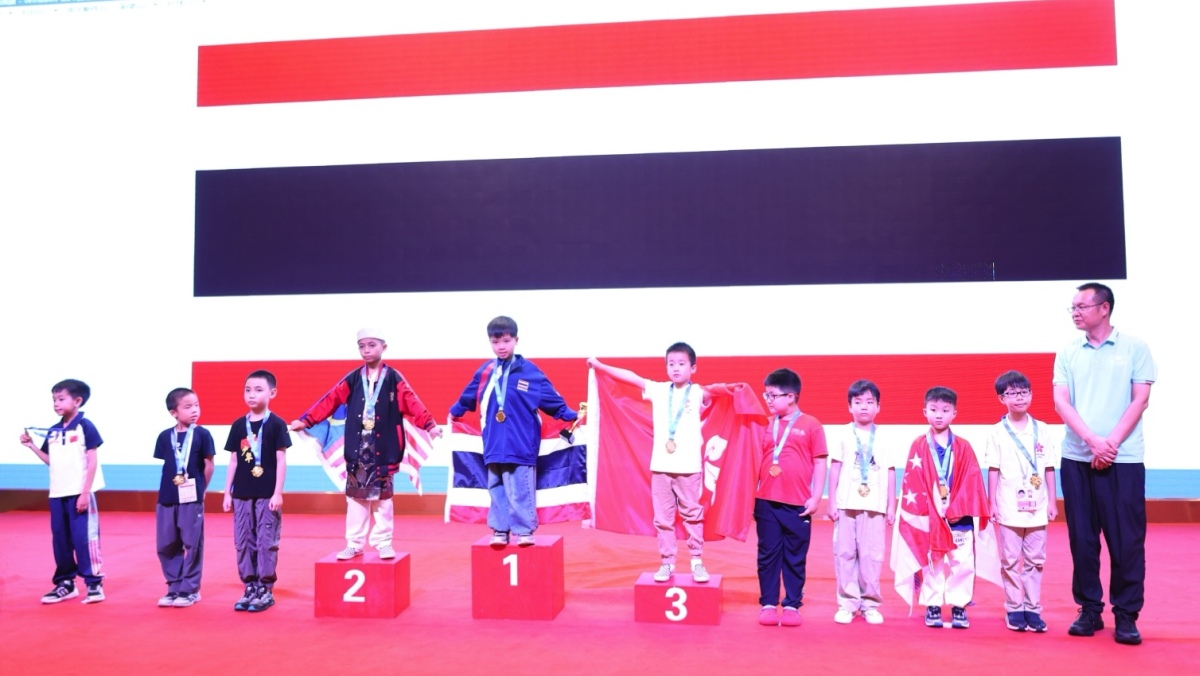
Koraviyotin Archawin of Thailand has won the Boys Under-8 title at the Eastern Asia Youth Chess Championship 2026, capping a rapid competition that distributed medals across six age categories and both genders. The tournament crowned 12 champions total, drawing participants from federations throughout the region.
This is Archawin's breakthrough result on the Eastern Asia youth circuit. At eight years old, winning a rapid title against continental competition marks serious progress for the Thai player. The rapid format, with its compressed time controls, demands calculation speed and intuition rather than pure preparation. For young players, it's often a better indicator of genuine talent than blitz, which rewards tactics but not much else.
China dominated the medal count, as expected. Zhou Yixin captured the Girls U08 crown while Zhang Hongya won Boys U12. The Chinese federation has invested heavily in youth development over the past decade, and results like these show the strategy working. Peng Lixiao Sonia also brought a medal home for the region by winning Girls U10, competing under the Hong Kong banner.
Mongolia and Indonesia each secured titles through Enkhmandal Bayaraa (Boys U10) and Makalew Veronica Jefany Sheryl Kichi (Girls U12). These victories matter for smaller federations. When a player from a less chess-rich country reaches the continental podium, it often catalyzes interest at home and attracts sponsorship. Bayaraa's U10 success in particular could fuel Mongolia's youth pipeline, which remains underdeveloped compared to neighboring powers.
The Under-18 categories, where serious rating gains become possible and players often start preparing for open (non-age-restricted) tournaments, remain partially undeclared in available results. That's where the tournament's real implications crystallize. By 16 or 17, a youth rapid champion typically carries a standard rating between 2200 and 2400, depending on federation strength. Those performances seed serious players into continental and world junior circuits.
Eastern Asia's youth scene has matured considerably. A decade ago, these championships attracted mostly regional players. Now the federation depth across Thailand, Indonesia, Hong Kong, and Mongolia suggests grassroots infrastructure is genuinely spreading. China will remain dominant for years, but the gap is narrowing.
The next question is whether rapid success translates to classical results. Rapid chess and standard play require different skills. A player sharp enough to win a rapid at age 10 might struggle in 90-minute games where positional understanding and endgame technique matter more. Watch whether these 2026 champions appear on world junior championship qualifying lists over the next two years. That's the real test.