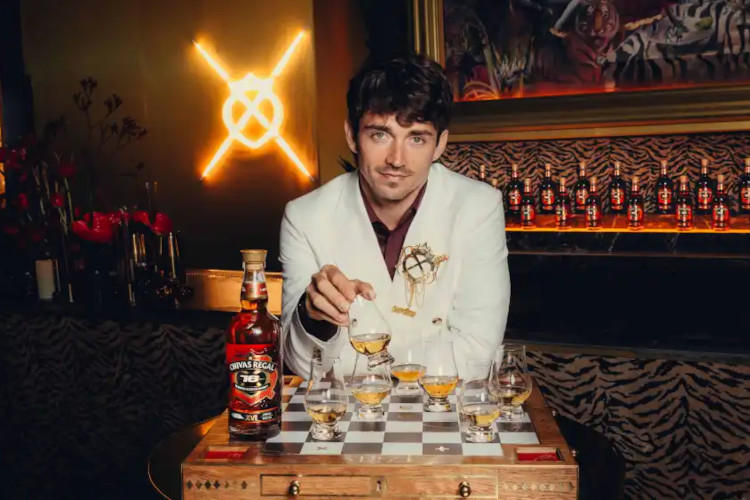
Hikaru Nakamura is trading the 64 squares for something stranger. On September 1 in Monza, the American super-GM will face off against Ferrari driver Charles Leclerc in Se!ze, a chess-inspired strategy game that sits somewhere between traditional chess and the high-stakes world of Formula One tactics.
This is not a publicity stunt. Se!ze represents a genuine hybrid: it borrows chess's methodical thinking and planning but wraps it in the velocity and real-time decision-making that defines motorsport. The game's name references Leclerc's iconic number 16, and it was developed specifically with the driver's input. Chivas Regal is backing the event as part of what they're calling the Arena of Mastery, to be held in the paddock at Monza ahead of the Italian Grand Prix.
Why does this matter? Nakamura has never shied away from chess variants or game-based crossovers. He streams constantly, dominates blitz and rapid formats, and understands that chess's appeal extends far beyond the elite tournament circuit. At the same time, Leclerc brings something Nakamura doesn't naturally possess: instinct forged in a cockpit. A racing driver's decision-making under pressure is fundamentally different from a chess player's. They operate in parallel worlds of strategy, but the tools are alien to each other.
The game itself demands something neither player has trained for exclusively. Nakamura will need to adapt to mechanics that reward speed and intuition alongside calculation. Leclerc will need to respect the depth that even a chess-adjacent game demands. Neither has an obvious advantage.
This matters beyond the novelty. Chess is experiencing a boom in crossover culture. Magnus Carlsen appears on podcasts. Levy Rozman builds a YouTube empire on chess content. The game's audience increasingly overlaps with esports, streaming, and entertainment properties. An event that bridges chess and Formula One recognizes that audience migration. Young fans don't segregate their interests into neat boxes anymore.
The September 1 matchup also comes at a useful moment for Nakamura. He will have just finished the US Chess Championship (which concludes in late August), so timing-wise he's heading into rest mode. Playing a novelty game against a global sports celebrity in one of the world's most prestigious racing venues beats grinding prep for his next classical tournament.
What happens next depends on whether Se!ze works. If the game generates real engagement, expect more crossovers. If it falls flat, it remains a curiosity. Either way, Nakamura gets the narrative: he's the chess player cosmopolitan enough to step outside the board and compete on unfamiliar terms. For a 36-year-old looking to remain relevant in chess culture, that story is worth more than another classical tournament result.