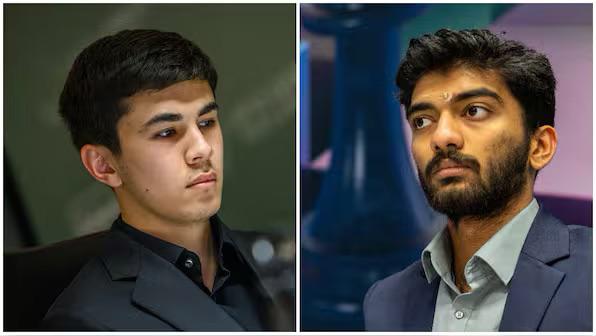
India and Uzbekistan arrive in Samarkand as seeded rivals, but the real story cuts deeper than Olympic medals. Gukesh Dommaraju and Javokhir Sindarov will face each other on boards they may never see again once they leave for their World Championship match in Geneva this November.
That's the paradox worth understanding. Yes, this is a warm-up of sorts. Yes, both players compete on home soil with national pride on the line. But Gukesh plays fourth board for India, not first. Arjun Erigaisi carries the rating banner for the defending champions. Sindarov, the host nation's star, will not necessarily anchor Uzbekistan's lineup either. The Olympiad format strips away the spotlight that defines a World Championship match. They will not meet as equals. They will meet as teammates in a team event, and that changes everything about what we can learn from their interactions here.
This matters because the World Championship in November remains genuinely uncertain. Gukesh, at 18, became the youngest-ever challenger when he dethroned Ian Nepomniachtchi's position in the qualification cycle. The chess world watched him climb ratings like a ladder. Sindarov, 17, represents a different trajectory. He has dominated the junior circuit and earned his seat through exceptional tournament play. Both arrive at this Olympiad with something to prove beyond medals.
Samarkand becomes a testing ground. How do they handle the pressure of team competition before switching into individual combat? Do they play with aggression or caution? Do nerves show? The Olympiad board is a stage, but it is not their stage. Neither player will risk career damage to a teammate for an experimental idea. They will play solid chess. They will play for points. They will not reveal the opening prep they have been grinding for months.
What actually matters here is momentum and mentality. India needs to defend its title. That pressure sits on Erigaisi and the top boards, not on Gukesh. Uzbekistan needs to prove it belongs with the elite. Sindarov carries that burden differently than he will in November. Both young players will measure themselves against world-class opposition in real time. Both will see how their bodies and minds handle sustained competition with national stakes attached.
The World Championship remains the prize. Samarkand is the stage before the stage. Neither player can afford to stumble now. Not against each other. Not in front of their countries. The Olympiad will tell us whether they have the metal for November, even if it cannot predict who wins when they finally play for the title.