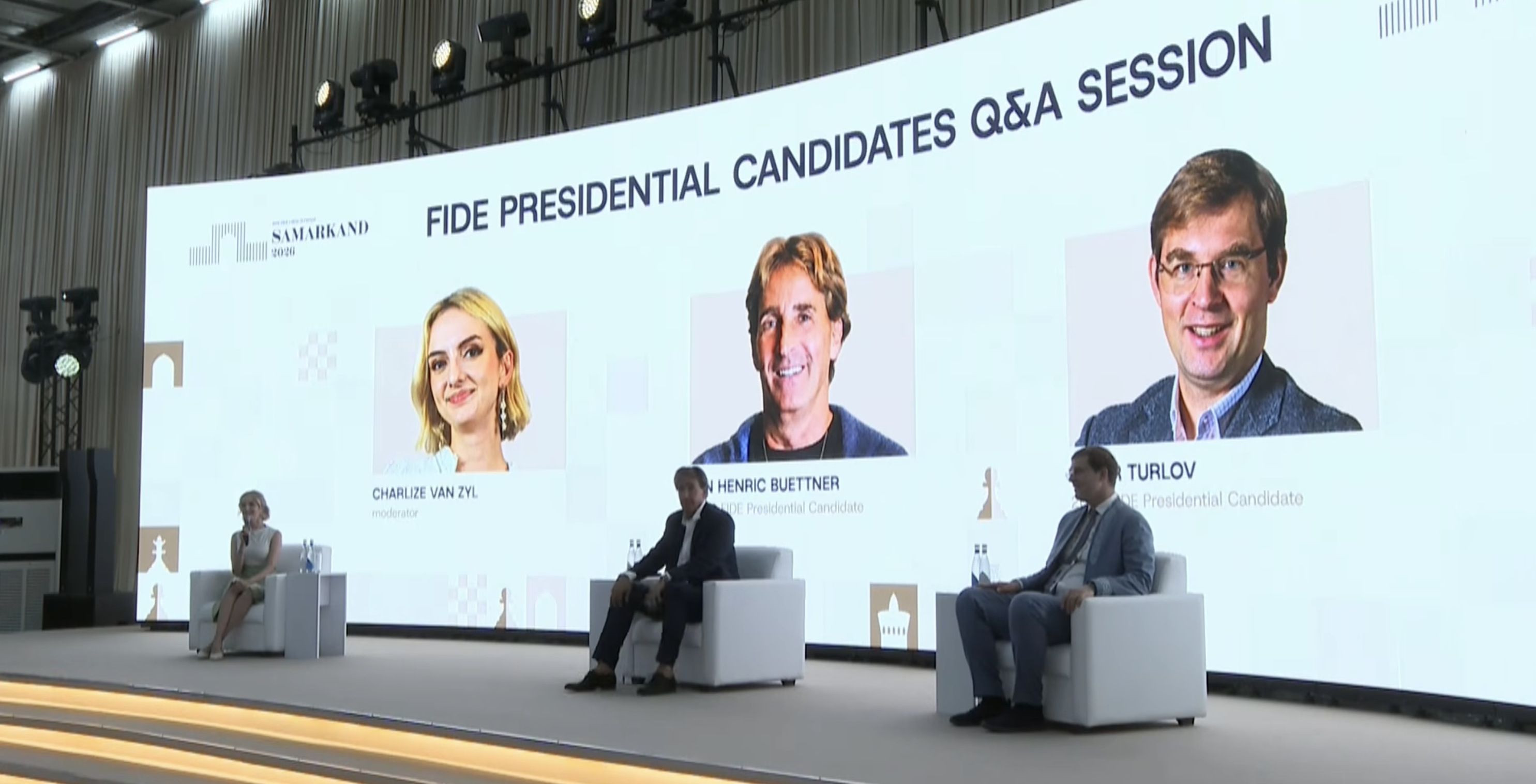
# Two Billionaires, One Federation: FIDE's Presidential Choice Comes Down to Vision and Trust
The FIDE presidency is up for grabs, and the two men vying for it could not be more different in their approach. Timur Turlov and Jan Henric Buettner faced off in a live Q&A at the Olympiad in Samarkand, each pitching a business-first model for how to run international chess. What emerged was less a debate about the game itself and more a revealing window into how much control chess players are willing to hand over to wealthy outsiders.
Turlov, the Kazakhstan-born crypto and tech entrepreneur, came with money and connections. Buettner brought his own fortune and operational experience. Both spoke confidently about transforming FIDE's finances, expanding chess globally, and professionalizing the federation's management. On paper, this sounds appealing. FIDE has chronically struggled with funding, governance, and the kind of strategic vision that gets things done.
But the Q&A exposed a gap between their grand promises and hard specifics. Neither candidate addressed the central tension in their candidacies: what happens when the president is also the primary financial backer? Who audits the books? What stops a wealthy president from steering federation money toward personal interests or pet projects? These are not abstract concerns. They are the differences between a functioning federation and a personal fiefdom.
Transparency was the ghost in the room. Turlov and Buettner sketched visions of chess academies, expanded sponsorships, better player compensation, and stronger grassroots development. All worthy goals. Neither offered clear mechanisms for accountability or explained how FIDE would maintain independence from its own president's financial leverage. The audience got rhetoric where it needed specifics.
The broader chess world now faces a choice. The current FIDE leadership under Arkady Dvorkovich has its flaws, but it operates within established structures and multiple power centers. A Turlov or Buettner presidency would concentrate authority in a way chess has not seen before. Money talks in sports governance, and both candidates understand this. The question is whether the chess federation's delegates will demand concrete safeguards or simply trust that a billionaire's goodwill is enough.
The election matters because it shapes everything downstream: which tournaments get funding, which regions get development resources, how much players earn, and whether FIDE becomes a true international institution or a vehicle for one person's chess ambitions. Samarkand revealed the pitch. What remains to be seen is whether either candidate will commit to the transparency mechanisms the federation actually needs.