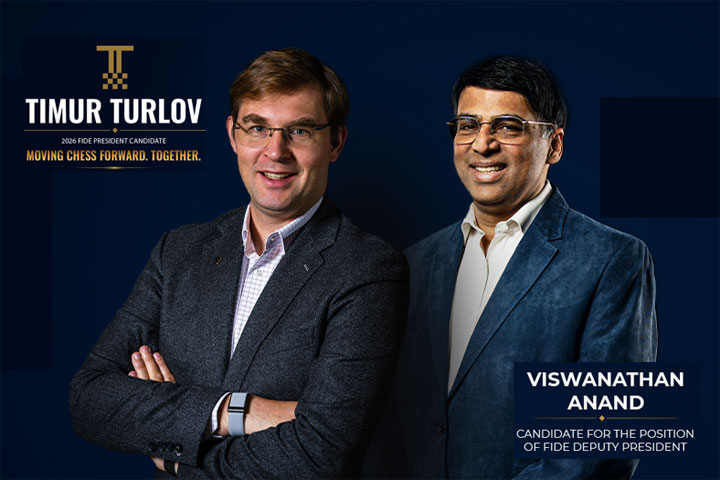
Timur Turlov will lead chess's global governing body for the next four years. He defeated Wadim Rosenstein decisively on Saturday in Samarkand, collecting 110 votes to Rosenstein's 85 in a runoff that settled the FIDE presidency race with no ambiguity.
This wasn't close. Turlov entered the second round holding a 20-vote cushion and expanded it to 25 votes, meaning he didn't merely defend his coalition but actually strengthened it. He picked up support from the Buettner-Pein voting bloc that Rosenstein failed to secure, a concrete demonstration of political organization and persuasion between rounds.
The result confirms what weeks of pre-election polling had telegraphed. Turlov, a Russian businessman and chess administrator, effectively inherited the machinery of Arkady Dvorkovich's re-election campaign after Dvorkovich departed the race. That institutional foundation, combined with his own delegate relationships, proved decisive against Rosenstein, whose campaign couldn't generate the momentum needed to overcome Turlov's initial first-round advantage.
The FIDE presidency matters more than casual fans realize. This office controls the chess calendar, sanctions major tournaments, oversees the world championship cycle, and manages the federation's finances and strategic direction. Who holds it shapes which tournaments get rating points, how title norms work, which countries receive preferential treatment in bidding processes, and which players receive support for elite events.
Turlov takes over at a moment when FIDE faces real pressure. The chess world has fractured over Ukraine. Russian players remain excluded from many federations and events. The organization's relationship with Magnus Carlsen remains strained after the world champion's public criticism of federation leadership and his decisions to withdraw from competition. Meanwhile, emerging federations in South Asia and the Middle East push for greater visibility and resources.
His first test arrives quickly. FIDE must navigate the 2025 world championship cycle, manage the ongoing diplomatic complications around Russian participation in world events, and rebuild credibility with elite players who have lost faith in the organization. Carlsen won't automatically respect the new leadership simply because Turlov won an election. The chess community watches whether Turlov can broker peace between competing interests or whether FIDE remains as fractious as it has been under Dvorkovich.
Turlov's victory also matters within Russian chess politics. He represents continuity with Dvorkovich's faction, which means the Russian Chess Federation's internal dynamics will shape how Turlov governs. That alignment could either strengthen his mandate domestically or create perception problems internationally, depending on how he wields his power in his opening months.
The next battle for FIDE leadership won't arrive until 2028. For now, Turlov owns the board.