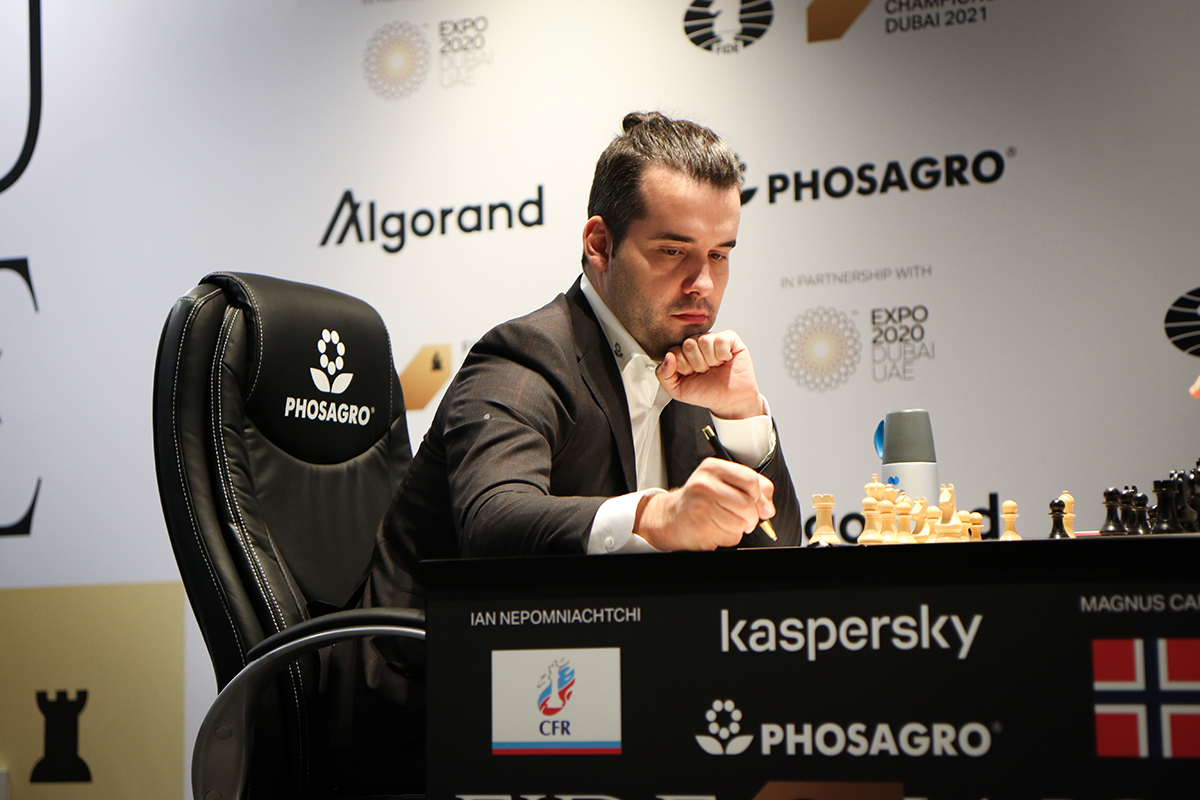
Nepomniachtchi just gave rating deflation the frank diagnosis that's been brewing beneath chess's surface for years. He lost 40 rapid points in a year. Hasn't cracked 2800 since 2022. And crucially, he framed it as systematic collapse, not personal decline. "Everyone has lost points," he said on a recent livestream.
This matters because the rating system works only if scores track real playing strength. When the entire population deflates together, the numbers stop meaning what they're supposed to mean. A 2750 player today isn't the same 2750 player from five years ago.
The causes run deep. First, there's the flood of young talent. Giri, Caruana, Vachier-Lagrave, MVL. These guys played each other relentlessly from age ten onward. They absorbed preparation that would have taken older players decades to accumulate. When you're constantly facing opponents who've seen everything you throw at them, draws multiply and decisive games dry up. Draws compress rating swings. Nobody gains much. Everybody bleeds points gradually.
Second, online chess accelerated the learning curve brutally. Twenty years ago, a 2700 player was a deity. Now there are 50 of them. The gap between 2800 and 2600 has tightened because the 2600 players have spent thousands of hours grinding rated games online, studying databases, working with engines. They're not accidents anymore. They're products of a machine.
Third, Carlsen's dominance paradoxically hurts ratings. When one player sits at 2880 while everyone else clusters around 2750, rating points pile up at the top and starve the middle. The distribution breaks. Players stop gaining because there's nowhere to go without beating Carlsen repeatedly, which nobody does.
The FIDE rating system has its own friction too. It uses a K-factor that limits how many points change hands per game. That was designed to stabilize ratings after inflation in the 1990s and 2000s. Now that same mechanism locks players into narrow bands once they reach elite levels. You need a string of wins to move the needle. One loss doesn't hurt as much, but one win doesn't help as much either.
What changes next. FIDE will likely face pressure to adjust the rating system itself, though changes take years to implement and anger whoever benefits from the current rules. Alternatively, the chess world simply accepts that 2750 today means something different than 2750 in 2018. Ratings become historical artifacts rather than absolute measures of strength.
For now, Nepomniachtchi's 2748 rapid tells you he's still one of the best players alive. The number just doesn't prove it the way it used to.