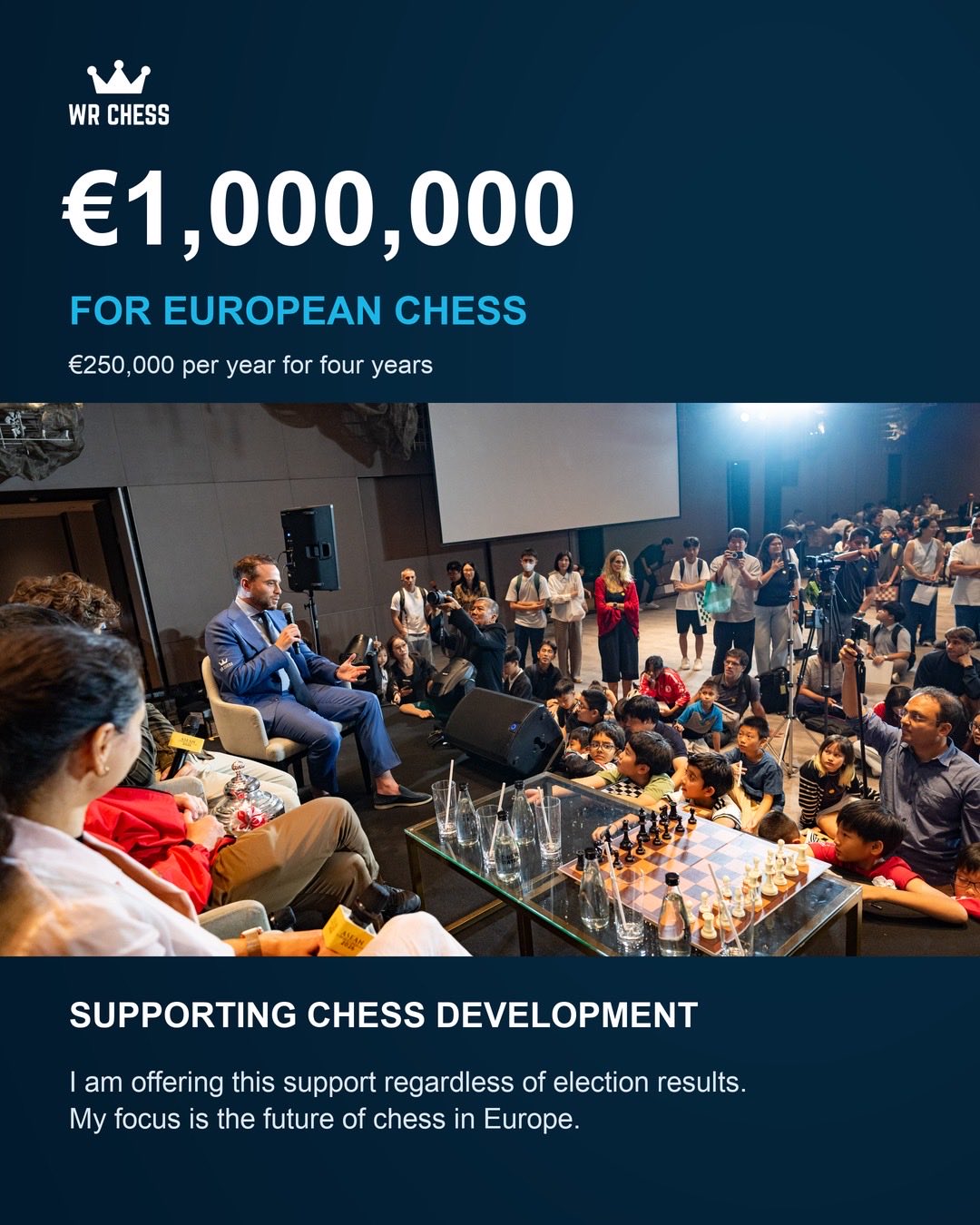
Wadim Rosenstein is writing a check to European chess. The businessman and failed FIDE presidential candidate committed €1,000,000 to the European Chess Union this week, funding to arrive at €250,000 annually over four years.
This matters because Rosenstein lost badly in September. He faced off against FIDE president Kaan Guksoy in a runoff vote and fell short, 110 to 85. That kind of defeat ends most political ambitions in chess. Candidates retreat, issue gracious statements, disappear from the board.
Rosenstein did the opposite. Rather than nurse his wounds, he doubled down on his vision for European chess development. The money flows regardless of who occupies the FIDE presidency. That separation from electoral politics tells you something about his actual priorities.
The timing is sharp. European chess needs cash. Federations across the continent struggle to fund junior development, organize high-level tournaments, or compete with Asian chess's growing investment. Grassroots programs shrink. Elite academies lack resources. The European Championship remains prestigious but underfunded compared to equivalent events in other regions.
What Rosenstein's pledge does is create a four-year runway for serious structural work. €1,000,000 is real money. It funds a modest league structure. It supports coaching. It enables scholarship programs for talented juniors. It pays for tournament organization that might not otherwise happen.
The commitment also signals something to the broader chess world. European chess is attractive to capital. Rosenstein saw opportunity worth betting on after an electoral loss. That's either stubborn or visionary, depending on your view of his earlier campaign. Either way, he's keeping his hand in the game rather than exiting it.
Kaan Guksoy won the FIDE presidency on promises of modernization and investment. Now he inherits a chess landscape where a rival is bankrolling European development independently. That's awkward politically, but it's good for chess. Competition for funding and ideas might actually accelerate progress on the continent.
The European Chess Union must now execute. €250,000 per year requires strategy. Poor allocation wastes the gift. Smart allocation transforms European chess in measurable ways within four years. Expect pressure on European Chess Union leadership to produce results, not just bank transfers. Rosenstein didn't spend €1,000,000 to watch it disappear into administrative overhead.