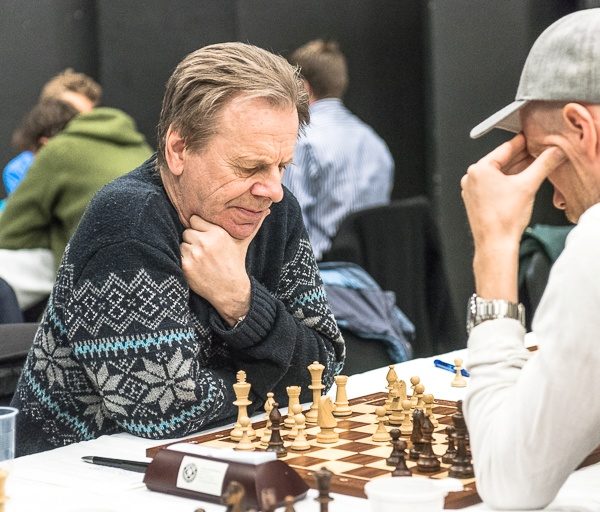
Ulf Andersson finally gets his flowers. The Swedish grandmaster just landed in the World Chess Hall of Fame, and Stockholm is throwing him a proper party. On October 29, Andersson plays in the Svarta Hästen Invitational, a 16-player rapid tournament built around his 75th birthday celebration.
This is not a ceremonial lap. Andersson still plays serious chess. The tournament field mixes Stockholm's chess establishment with rising talent, including content creator Anna Cramling. That blend matters. Andersson spent his peak years dominating closed European circuits and matching wits with Karpov and Korchnoi when few Western players could touch him. Now younger players get to test themselves against a man who made a career out of outmaneuvering stronger opposition through pure technique.
The lineup reads like a Swedish chess family tree. Pia Cramling (Anna's mother, a strong GM in her own right) plays. So do Ferdinand Hellers, Harry Schüssler, and Juan Bellon Lopez. These are serious names, not charity opponents. Andersson's rating may not shock the computer anymore, but his understanding of endgames and prophylactic thinking still cuts through most opposition.
Andersson's Hall of Fame induction is overdue. His career peaked in the 1970s and 1980s, before dominant computers reshaped how we understand the game. He never challenged for the world title. He never won a super-tournament by storm. What he did was play chess at the highest level for decades with a consistency that defined grinding positional mastery. He made his living extracting wins from positions other grandmasters drew. Against him, you played worse chess because he played so well.
The rapid format here tells you something too. Andersson thrived in classical games where preparation mattered less than intuition and long-term planning. Rapid chess rewards calculation and pattern recognition over deep preparation. At 75, he probably plays faster games better than he would in classical formats. The time control suits him.
What happens next matters for Stockholm's chess culture. Andersson's reputation still carries weight. Younger players pay attention when legends show up. Cramling's presence bridges the entertainment chess world (where she builds audiences) with classical chess tradition (where Andersson belongs). That crossover rarely happens cleanly in Stockholm.
The tournament itself won't reshape ratings or tournament classifications. No one is fighting for qualification points or major tour spots. What matters is that Swedish chess gets a day to acknowledge one of its best players in his 75th year, and Andersson gets to sit across the board from friends and rivals who respect what he built. Seven rounds of rapid chess in Stockholm on October 29. That's the tribute he earned.