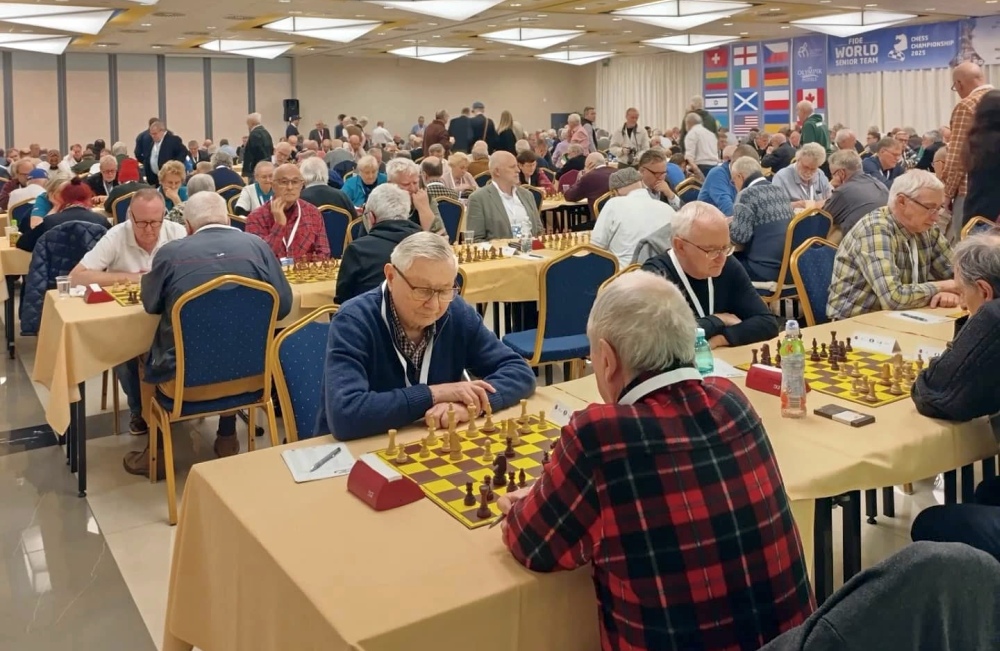
# Serbia Hosts Record-Breaking Senior Championship as 385 Players Chase Gold
Vrnjačka Banja, Serbia, is hosting the 2026 FIDE World Senior Chess Championship, and the numbers alone tell you this event matters. Three hundred eighty-five players. Sixty-five nations. Forty-four Grandmasters competing in the Over-50 bracket. This is not a backwater tournament for retirees passing time. This is organized, competitive, serious chess.
The championship splits into four sections: Open 50+, Women 50+, Open 65+, and Women 65+. Each runs as a 9-round Swiss at classical time controls. The format lets players compete within their age group without losing the rigor of classical chess. You get decisive games, not quick draws between tired opponents.
What makes this event resonate goes beyond the scale. The presence of 44 Grandmasters in the 50+ category signals that elite players still want to compete at the highest level after their prime years. Many are former national champions or Soviet-trained players who refuse to fade quietly. These are people who shaped chess in their countries and still possess the technique to win tournaments.
The women's sections matter here too. Eight Women Grandmasters participating shows the sport has built depth in women's chess over the past two decades. Twenty years ago, you wouldn't see this kind of female participation in a senior championship. The pipeline works now.
Serbia hosting this carries its own weight. The country has serious chess infrastructure and hosting experience. The Serbian Chess Federation, led by President Andrija Jorgić, coordinated with FIDE and the Vrnjačka Banja municipality to deliver a professional operation. The opening ceremony at Zepter Hotel wasn't just ceremony. It established tone and respect for the event.
The 9-round format compressed into classical time controls creates genuine drama. These aren't blitz events or rapid tournaments where luck matters more than skill. Nine rounds means you need 5 or 5.5 points to win outright. You can afford a loss or two but not three. Every game counts. The old guard still plays classical well.
For players in this age bracket, winning a world championship title carries different weight than it did at 25. Many competed internationally during the Soviet era or in smaller federations where they couldn't reach top world rankings. A World Senior Championship gold medal closes circles. It validates decades of study and sacrifice.
The tournament runs through its nine rounds now with results flowing in daily. The real story will emerge when the dust settles. Who plays the sharpest chess at 55? Do the younger seniors (50-64) dominate the 65+ crowd? Which federation claims the most medals? Chess hasn't finished aging. It's still evolving, still competitive, still demanding.