The Caro-Kann has survived every chess revolution of the past 130 years. Not because it's flashy. Because it works.
One move. 1...c6. That's the whole statement. Black plants a pawn on c6 and tells White: build your center if you want. I'm not fighting for space. I'm controlling what matters. The beauty of the Caro-Kann is that this modest claim never breaks under pressure. Bobby Fischer believed in it. Anatoly Karpov built empires with it. This week's junior rapid players chose it too, which tells you something about opening theory that nobody wants to admit. The best often works best.
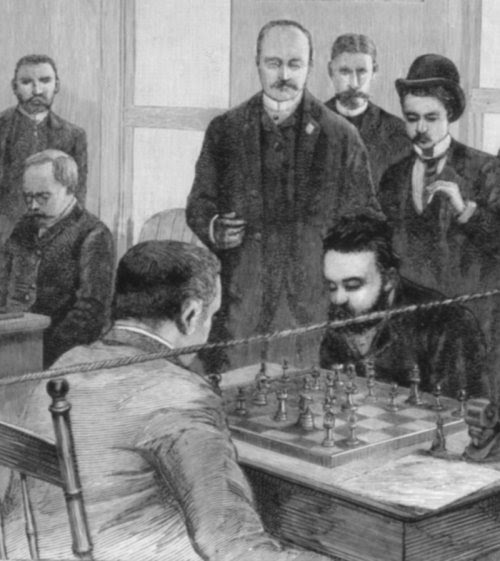
The opening carries two names, both chess figures from another era. Horatio Caro and Marcus Kann. Caro lived most of his chess life in Berlin after moving from Newcastle upon Tyne. In 1886 he began publishing analysis of 1...c6 in his magazine. Kann contributed his own analysis around the same time. History fumbled their names together with a hyphen, and nobody bothered to separate them again.
What makes the Caro-Kann different from the French, which looks similar on the surface, is the move order and the flexibility it gives Black. The French commits to ...e6 immediately, which locks in Black's light-squared bishop on the back rank. The Caro-Kann keeps that bishop mobile. After 1.d4 c6 2.c4 d5, Black gets space on d5 and room to maneuver. White has more setup options, but Black isn't playing a cramped, defensive endgame. Black is playing a fundamentally sound structure that doesn't betray weaknesses.
This is why the Caro-Kann attracts a certain type of player. Not romantics. Builders. Players who understand that a bad position crushed early is worse than a solid position defended late. Capablanca loved it. Karpov refined it into an art form. Ding Liren has made it his weapon in rapid events because the opening doesn't require constant calculation. It requires understanding.
The 1.e4 players keep trying to refute it. Deep Blue variations, computer-augmented lines, Moscow variations with 3.Nc3, 5.Bg5 attempts. None of it has killed the Caro-Kann because you can't refute an opening that doesn't claim to be better. It claims to be solid. That's a promise you keep through move 30.
Modern junior players are rediscovering what Caro and Kann figured out a century ago. In a rapid game where time is scarcer than space, the opening that demands the least of your clock and the most of your opponent's patience becomes invaluable. The Caro-Kann doesn't promise a win. It promises you'll still be playing after your opponent's time advantage disappears.