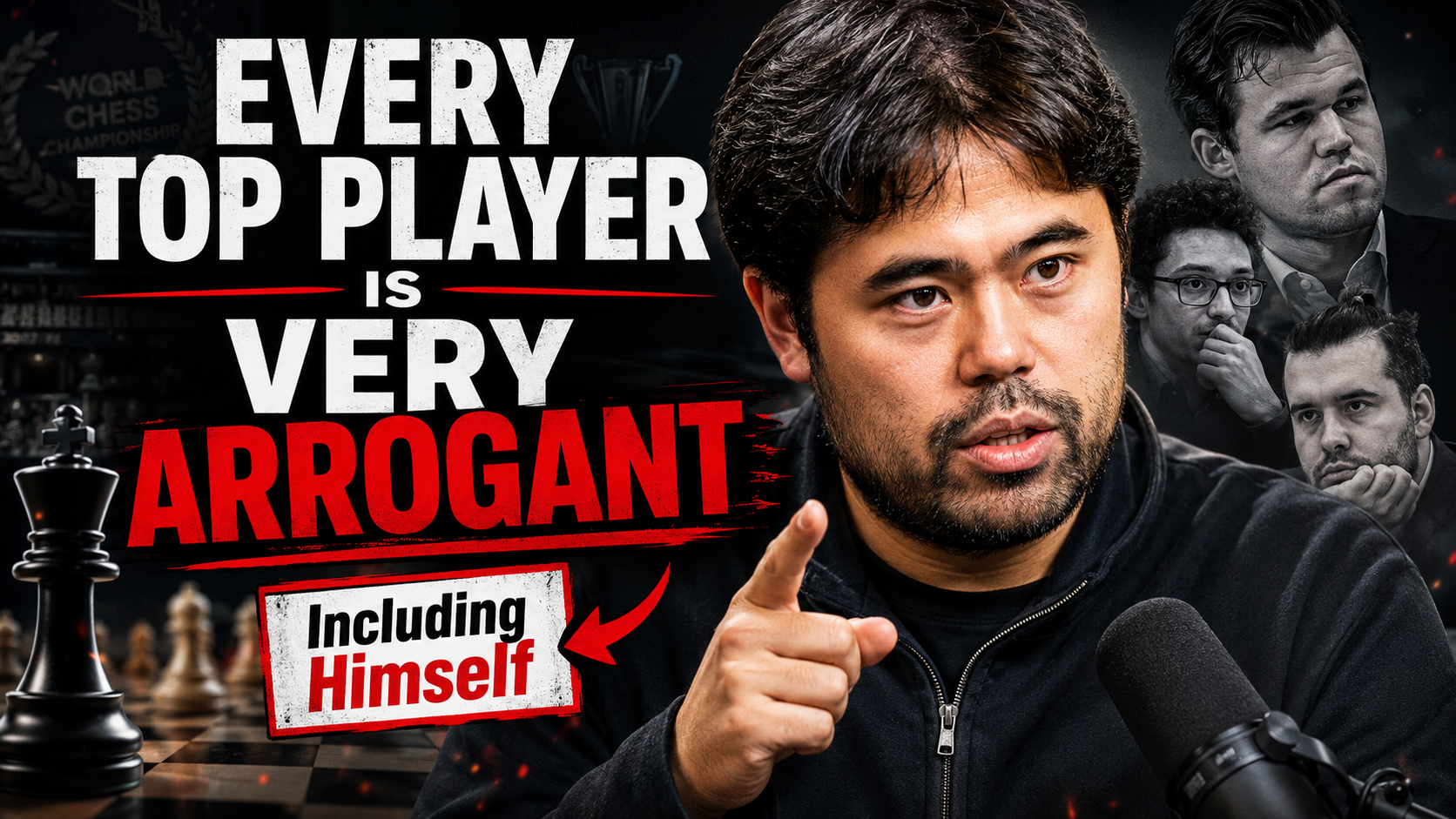
Nakamura just said what everyone at the top of chess already knows but rarely admits. Every world-class player is arrogant. Not some of them. All of them.
The American grandmaster, currently ranked third globally, made the point bluntly: arrogance isn't a flaw you tolerate in elite chess. It's fuel. You cannot reach 2750+ without believing, at a fundamental level, that you are better than almost everyone else at what you do.
What separates the showmen from the quiet competitors is control, not absence. Nakamura drew a clean distinction. Some players broadcast their confidence loudly, making it part of their brand or their psychological warfare. Others lock it down, keep the swagger internal, let their results do the talking. The arrogance is still there. It has to be.
This matters because Nakamura, who streams constantly and has cultivated a large following outside traditional chess circles, is willing to name something the establishment usually pretends isn't there. The chess world likes narratives about humility, respect, lifelong learning. True enough. But you don't grind your way to 2800 by thinking you have room to learn from everyone. You do it by knowing you are exceptional and refusing to accept a ceiling.
The implications cut both ways. For young players chasing ratings, this is clarifying: the mental trait that looks like obnoxiousness in your local club is exactly what you need to nurture at the elite level. Confidence isn't something you add after you get strong. It's something you build into your game from the beginning, or you never get there.
For the chess public, it explains behavior we see repeatedly. When Carlsen complained about formats, when Giri made controversial comments, when Vachier-Lagrave pushed back on opponents' claims, they weren't being bad sports. They were operating from the baseline assumption that they knew better. That their read of the position, the tournament, the rules was the correct one.
Nakamura's honesty also cuts against the careful, PR-managed image most top players maintain. He could have deflected, offered platitudes about how important it is to stay grounded. Instead he acknowledged that elite chess selects for players who believe in themselves to an almost pathological degree.
Whether that's good for the game's culture is a separate question. But Nakamura's right about the facts. You cannot be world-class at chess and doubt yourself. Arrogance isn't a personality quirk some elite players happen to have. It's the operating system.