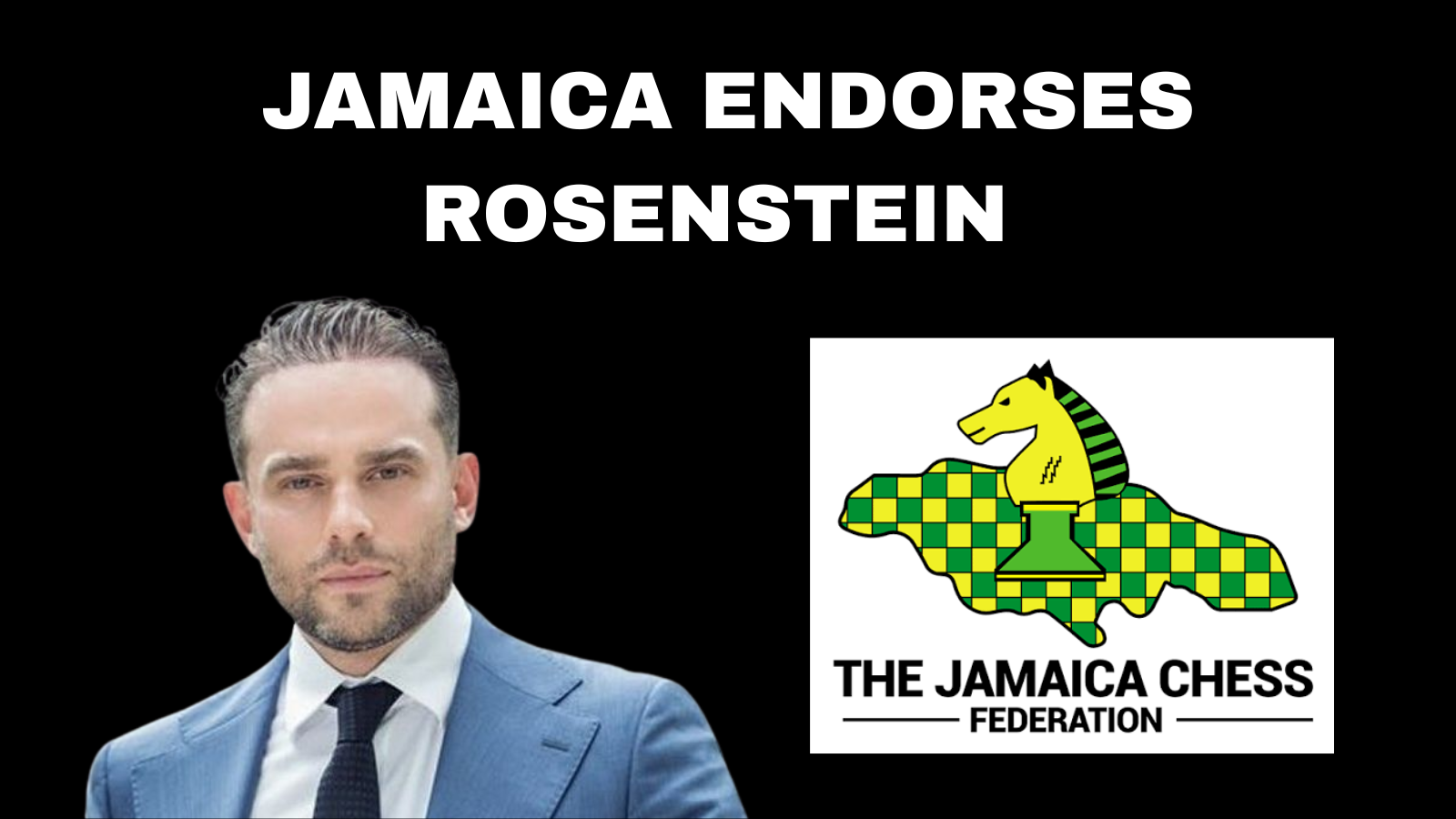
Wadim Rosenstein just picked up a crucial endorsement from Jamaica, the latest move in what's shaping up as a competitive FIDE presidential race. The Jamaica Chess Federation met with all three candidates, heard their pitches, and chose Rosenstein. They were impressed by his vision and, more tellingly, by his willingness to show up and listen.
This matters because Jamaica's endorsement signals something beyond one federation's vote. It reflects a campaign strategy that's working on the ground level. Rosenstein isn't just talking about FIDE reform from a podium. He's actually meeting with national federations, asking what they need, and positioning himself as someone who will answer.
That approach contrasts sharply with how chess politics usually works. FIDE has a long history of top-down decision-making that leaves smaller federations feeling ignored. When a candidate shows up in Jamaica and treats their priorities as real, it lands. The Federation's statement makes that clear. They backed Rosenstein because he demonstrated he understands their position and has concrete ideas to improve it.
The three-way race for FIDE president matters more than it might seem to casual observers. The federation runs world championships, rating systems, titles, and tournament standards. Its president shapes how resources flow to developing chess nations and which tournaments get sanctioning. Jamaica isn't a powerhouse like India or China, but every federation gets one vote. In a tight race, that vote counts.
Rosenstein's campaign theme of "stronger communication" and "practical support" is exactly what smaller federations want to hear. He's identifying a real gap. FIDE has spent years struggling with accusations of opacity and slow response times to federation requests. If he wins, expect actual changes to how FIDE interfaces with its membership. If he loses, his opponents will need to address these same expectations or face credibility problems.
The endorsement also suggests Rosenstein's team is organized and thorough. Visiting all three candidates showed Jamaica was serious about the decision, not rubber-stamping anything. That kind of diligence spreads. Other federations will notice and likely conduct their own reviews. The campaign just became more substantive.
FIDE's presidential election usually generates less attention than World Championship matches, but it shouldn't. A president who listens to federations and delivers support could reshape chess development globally. Jamaica's vote is one of many still to come, but it's a signal that candidates willing to engage directly with their members have an advantage. In chess politics, that's refreshingly different.