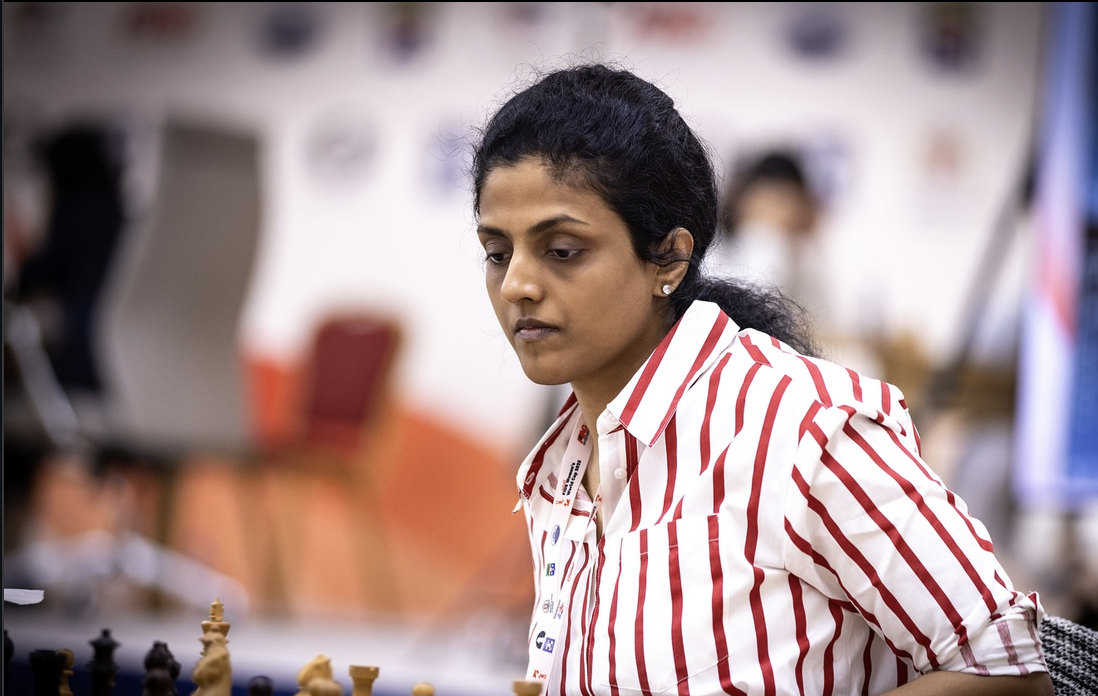
Harika Dronavalli walked away from India's Olympiad team on her own terms. The 2024 gold medal winner told Chessbase India she made a deliberate choice to step back after achieving exactly what she set out to accomplish with the team. She wanted to exit at the peak, not fade gradually into irrelevance.
This decision catches observers off guard because Dronavalli remains one of India's strongest female players. Her rating hovers around 2500, and her contribution to India's dominant Olympiad performance last year was genuine. Many assumed the federation would welcome her back without hesitation. Instead, she made the call herself.
What drives her now differs from the team grind. Dronavalli has her sights locked on the World Championship cycle. She sees that path as her true objective for the remaining years of her peak chess. The Olympiad, for all its prestige and team camaraderie, served its purpose. She won gold. Closing that chapter lets her concentrate entirely on individual competition and the specific preparation that demands.
This reveals something about elite player psychology that often stays hidden. The hunger doesn't disappear. It redirects. Dronavalli isn't retiring or losing passion. She's recalibrating. Team competitions have their appeal, but they fragment focus when a player's real target is a World Championship match qualification or tournament victory.
The Indian women's team now faces the practical problem of replacing one of its architects from last year's gold medal run. They have talent in Koneru Humpy, Vaishali, and younger players like Divya Deshmukh, but losing Dronavalli's experience and rating points creates a gap. How they fill that matters for the next Olympiad cycle, particularly if they want to defend the gold.
For Dronavalli personally, this gamble makes sense. She's 24 years old with a realistic window to mount a serious World Championship challenge. Spending two years on Olympiad preparation and travel doesn't align with that timeline. Team gold was a box checked. World Chess Federation individual qualification is the next target.
The decision also sends a quiet message to Indian chess administration: elite players will manage their own careers if given space to do so. Dronavalli didn't ask permission. She didn't demand a special arrangement. She stated her terms and moved on. That kind of player agency, exercised respectfully, usually leads to better long-term outcomes than forced participation. India's federation appears to have accepted that reality.